Choosing and Selling Liquidation Inventory at Flea Markets
At a flea market, shoppers may pass many booths in a short time. If products are difficult to browse or prices are unclear, they may move on before asking questions. For flea market vendors, choosing inventory is only part of the work. The way you transport, display, price, and track that inventory also shapes your selling process.
Liquidation inventory can include a mix of products, so it helps to choose items that fit your customers, booth space, and setup routine. A practical plan can make it easier to manage different products and learn what works from one market to the next.
Show Value Fast
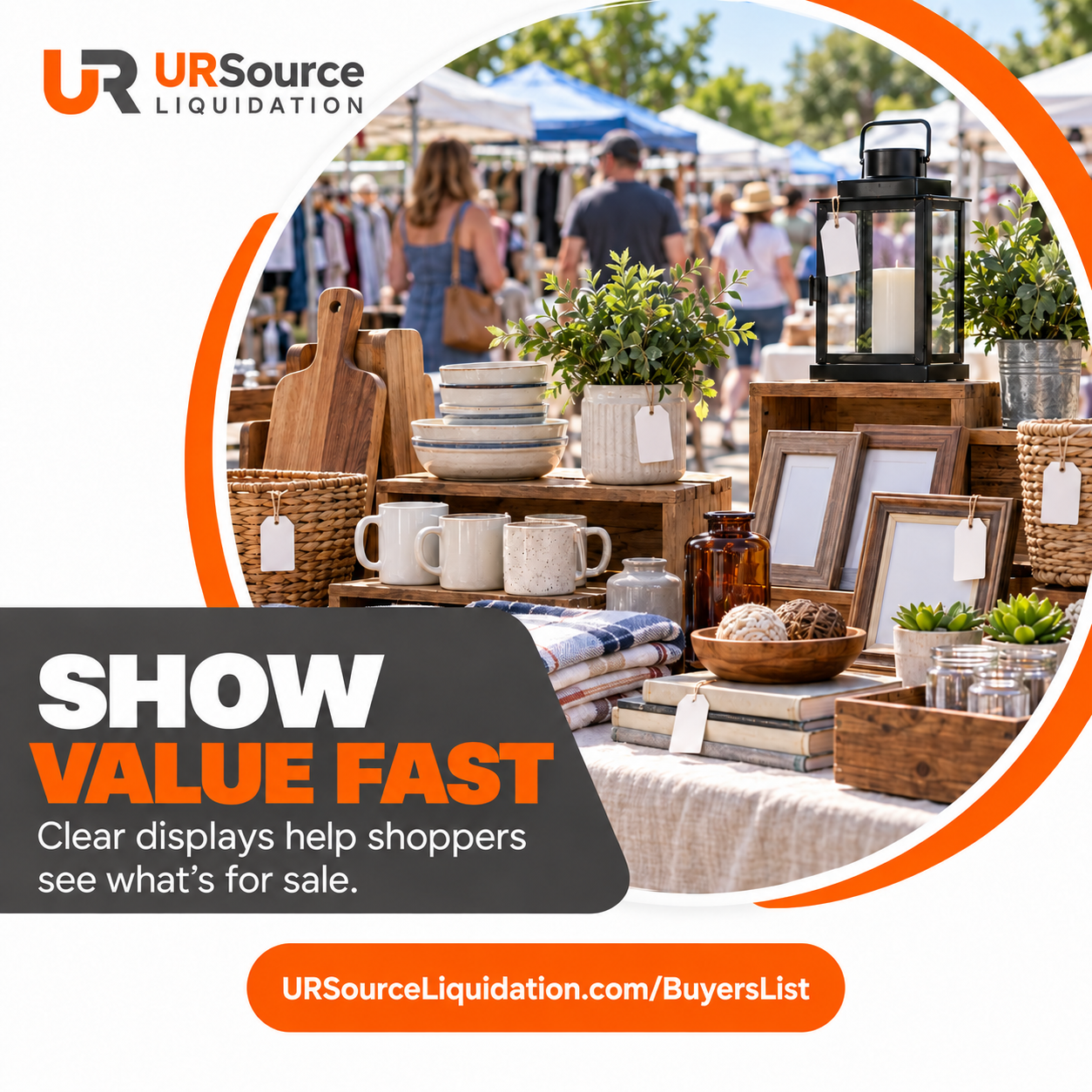
Shoppers should be able to understand what an item is and why they might want it without having to search through a pile. Group merchandise by use or category, and make the most relevant products easy to see from the aisle.
Use simple signs to identify categories, explain key details, or show prices. Keep product descriptions honest and specific. If an item has a missing piece, visible wear, or another condition detail buyers should know, make that clear before purchase.
Presentation can help shoppers compare similar products. Place related items together, keep frequently handled merchandise accessible, and leave enough room for people to browse without moving everything on the table. A tidy display also makes it easier for you to notice which items attract questions and which ones shoppers pass over.
Your booth does not need elaborate decorations to communicate value. Clear organization, visible prices, and accurate product information give customers a useful starting point.
Offer Multiple Price Points
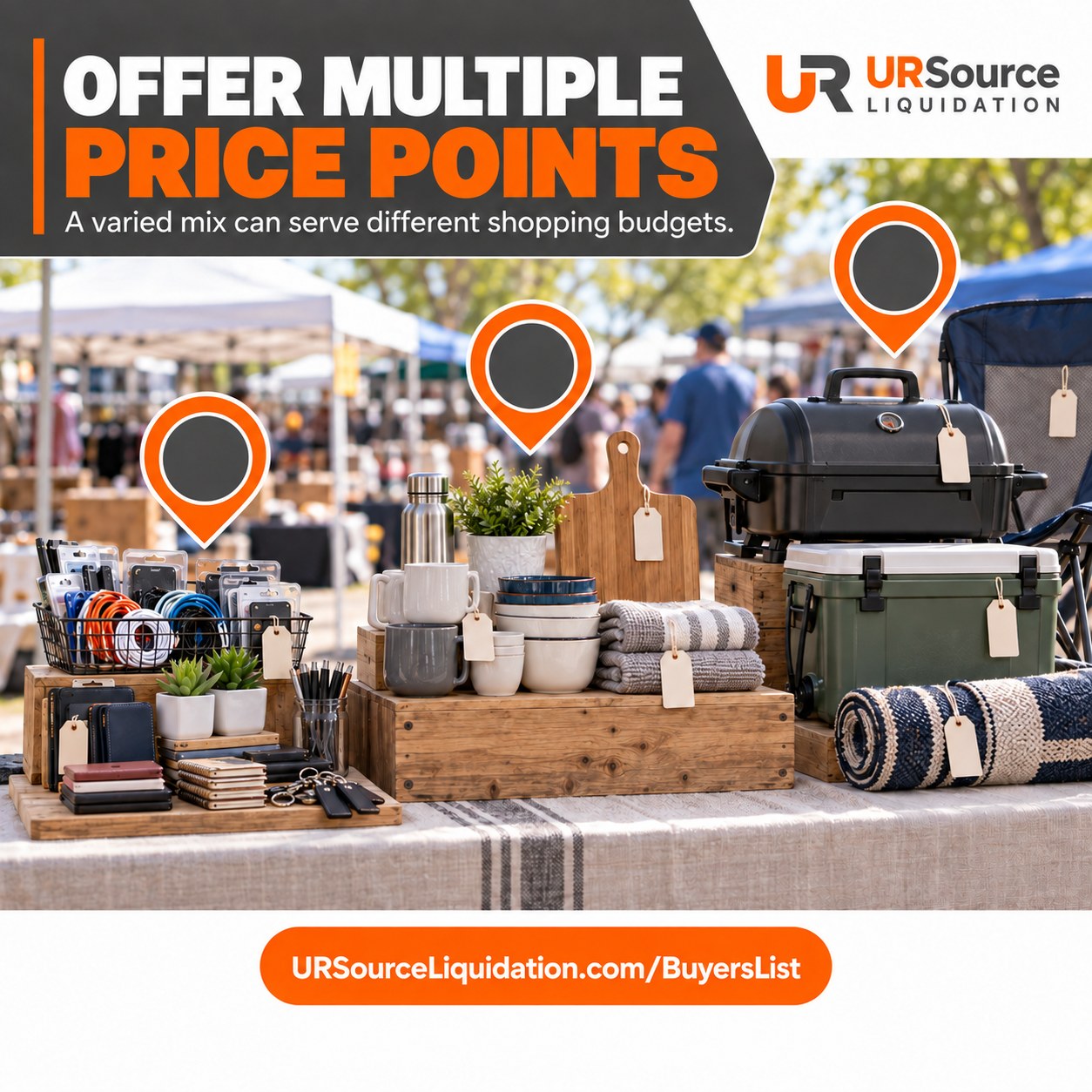
A booth with only one kind of product or price level may not suit every shopper. When evaluating liquidation inventory, consider whether the mix gives you a range of options that fit your customer base and selling approach.
Some vendors use lower-priced items to give shoppers an easy entry point, alongside mid-range products and select higher-priced pieces. The right mix will depend on what you sell, what your customers seek, and what fits your budget. There is no universal price range that works for every market.
Set prices with the item’s condition, completeness, purchase cost, and selling effort in mind. Include the expenses involved in getting inventory to the market and preparing it for sale, such as transportation, storage, labor, booth fees, and supplies. Do not use a product’s original retail price or recognizable brand as the only basis for your asking price.
Clear, consistent price labels can also reduce repeated questions and make it easier for shoppers to compare products. If you adjust prices during the day or offer a bundle price, update the signage so the offer is easy to understand.
Plan Transport and Display
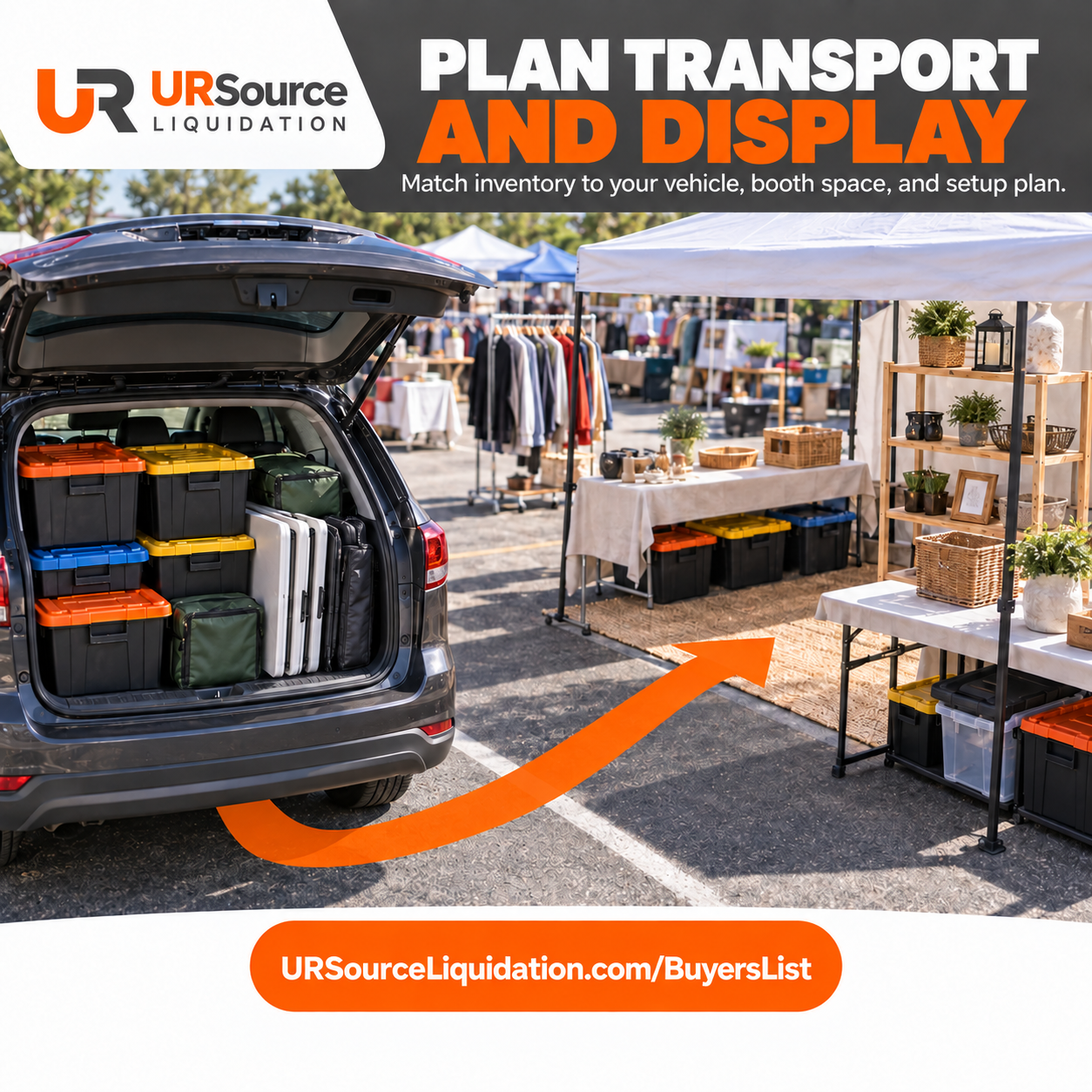
A product may look like a good fit until you consider how it will get to the market and fit in your booth. Before buying, think about the size, weight, packaging, and quantity of the inventory, as well as how much space you have to transport and display it.
Plan your loading and setup process. Keep display supplies such as tables, bins, signs, or shelving in mind when estimating how much merchandise you can bring. Check the market’s stall dimensions and rules with its organizer instead of assuming every location offers the same space or equipment.
It can help to group items before loading so you know which products will be displayed together. Keep delicate or easily misplaced merchandise protected during transport, and leave room to restock or rearrange the booth as items sell.
When reviewing opportunities from URSource Liquidation in San Marcos, Texas, consider how the available inventory details fit your transport capacity, display space, and customer base before making a purchase decision.
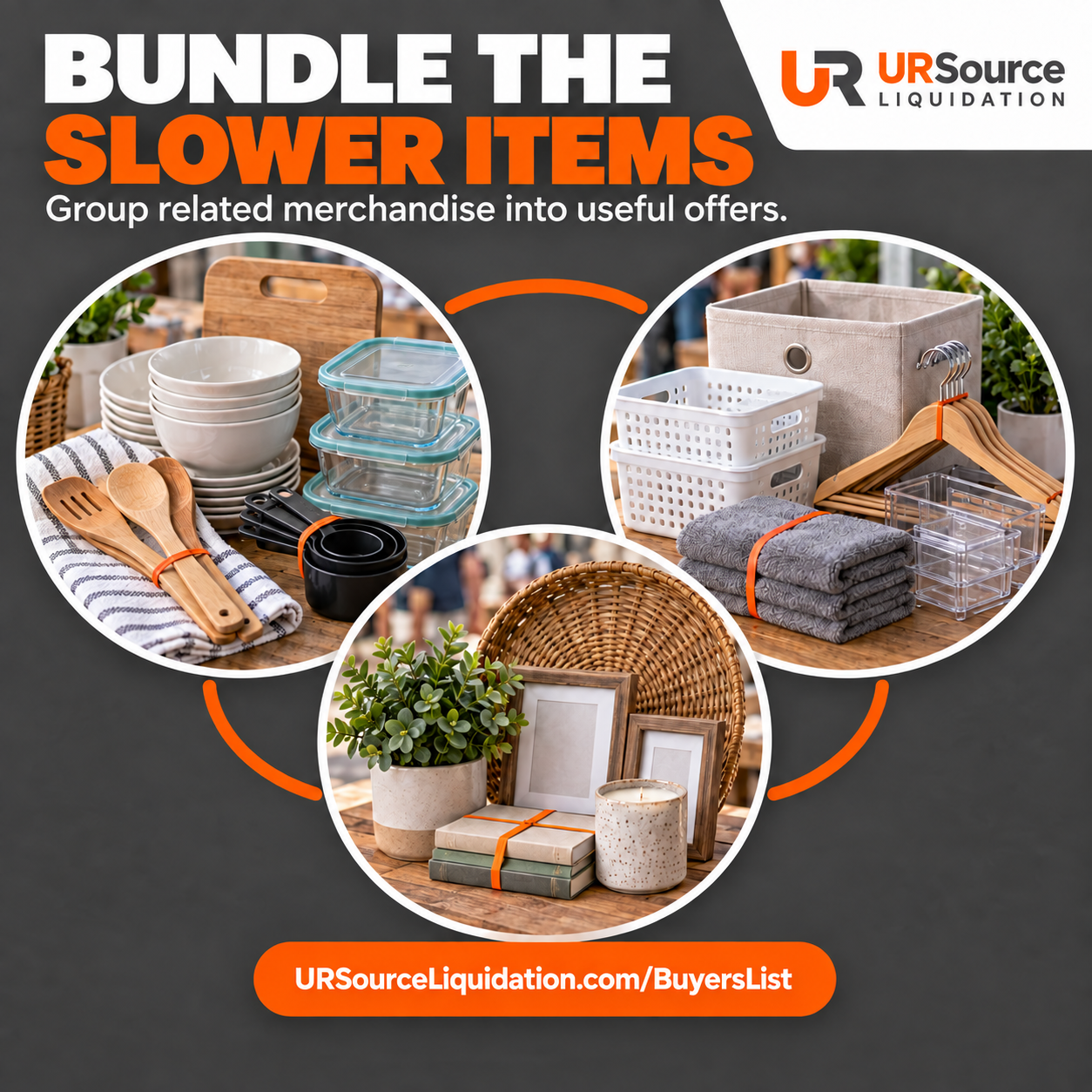
Bundle the Slower Items
Some products may draw less attention on their own, while related items can make a more useful offer together. A bundle might combine products that serve the same purpose, belong to the same category, or are commonly used together.
Choose items that make sense as a group. Bundling unrelated merchandise simply to clear space may leave shoppers unsure about what they are buying. Check each item’s condition and completeness, and explain what the bundle includes.
Before setting a bundle price, account for the combined purchase cost and any work needed to sort, clean, package, or display the items. Compare that price with what you would ask for the products separately, and make sure the offer still fits your selling plan. Bundling should help customers understand the value of the group while keeping your costs in view.
You can also track which products tend to sell better as bundles. If a particular combination receives interest, that information may help you plan future displays or purchases.
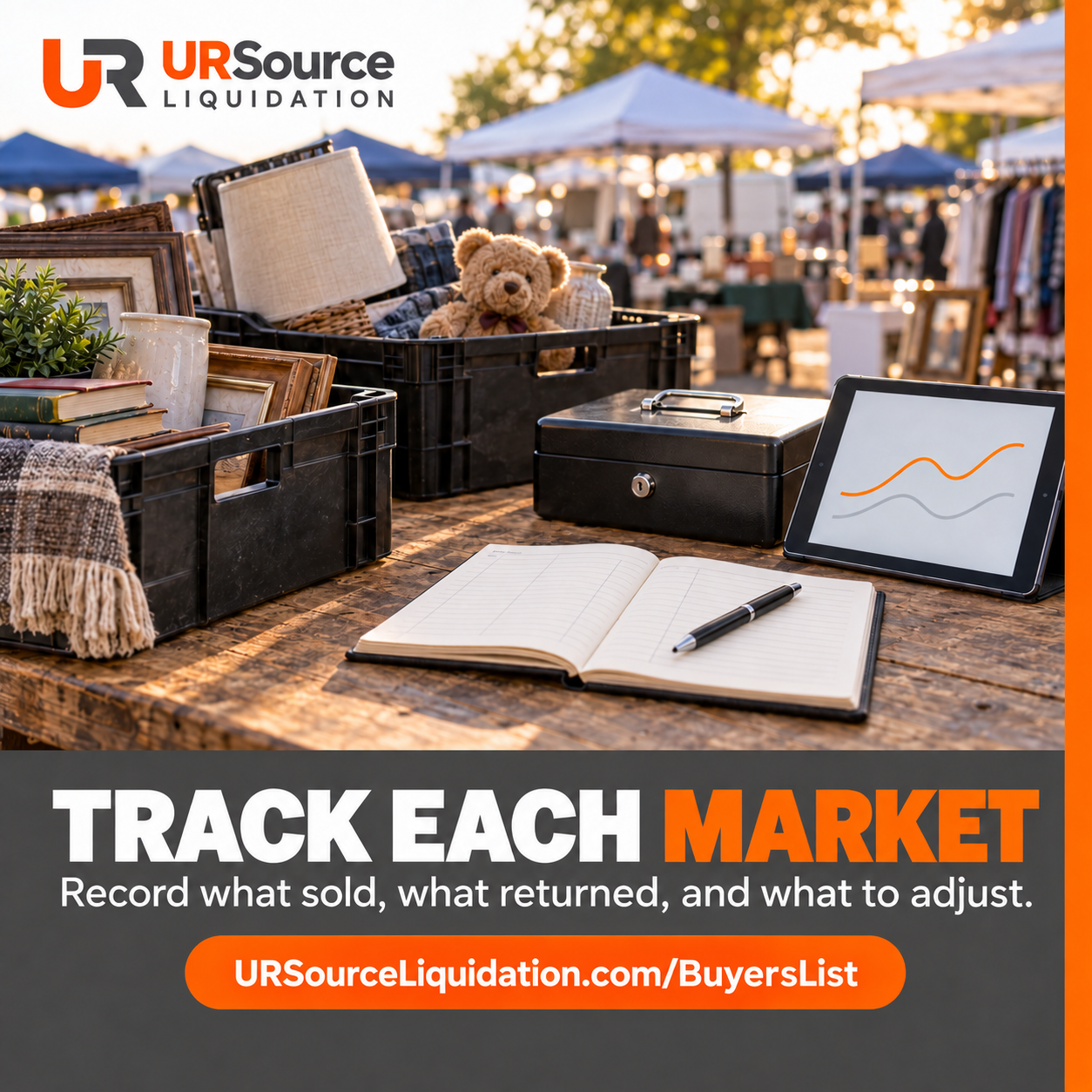
Track Each Market
One busy day or slow afternoon does not tell the whole story. Keep records for each market so you can compare results and adjust your inventory plan based on what happened.
Track the market date, booth costs, categories brought, items sold, selling prices, markdowns, bundles, and products taken home. You can also note questions shoppers asked, items they handled but did not buy, and products that required extra setup or explanation.
When you review your notes, look for patterns. A category that attracts attention may need clearer pricing or a different display. Items that remain unsold across several markets may need a new selling channel, bundle, or price review. Keep in mind that performance can vary with location, customer demand, competition, costs, condition, and the time you have to sell.
These records can help you make more informed decisions about what to source, how much to bring, and how to prepare for the next market.
Make Each Market More Informative
A flea market selling plan connects inventory selection with display, pricing, transportation, bundling, and recordkeeping. Review each opportunity against your customers and operating limits, then use the results from each market to refine your next decision. Costs, condition, demand, labor, and sell-through time all affect how an inventory purchase performs.
Looking for liquidation inventory to evaluate for your flea market booth? Join the URSource Liquidation Buyer’s List to stay informed about opportunities and review each one for customer fit, price range, transport needs, display space, and selling capacity.
Frequently Asked Questions
1. What is liquidation inventory?
Liquidation inventory is merchandise sold in bulk, often because it is excess, returned, discontinued, or otherwise needs to be cleared. The products and their condition can vary, so review the available details before buying.
2. What liquidation inventory is a good fit for a flea market?
Look for products that match local shoppers, fit your booth space, and are practical to transport and display. Check condition and completeness, then consider whether the expected selling price can cover your costs.
3. How should I evaluate a liquidation lot before buying?
Review the manifest or item list, available photos, stated condition, and any missing or incomplete products. Include shipping or pickup costs in your calculations, and estimate your cost per sellable item conservatively.
4. Should I offer a wide variety of products or focus on a few categories?
Choose a mix that suits your customers and the space you have. A focused selection can make browsing easier, while a small amount of variety can help you see which categories shoppers respond to.
5. How should I price liquidation items at a flea market?
Consider your total costs, the item’s condition, and prices shoppers may see for comparable products. Simple price ranges can make decisions easier for customers and help you price items consistently.
6. How can I make the value of an item clear to shoppers?
Keep products organized, make prices easy to spot, and share useful details about condition or included parts. Clear displays help shoppers understand what they’re considering without having to ask about every item.
7. What should I consider when planning transport and display?
Think about the load size, vehicle space, unloading time, and booth layout before buying. Plan how fragile or bulky items will be protected and displayed so they are easy for shoppers to view.
8. When should I bundle liquidation items?
Bundles can work well for related, lower-priced products or items that have been slower to sell individually. Keep the grouping useful and give shoppers a clear bundle price.
9. What should I do with inventory that does not sell?
Record what remained after each market and consider whether the price, display, product mix, or venue affected sales. You can test a different price, create a relevant bundle, or adjust how much of that category you bring next time.
10. What sales information should flea market vendors track?
Record the market date and location, products or categories brought, purchase costs, sales, and remaining inventory. Comparing results across markets can help you make more informed choices about future liquidation buys.
