
Common Liquidation Buying Mistakes That Reduce Reseller Profit
A low purchase price can make liquidation inventory look like an easy opportunity. But if the merchandise is difficult to sell, expensive to process, or slow to turn into cash, the discount may not matter. Many liquidation buying mistakes reduce reseller profit before the first item is listed or displayed.
Evaluate each opportunity against your customers, cash, time, and selling capacity. These five mistakes deserve a place on your pre-purchase checklist.
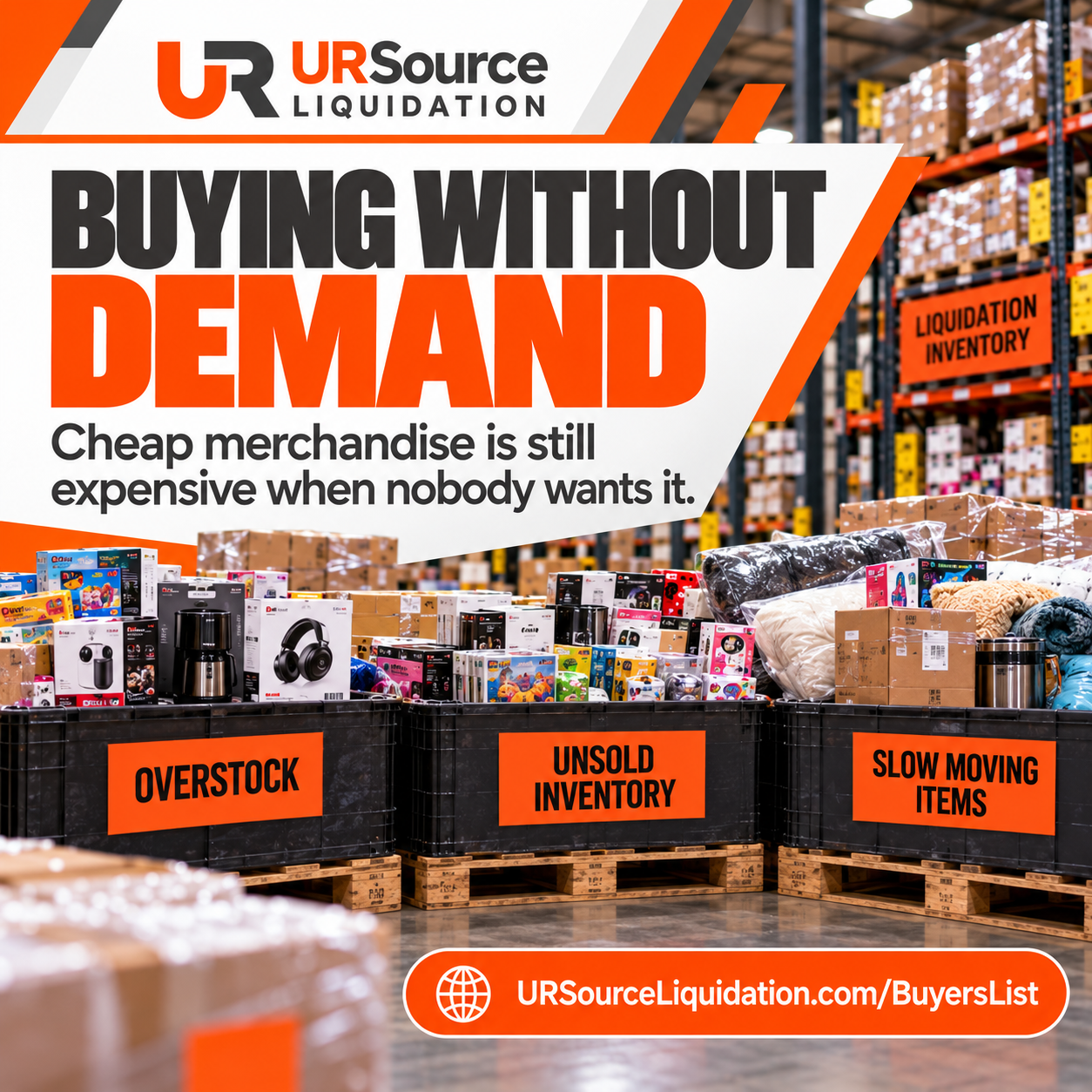
1. Buying Inventory Without Checking Customer Demand
Cheap merchandise is not a bargain if your customers have little interest in it. A pallet or mixed lot can seem attractive because it contains plenty of items, but quantity does not prove demand.
Start by identifying who would buy the products and where those buyers shop. Online marketplace customers may respond differently from flea market shoppers or discount store customers. Consider the categories, price points, and product conditions your audience already accepts.
Look at completed sales for comparable items, not just active listings. If you sell locally, pay attention to what customers ask for, what stays on your shelves, and which categories consistently move. Consider seasonality and competition before committing.
Before buying, establish a realistic exit path. If you cannot explain how and where most of the inventory could sell, the low price alone is not enough reason to commit.
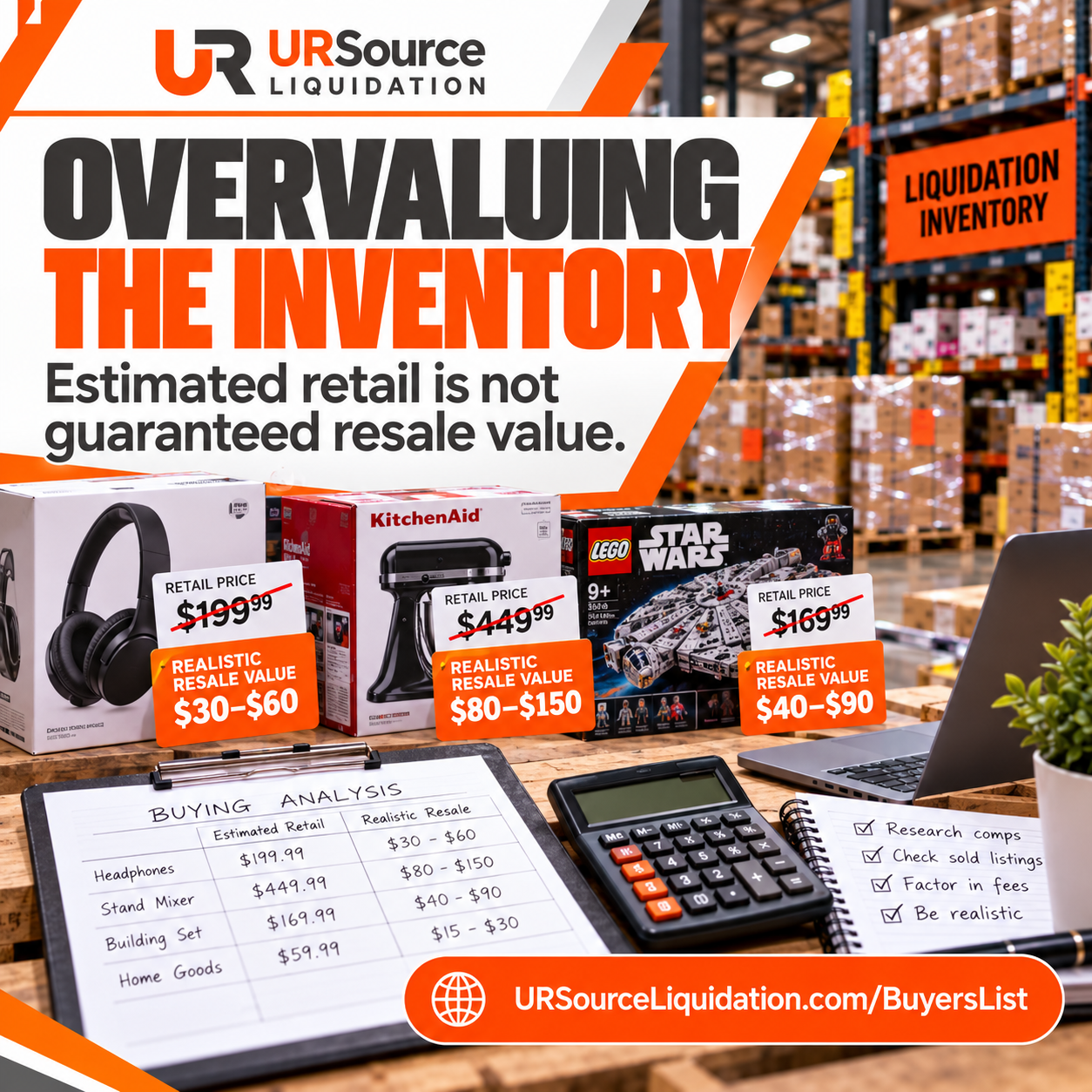
2. Overvaluing Inventory Using Retail Estimates
An estimated retail total is not the same as the revenue a reseller can collect. Buyers sometimes base their calculations on original price tags or optimistic online listings, then discover that actual resale prices are much lower.
Use recent sold prices for genuinely comparable products. Check condition, completeness, packaging, and customer demand. Missing parts or extra testing can change what an item is worth, and competition may push prices down.
Build a recovery estimate that accounts for items you may need to discount, bundle, or discard. Subtract selling fees, payment processing costs, and other expenses that apply to your channel.
A useful starting point is:
Expected resale revenue − purchase and selling costs = estimated profit.
That figure is still an estimate, not a promise. Consider a cautious outcome before deciding what you can pay. If the deal only works when every item sells at your highest expected price, reconsider the offer.
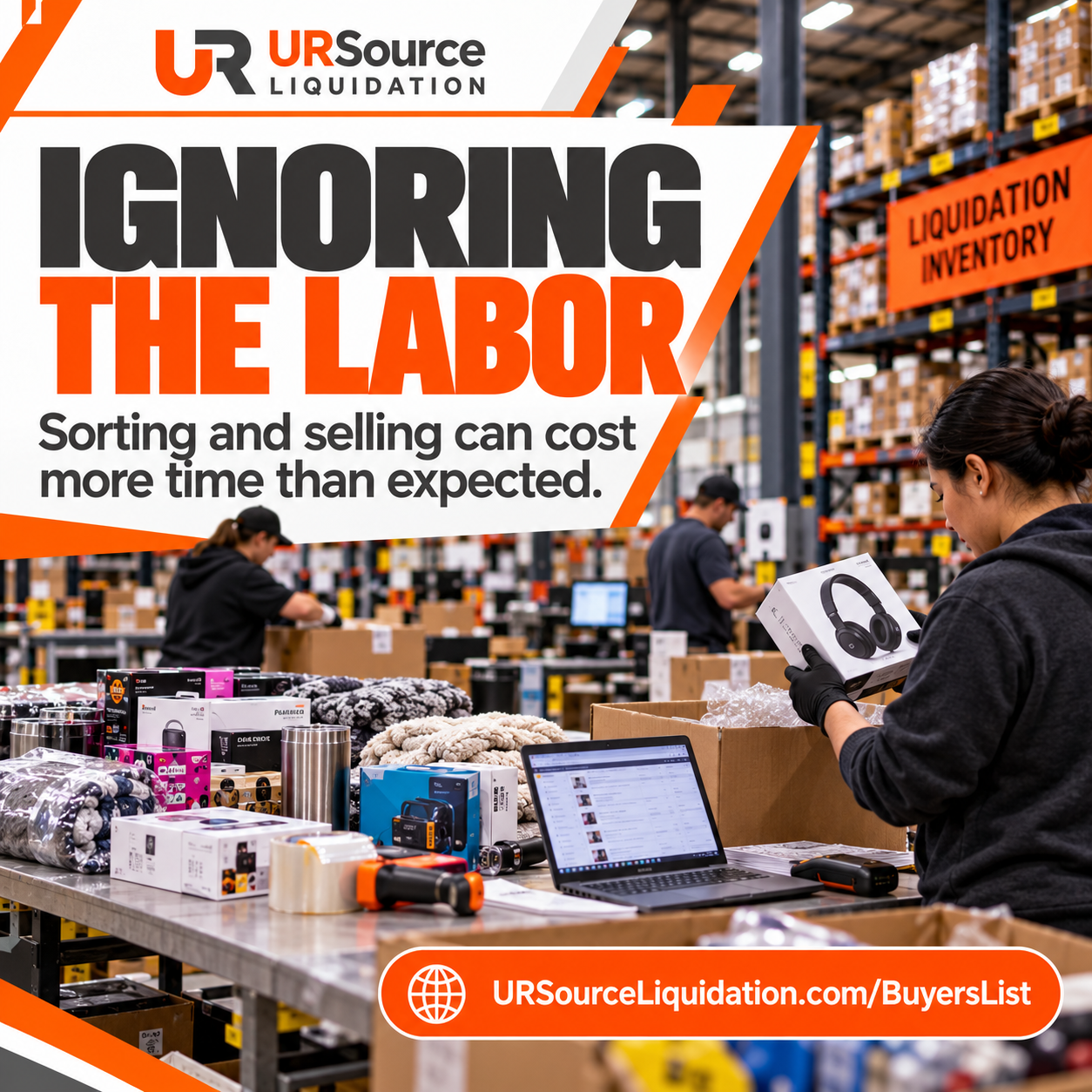
3. Ignoring the Labor Behind Every Sale
Liquidation inventory does not always arrive ready for a sales floor or online listing. Someone may need to unload it, inspect condition, sort categories, test products, clean items, photograph them, set prices, and handle customer questions.
Each step takes time. Online sellers may also need to package orders and handle returns. Flea market vendors and discount stores may spend hours preparing displays and reorganizing remaining merchandise. Your time has value, too.
Estimate the hours required before you buy. Ask how quickly you can process the inventory alongside the merchandise you already own. A large mixed lot might offer variety, but it can also create a bottleneck when each item needs individual attention.
Include labor in your purchase calculation and be realistic about your listing or display capacity. The best opportunity is not necessarily the one with the most units; it is one your business can prepare and sell efficiently.
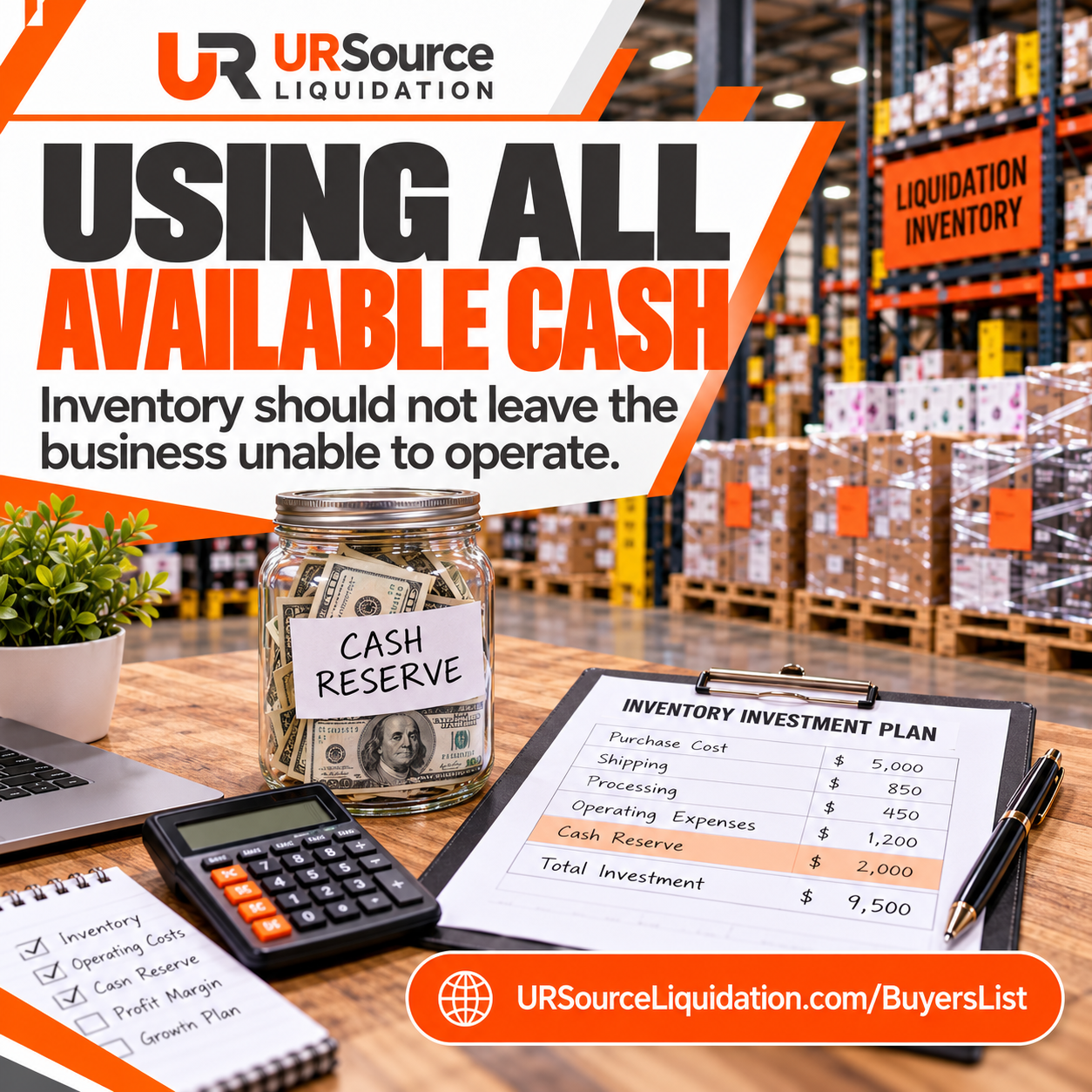
4. Using All Available Cash on One Purchase
A promising inventory opportunity can become a problem if paying for it leaves too little money to operate. Inventory is an asset, but it does not cover expenses until sales bring cash back into the business.
You may still need funds for transportation, rent, storage, supplies, platform fees, payroll, or the next buying opportunity. Slow sales and markdowns will not stop those expenses.
Set a purchase ceiling before reviewing the deal. Begin with available cash, subtract near-term operating obligations, and reserve an amount for processing and unexpected expenses. Only then decide how much can safely go toward inventory.
Consider how long your capital might stay tied up. A purchase with an acceptable estimated margin can still strain cash flow when sell-through takes longer than planned.
Buying less, passing on a deal, or preserving your reserve may be more useful than filling every available shelf.
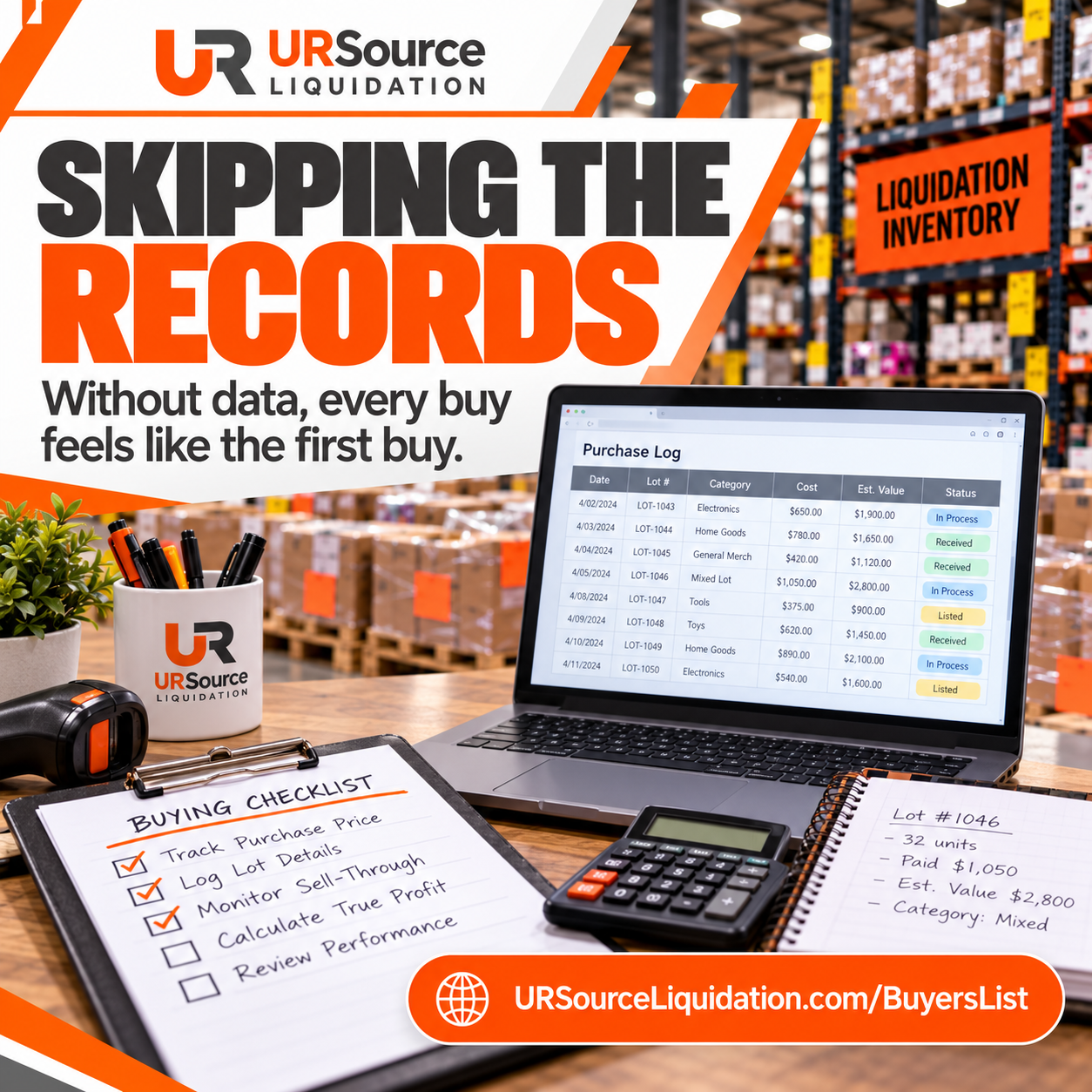
5. Skipping Records That Could Improve the Next Buy
Without purchase records, it is easy to remember the successful items and overlook the costs or leftovers. Revenue alone will not tell you whether an inventory purchase made financial sense.
Track each lot's acquisition cost, transportation, supplies, labor, selling fees, revenue, unsellable items, and remaining stock. Note how long items take to sell and which categories require frequent markdowns.
A simple spreadsheet can be enough if you update it consistently.
Review those numbers after each buying cycle. Which categories moved quickly? Which ones sat too long? Did processing take more time than expected? Were the final selling prices close to your original estimates?
Use the answers to adjust your maximum buy price, preferred categories, and workload assumptions.
Over time, your own sales records become a stronger guide than general claims about how profitable a lot could be.
Put a Buying Plan Ahead of the Discount
Avoiding liquidation buying mistakes starts with a repeatable decision process. Verify demand, estimate achievable resale prices, calculate labor, protect operating cash, and review past purchase results. These checks help reveal risks before you commit money.
Reseller profit ultimately depends on acquisition cost, condition, transportation, selling fees, storage, processing effort, and how quickly inventory sells.
A low purchase price is useful only when the entire plan makes sense for your business.
Review Your Next Opportunity With a Clearer Plan
URSource Liquidation connects resellers with liquidation inventory opportunities from its warehouse in San Marcos, Texas.
Before considering your next opportunity, use these five checks to compare the merchandise against your actual customers, budget, and processing capacity.
Join the URSource Buyer’s List to stay connected with inventory opportunities and evaluate each one using what your business has learned.
Frequently Asked Questions
1. What are the most common liquidation buying mistakes?
The most common mistakes include buying without customer demand, overestimating resale value, ignoring labor costs, spending too much working capital, and failing to track inventory performance.
2. Why is buying cheap liquidation inventory sometimes risky?
A low purchase price does not guarantee profit. Inventory that sells slowly, requires extensive processing, or contains unsellable items can create additional expenses and tie up cash.
3. How can resellers check demand before buying liquidation inventory?
Review recent sold listings, customer preferences, local competition, and previous sales records. Focus on products that match your existing customers and selling channels.
4. Can resellers rely on estimated retail value when buying liquidation pallets?
No. Estimated retail value does not guarantee resale revenue. Actual selling prices depend on product condition, demand, competition, missing components, and selling expenses.
5. How do you calculate the potential profit from liquidation inventory?
Subtract the purchase price, transportation, labor, storage, selling fees, and other expenses from expected resale revenue. Include allowances for unsellable merchandise and markdowns.
6. Why should labor costs be included when evaluating liquidation inventory?
Sorting, inspecting, cleaning, testing, photographing, listing, and selling merchandise require time. Ignoring these activities can make a purchase appear more profitable than it actually is.
7. How much working capital should resellers keep before purchasing inventory?
Keep enough cash to cover upcoming operating expenses, inventory processing, and unexpected costs. Your inventory budget should not compromise your business's ability to operate.
8. What happens when liquidation inventory takes too long to sell?
Slow-moving inventory ties up working capital, occupies storage space, and may require markdowns. This can delay future purchases and reduce overall inventory profitability.
9. What records should resellers track after purchasing liquidation inventory?
Track acquisition costs, additional expenses, units sold, resale revenue, unsellable items, remaining stock, and sell-through time. These records help identify profitable categories and recurring buying mistakes.
10. How can resellers avoid repeating costly liquidation buying mistakes?
Use a consistent pre-purchase checklist, review past inventory performance, establish maximum buying limits, and evaluate realistic resale potential. Let actual sales results guide future inventory decisions.
