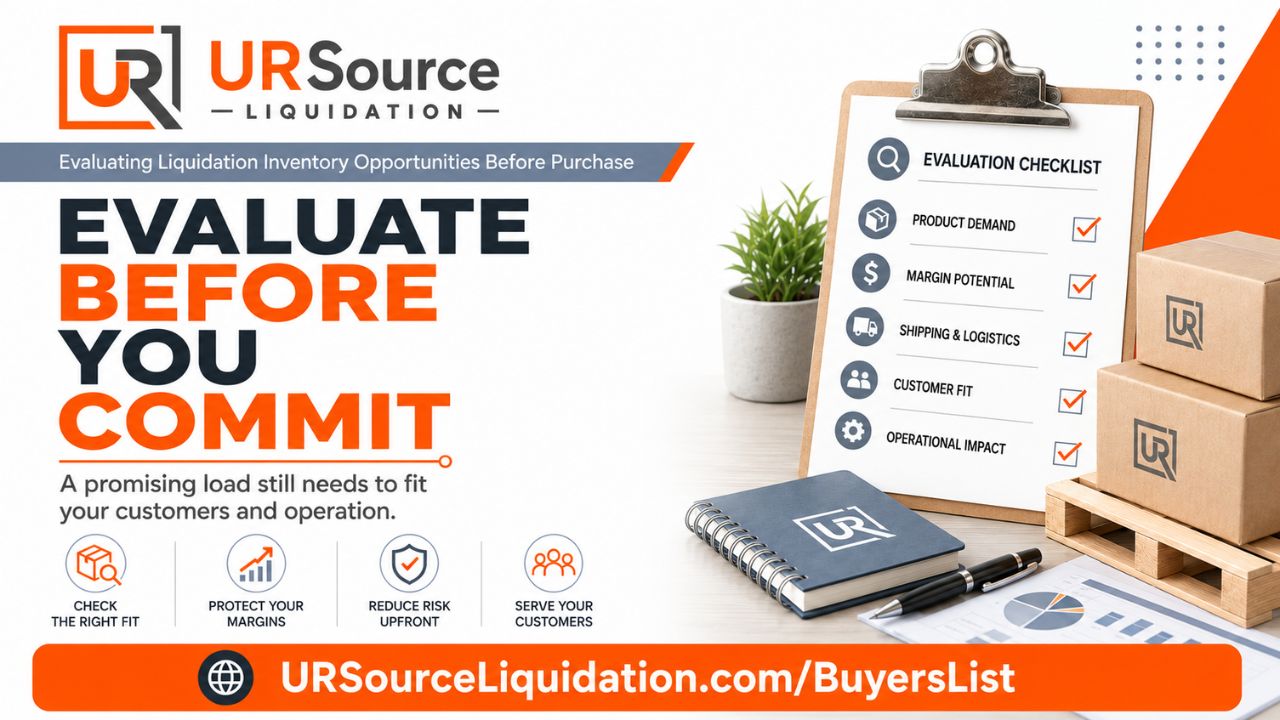
Evaluating Liquidation Inventory Opportunities Before Purchase
A promising load can create urgency. The category may look familiar, the merchandise may seem easy to sell, and the opportunity may appear to fit your budget. But buying before checking the operational details can turn useful inventory into a cash-flow, storage, or workload problem.
The stronger question is not simply, “Can I resell this?” It is, “Does this opportunity fit the customers, sales channels, resources, and limits of my resale business?”
When you evaluate liquidation inventory opportunities, look beyond the merchandise itself. Consider who will buy it, what information is confirmed, how much work it requires, where it will go, and what conditions must be met before you commit.
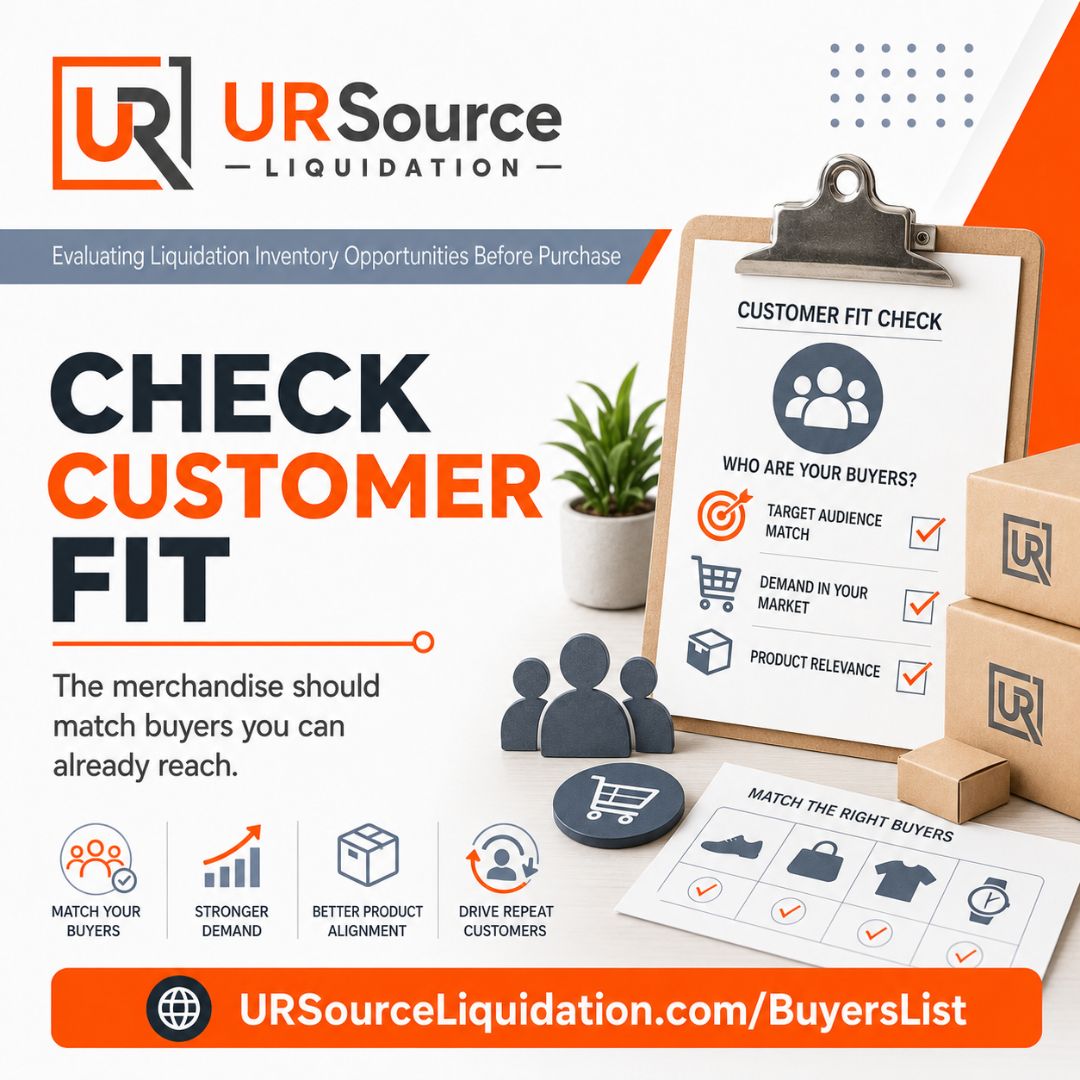
Check Customer Fit Before Evaluating the Numbers
Inventory has more value to your business when it matches customers you can already reach. Before purchasing, identify the likely buyer and the sales channel you would use first.
An online seller may need products that are practical to photograph, describe, package, and ship. A flea market vendor may prioritize visible value, easy display, and practical price points. Bin stores and discount stores may focus more on volume, variety, processing speed, and floor space.
Ask whether your current customers buy the category, whether the likely price range fits their expectations, and whether the merchandise can be sold through your strongest channel. Also consider whether you would need to build a new audience before making sales.
Buying outside your usual category is not automatically a bad decision, but it creates additional uncertainty. You may need more research, a smaller commitment, or a wider allowance for processing and sell-through time.
Customer fit should be the first filter because even attractive wholesale inventory can become difficult to move when the intended buyer is unclear.
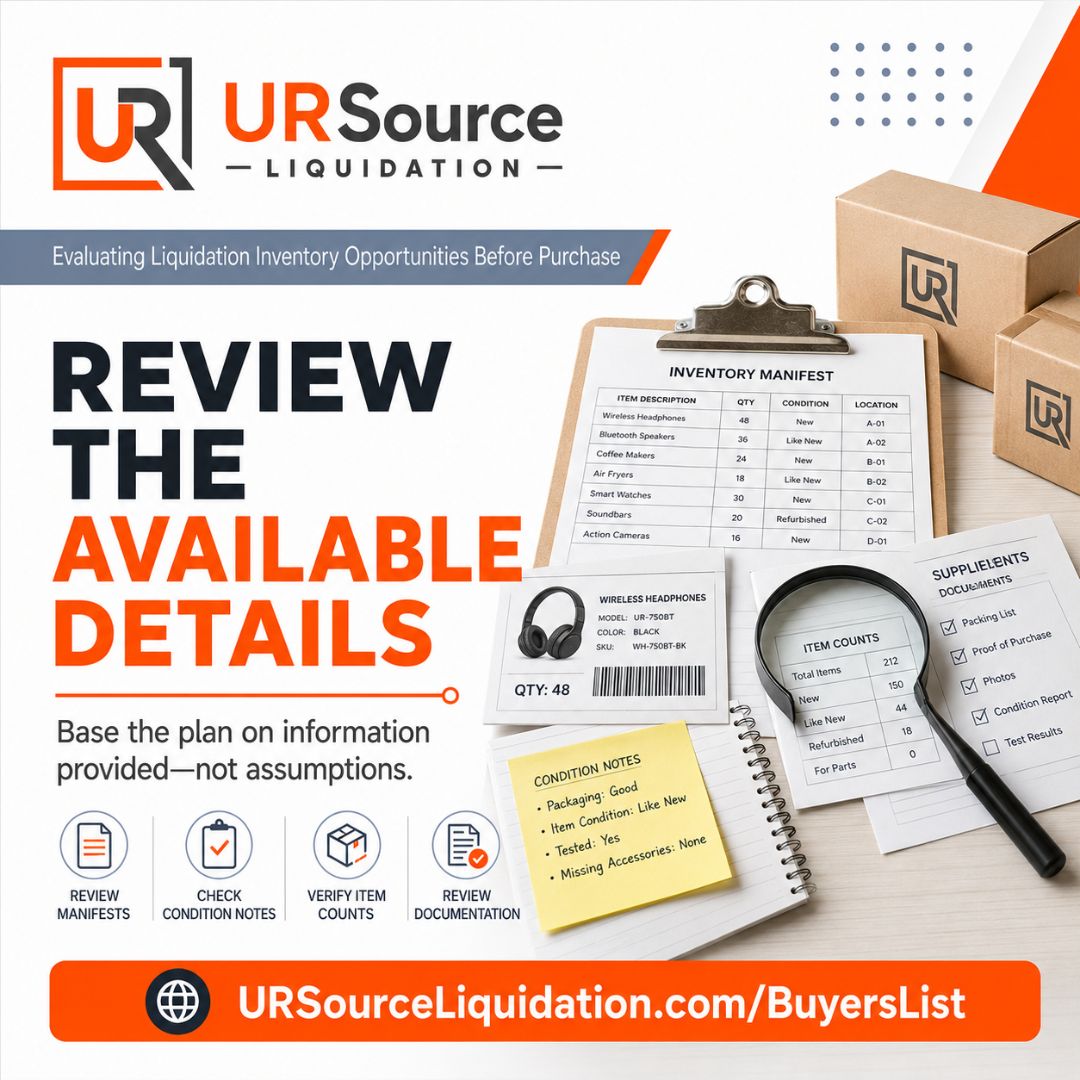
Review the Available Details Without Filling the Gaps
A careful decision should be based on information provided, not on the best possible version of what the inventory might contain.
Review the available category information, photos, quantity details, condition information, packaging, included parts, pickup requirements, and other confirmed context. Separate the information into three groups:
Confirmed
List details that have been clearly provided. These are the facts you can use in your plan.
Unclear
List information that has not been confirmed or is difficult to determine from the available materials.
Decision-Critical
Identify unanswered questions that could materially change your decision, such as condition information, transportation needs, included components, or sales-channel fit.
Avoid estimating revenue from assumed quantities, condition, or demand. Estimated retail value alone does not show what you may collect after platform fees, labor, transportation, supplies, storage, markdowns, and slower-moving inventory.
Limited information does not always require an automatic pass. It means your purchase limit and risk tolerance should reflect the uncertainty.
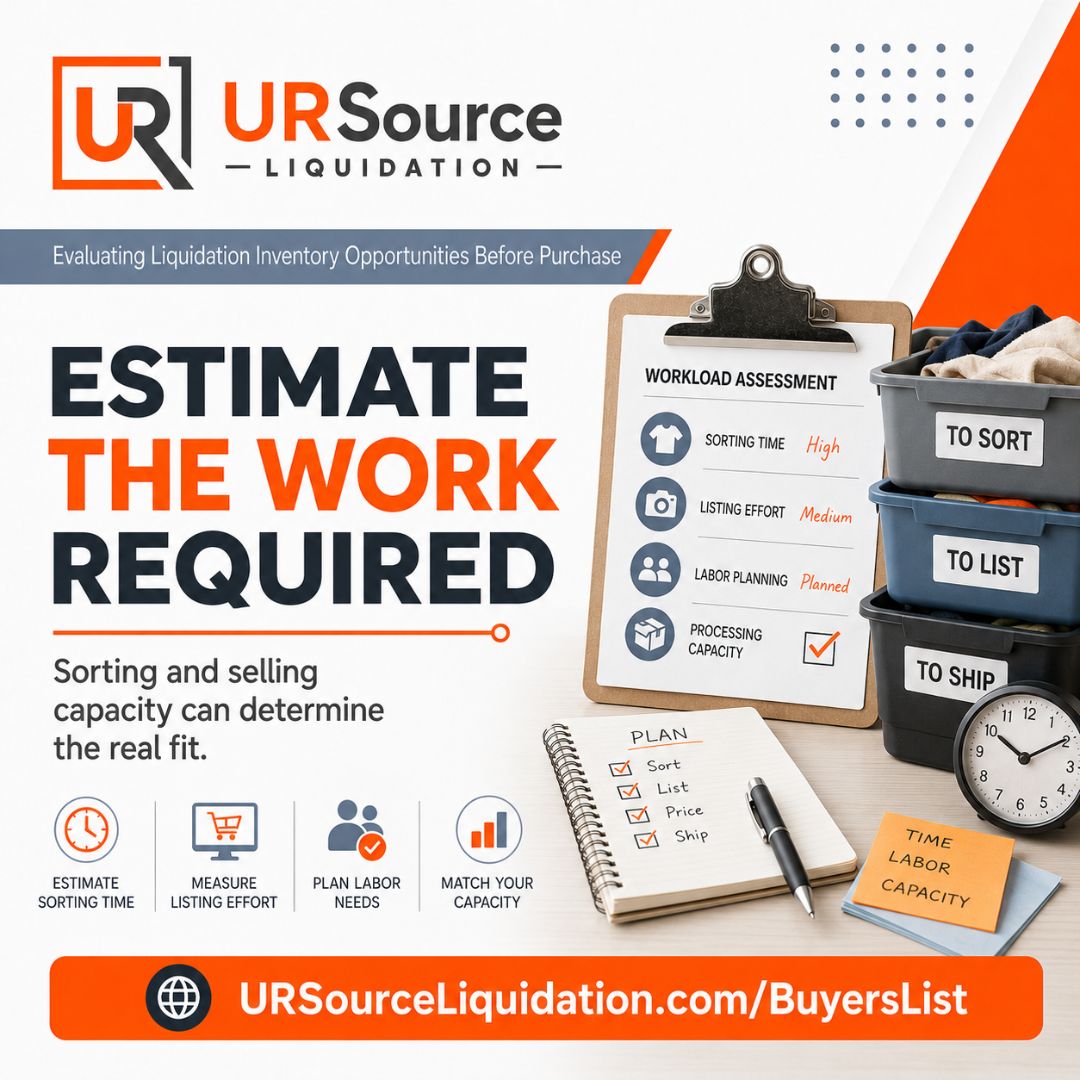
Estimate the Work Required After Pickup
Liquidation inventory does not become sellable simply because it reaches your vehicle or warehouse. The work after pickup can determine whether the opportunity fits your operation.
Depending on the merchandise and sales process, the workload may include unloading, sorting, counting, cleaning, testing, organizing, photographing, researching, listing, pricing, displaying, packaging, customer service, and returns.
Estimate how many hours you can dedicate, whether help is available, how quickly the inventory can reach its first sales channel, and whether it will interrupt inventory already waiting to be processed.
A familiar category may require less research and faster listing. A mixed lot may require more sorting and multiple exit paths. Larger merchandise may be simple to describe but harder to move, store, or transport.
Results depend on more than purchase cost. Labor, processing speed, condition, missing parts, platform fees, customer demand, pricing, and sell-through time can all affect the outcome.
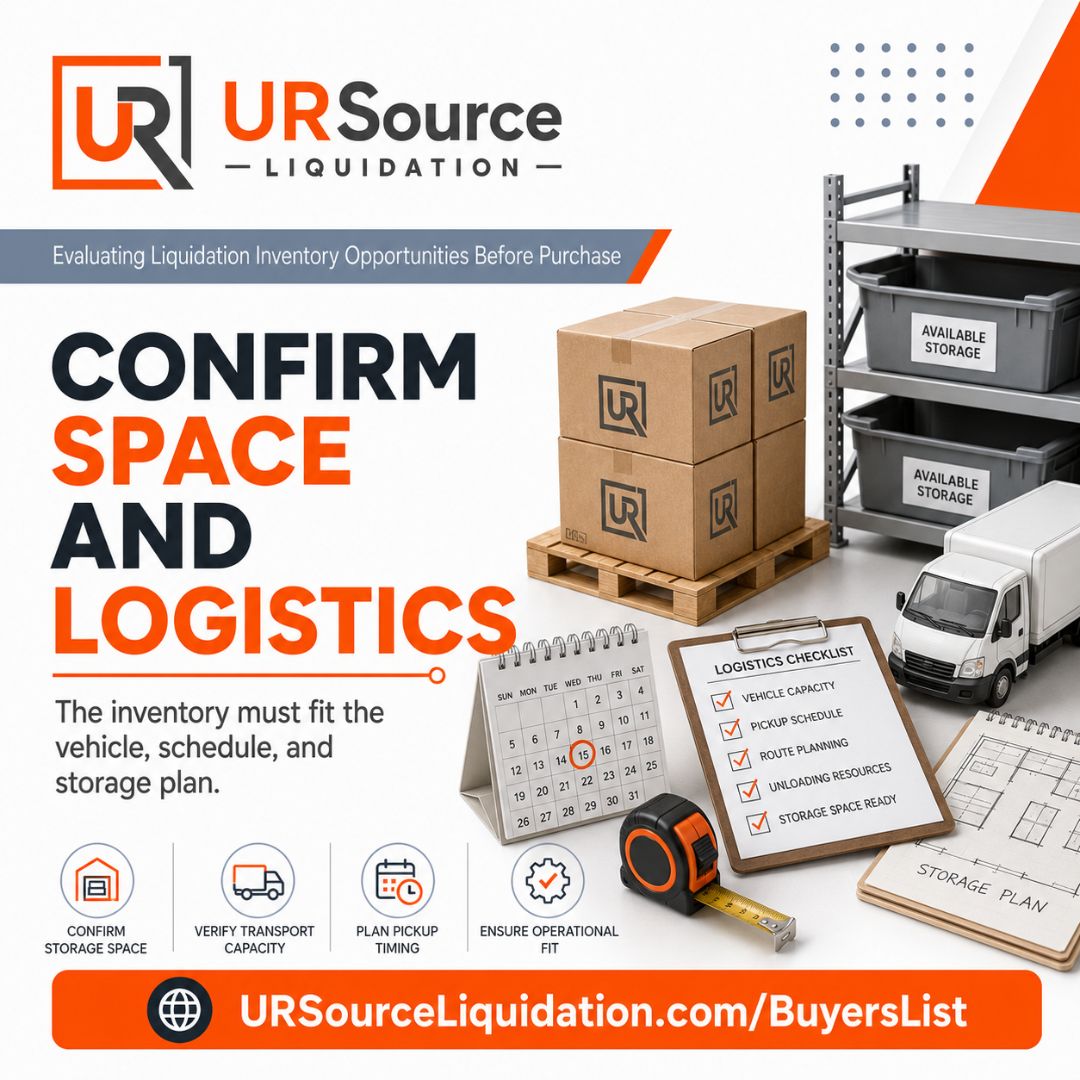
Confirm Space, Transportation, and Pickup Logistics
A purchase that fits your budget can still be a poor operational fit when the inventory does not fit your vehicle, schedule, storage, or receiving process.
Before committing, trace the inventory’s path from pickup to sale. Confirm how it will be transported, who will load and unload it, where it will be placed on arrival, where sorting or testing will happen, and how processed and unprocessed merchandise will be separated.
Consider fuel, travel time, equipment, helpers, loading access, unloading time, and scheduling. For opportunities near the URSource warehouse in San Marcos, Texas, local pickup may reduce some complexity for Central Texas buyers, but you still need a complete vehicle and storage plan.
Do not rely on temporary storage that interferes with daily operations. Inventory that blocks workspaces, customer areas, or existing stock can slow down the entire resale business.
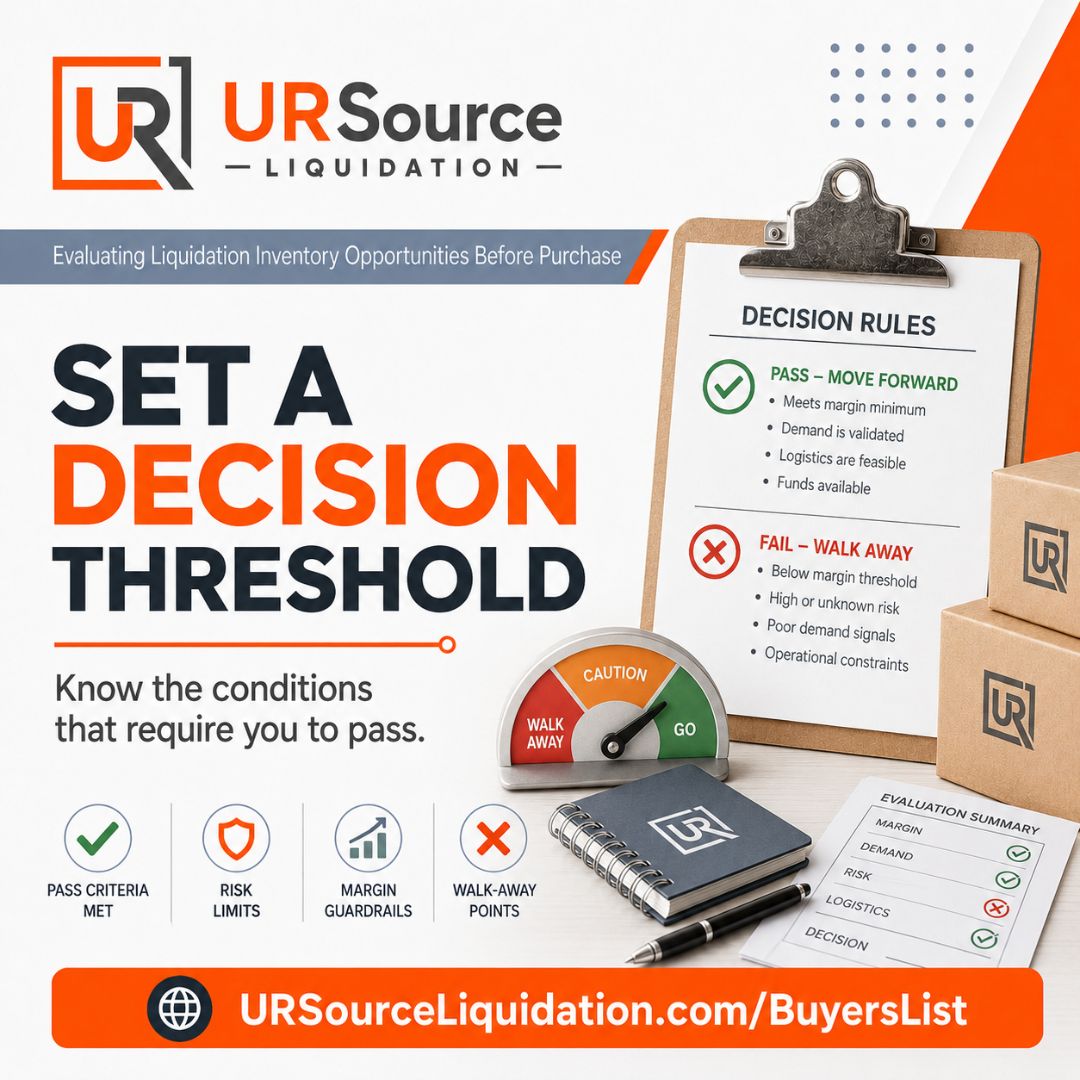
Set a Clear Decision Threshold
The easiest time to create buying rules is before an opportunity creates urgency.
Set a decision threshold that defines the minimum conditions required for a purchase. Your rules may include a maximum landed-cost limit, a minimum level of available information, confirmed customer fit, an acceptable workload, available transportation and storage, and enough remaining cash for processing and future opportunities.
You should also define automatic reasons to pass. These may include insufficient information, unclear customer demand, unavailable storage, an unrealistic processing schedule, or a total cost that exceeds your limit.
Passing is not a failure. It protects your cash, time, space, and ability to act when a stronger opportunity appears.
Make the Decision Based on Your Operation
The best inventory opportunity is not necessarily the largest load, the highest estimated retail value, or the most exciting category. It is the opportunity your business can purchase, receive, process, market, and sell with a realistic plan.
Use the same framework every time you evaluate liquidation inventory opportunities: check customer fit, review confirmed details, estimate the work, confirm logistics, and apply your decision threshold. Consistent evaluation makes it easier to compare opportunities without relying on urgency or assumptions.
Review New Opportunities With Your Framework Ready
Join the URSource Buyer’s List to receive inventory updates and apply your customer-fit, workload, logistics, and buying-limit checklist before committing:
