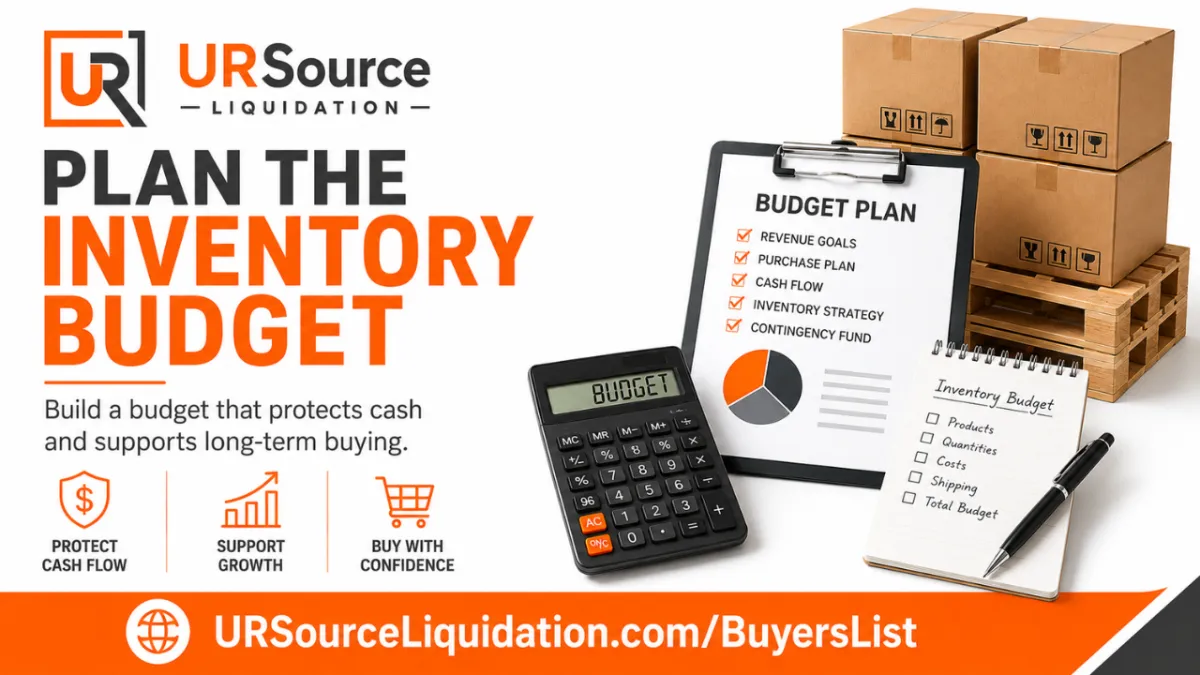
Liquidation Inventory Budget Planning for Resale Businesses
Liquidation Inventory Budget Planning for Resale Businesses
A liquidation purchase can look affordable until expenses begin using cash meant for rent, supplies, payroll, listings, or the next inventory opportunity. That is why liquidation inventory budget planning should begin before you review a pallet, mixed lot, or bulk offer.
A useful budget does more than set a maximum purchase price. It protects the cash required to receive, process, store, market, and sell the merchandise. It also leaves room for slower sell-through or unexpected work without putting the resale business under pressure.
For resellers reviewing opportunities in San Marcos, Texas, or elsewhere, the goal is not to spend every available dollar. The goal is to choose an inventory commitment the entire operation can support.

Separate Inventory Cash From Operating Cash
First, decide how much money is truly available for inventory. That amount should be separate from the cash needed for normal business operations.
Rent, utilities, payroll, taxes, subscriptions, insurance, advertising, and other recurring expenses still need to be paid after inventory arrives. A purchase that uses money assigned to those obligations can create a cash-flow problem, even when the merchandise appears promising.
Create a dedicated inventory fund or clearly tracked budget through a separate account, bookkeeping category, or spreadsheet. The important boundary is simple: your bank balance is not automatically your buying budget.
Also consider how long current inventory may take to sell. Revenue tied up in unsold products is not cash available today. Results may depend on demand, pricing, condition, platform fees, labor, and sell-through time, so avoid building a purchase plan around revenue that has not been collected.

Budget for the Full Landed Cost
The purchase price is only one part of the commitment. Your budget should include the cost of getting the merchandise into your operation.
Depending on the opportunity, landed cost may include:
Fuel or transportation
Vehicle rental when needed
Freight when applicable
Loading or unloading assistance
Handling supplies
Temporary or ongoing storage
Travel time and labor
Review the available pickup and inventory details before estimating these expenses. Each opportunity may be different, and transportation requirements should not be assumed.
Two loads with the same purchase price can have very different total costs if one fits your setup while the other requires equipment, helpers, or rented space.
Set a maximum landed-cost limit, not only a maximum inventory price. Subtract expected transportation and handling expenses before deciding how much you can spend on the merchandise.

Set Spending Limits by Category
Different categories can require different amounts of cash, space, labor, and selling time. Your budget should reflect those differences.
A category your business already understands may be easier to price, process, and sell. An unfamiliar category may require more research, testing, supplies, customer education, or markdowns.
Create category-level limits based on:
Proven customer demand
Processing requirements
Storage space
Intended sales channel
Realistic resale pricing
Expected sell-through speed
Your category experience
These limits help prevent one type of merchandise from consuming the entire inventory budget. They also make opportunities easier to compare.
Do not assume a category is valuable because the products have a high original retail price. Market value, condition, missing parts, demand, competition, and selling fees can affect realistic resale value. Use completed sales and your own records whenever possible.

Reserve Cash for Processing and Selling
Inventory does not become sellable the moment it is purchased. Most resale operations need additional cash and labor after pickup.
Depending on the merchandise and channel, the work may include sorting, cleaning, testing, photographing, measuring, packaging, labeling, listing, merchandising, customer communication, and returns. Supplies and platform fees can add more costs.
Reserve part of the budget for post-purchase work. Do not treat processing expenses as something to solve after all available funds have been spent on inventory.
An online seller may need boxes, protective materials, labels, and platform fees. A flea market vendor may need tables, bins, signs, price stickers, and transportation. A discount store or bin store may need enough labor and floor space to prepare volume efficiently.
The exact needs depend on your business model, but the budget must support the merchandise from receiving through sale. Buying more than your team can process may delay inventory movement and cash recovery.

Protect the Next Inventory Purchase
One oversized purchase can leave a reseller unable to respond when a better-fitting opportunity appears. A sustainable budget should leave room for the next buy.
Keep a reserve for unexpected expenses, faster-moving categories, necessary restocks, or future opportunities that match your customers more closely. Establish that reserve before approving the current purchase.
This flexibility also matters when sell-through is slower than expected. Not every item will sell at the planned price or within the planned timeframe. Some products may need markdowns, bundles, alternate sales channels, repairs, or clearance strategies.
Set a rule for how much of the inventory fund can be committed at one time. You might use a percentage of available cash, a fixed limit, or the number of weeks of operating expenses you want to protect.
The best rule is one you can apply consistently. A budget should make it easier to pass on an opportunity that would leave the business overextended.
Build a Budget the Whole Operation Can Support
Effective liquidation inventory budget planning connects the purchase decision to the full resale process. Separate inventory money from operating cash, calculate landed cost, set category limits, reserve processing funds, and protect future buying capacity.
Before committing, review the available details and calculate how the inventory may affect transportation, labor, storage, fees, pricing, and cash flow. Profit is never guaranteed, and results can depend on purchase cost, condition, missing parts, demand, processing speed, platform expenses, and sell-through time.
A disciplined budget helps you buy within limits that allow the resale business to keep operating, processing, and pursuing future opportunities.
Set your landed-cost limit, category budget, processing reserve, and future-buying fund before reviewing your next opportunity. Then join the URSource Buyer’s List to receive inventory updates and evaluate available opportunities without stretching beyond your plan:
