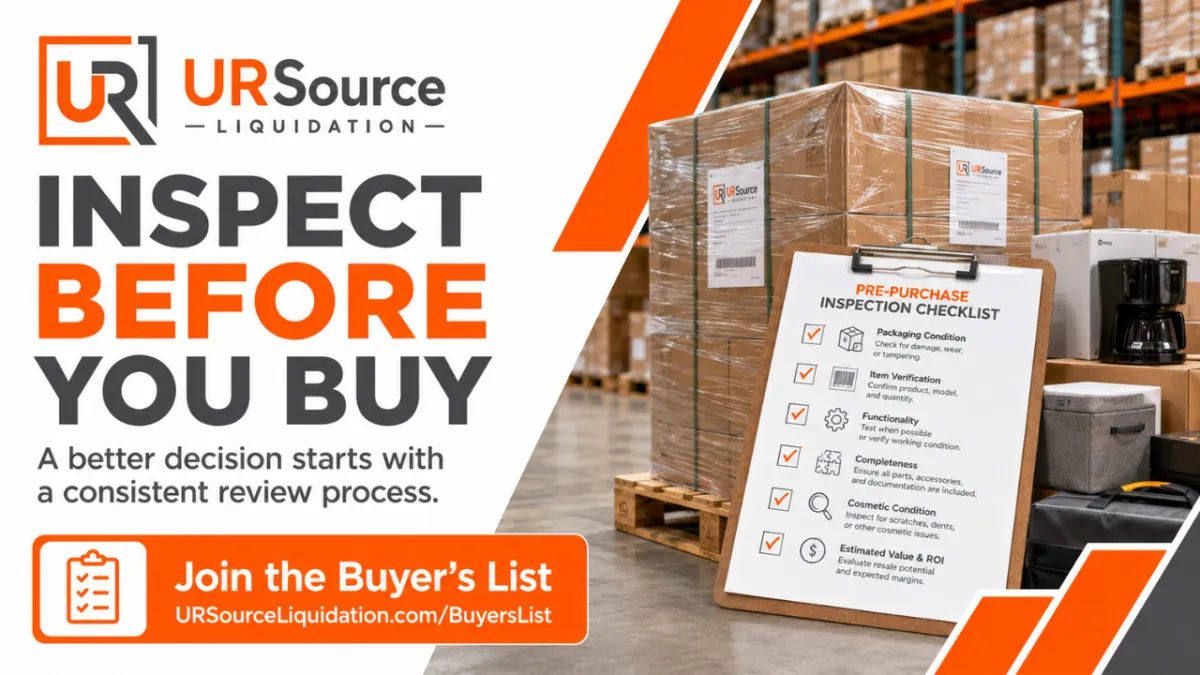
New Liquidation Inventory Inspection Checklist for Smarter Buying Post
A liquidation opportunity can look promising in a few photos and still create problems after purchase if important details were missed. For resellers, the goal is not to eliminate every unknown. It is to review the available information consistently before committing cash, storage space, transportation, and labor.
A liquidation inventory inspection checklist helps separate confirmed facts from assumptions. The same process can be used whether you sell online, at flea markets, through a discount store, or across several resale channels. Before buying, review the photos, category and quantity information, stated condition, packaging and parts, and pickup requirements.
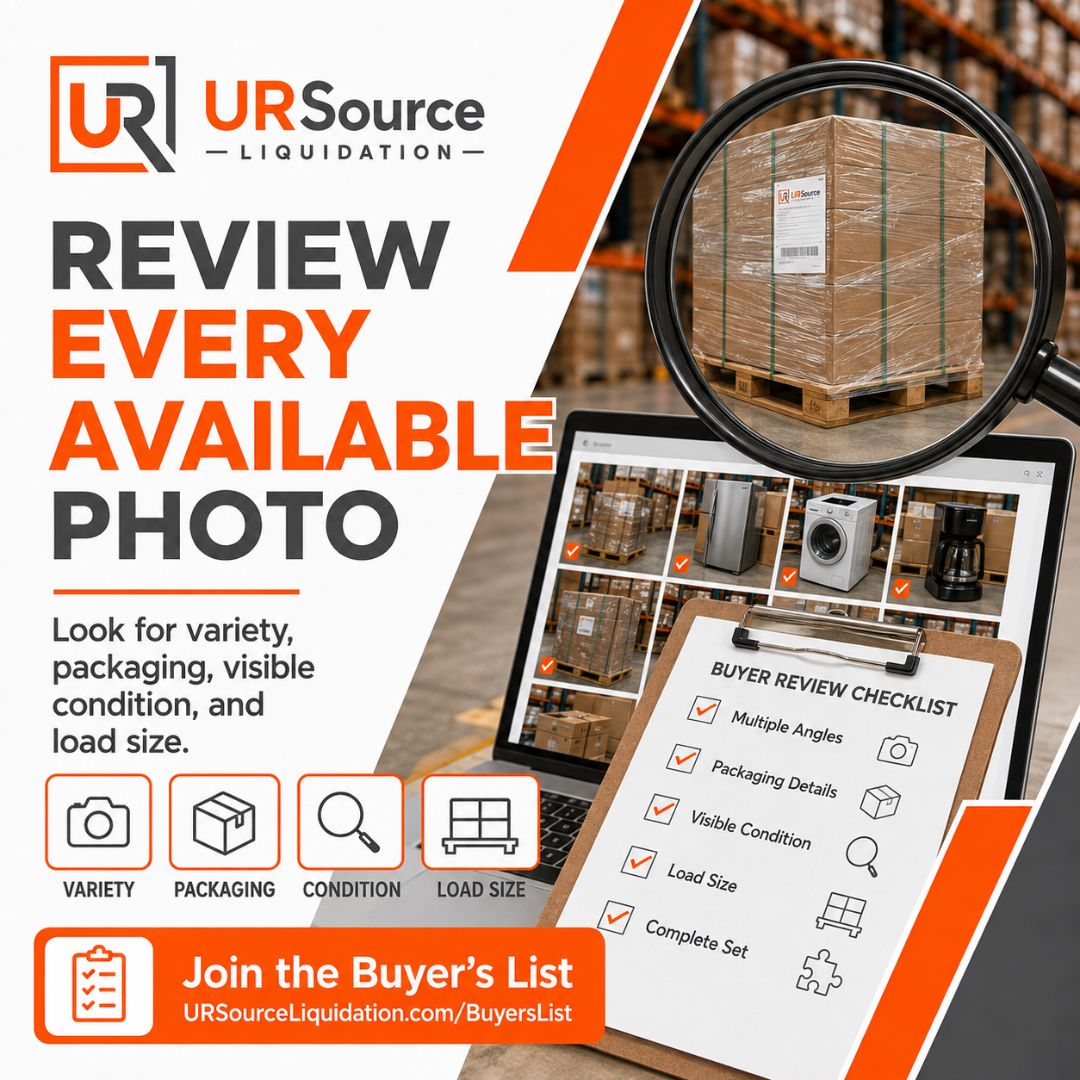
Review Every Available Photo
Do not make a buying decision from the first image that catches your attention. Review every available photo and look for information that affects both resale potential and workload.
Start with the overall variety shown. Are the images consistent with the category description? Do you see a narrow product mix or a broader assortment? Then look at packaging. Items may appear boxed, loose, wrapped, or prepared differently. Those differences can affect sorting, storage, presentation, and processing time.
Visible condition clues matter too, but photos should be treated as evidence rather than guarantees. Look for obvious damage, packaging wear, irregular stacking, or other visible details. Avoid assuming that an item is complete, functional, or in a particular condition simply because a photo looks clean.
Also consider the apparent size of the load. Photos can help you think through handling and storage, but they should not replace stated quantity or pickup information. If an important detail cannot be confirmed, put it on your list of unanswered questions instead of guessing.
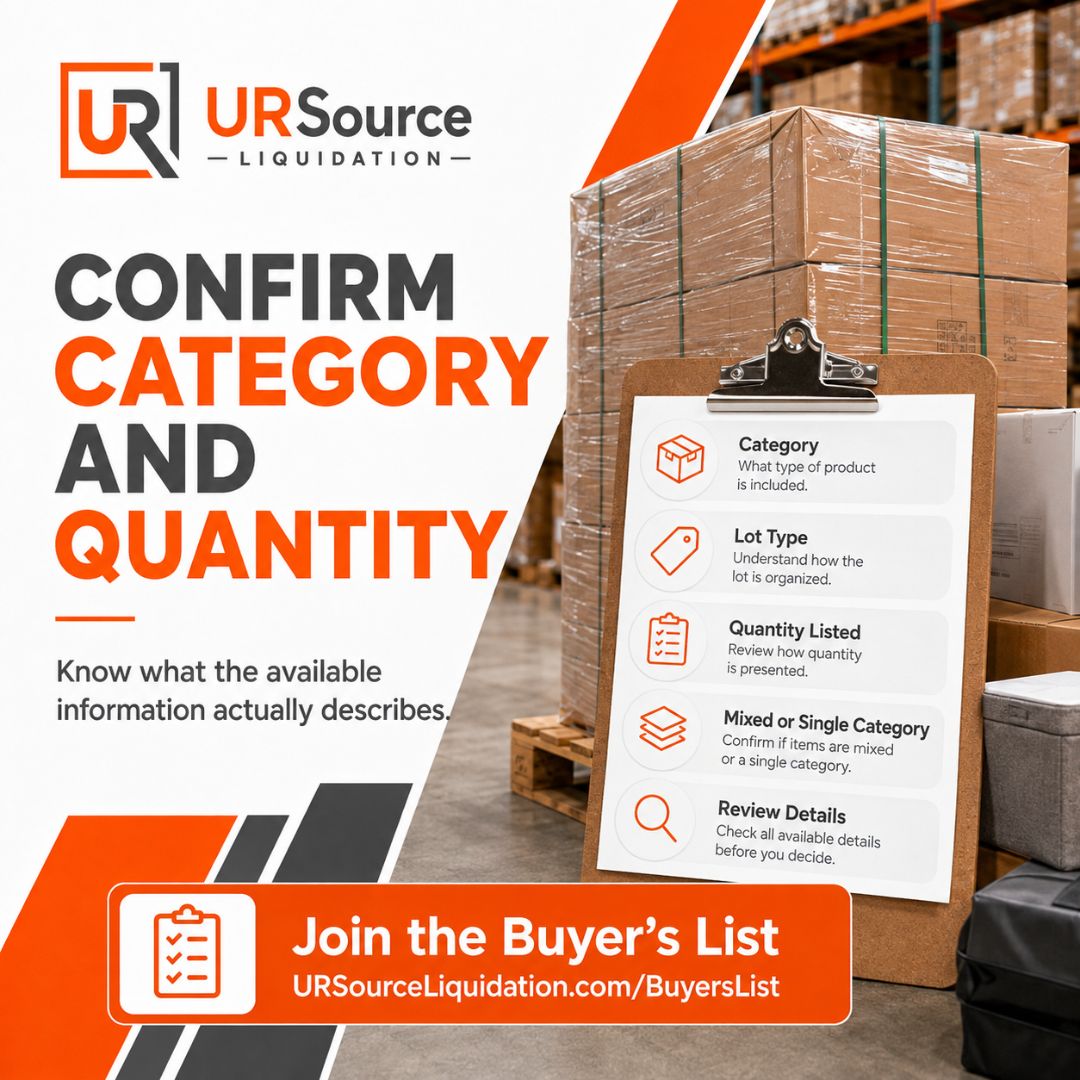
Confirm Category and Quantity
Category and quantity influence who may buy the merchandise, how you will sort it, how much space it may require, and which sales channels make sense.
Read the available description carefully and identify exactly what it confirms. If the information describes a category, do not assume every item belongs to it unless the details say so. If a quantity is provided, plan around that information rather than estimating an exact count from photos.
This matters especially with mixed lots and bulk inventory. Variety can create more selling paths, but it can also increase sorting, pricing, and merchandising work. Volume that looks manageable at first may require more receiving space or processing time than expected.
Your inspection should answer one basic question: Do you understand what the available information actually describes? If not, identify which missing details would materially affect the decision.
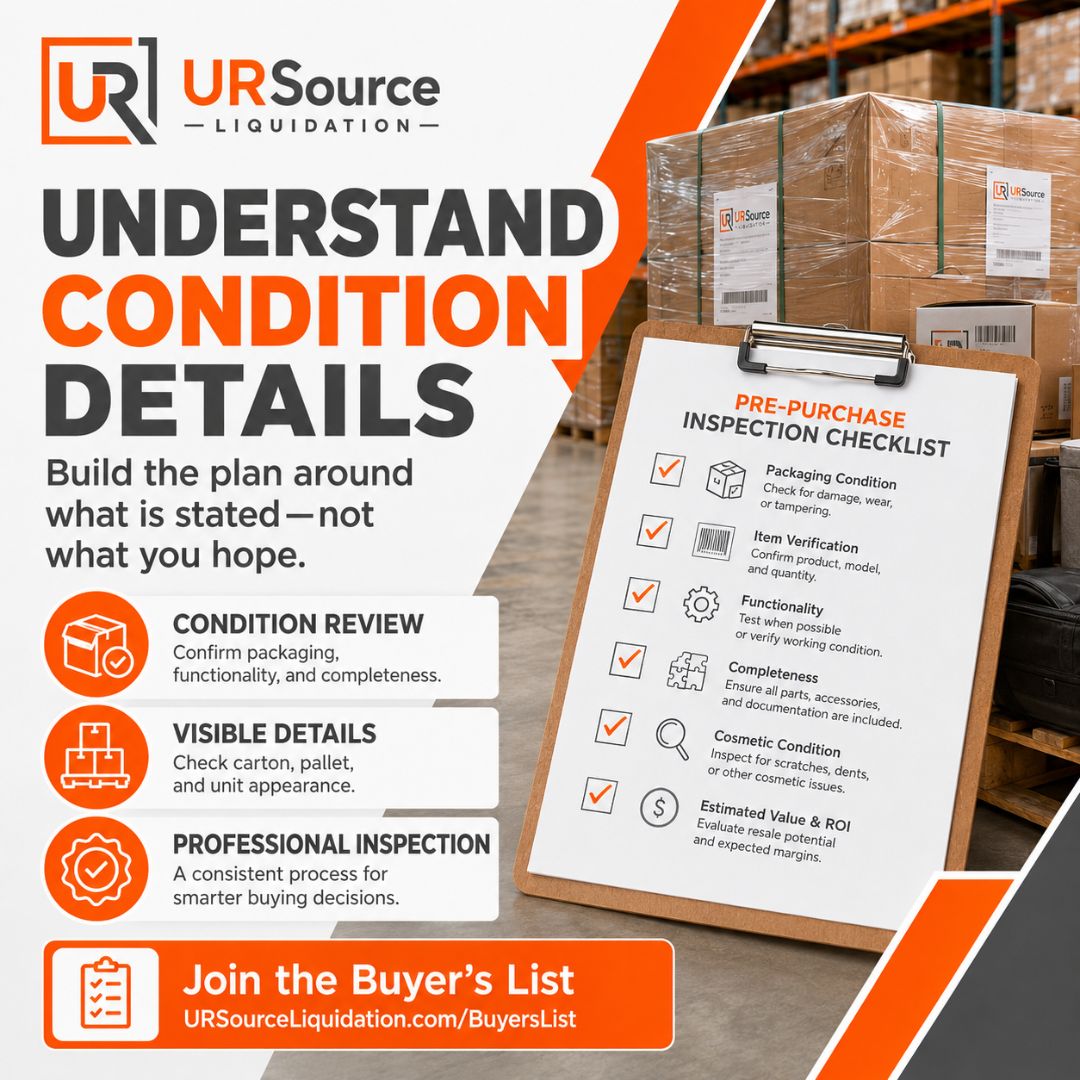
Understand Condition Details
Condition can change inventory value, labor requirements, customer expectations, and the sales channel you choose. That makes it one of the most important parts of a liquidation inventory inspection checklist.
Use condition details exactly as they are provided. Do not mentally upgrade them because you hope the merchandise will be better than described, and do not assume broad terms tell you more than they actually do.
Build your plan around the possibility that some inventory may need additional inspection, testing, cleaning, repackaging, or an alternate sales path when information is limited. Condition information should be reviewed for each opportunity because every load may be different.
Profit is never determined by purchase price alone. Results can depend on condition, missing parts, transportation, labor, storage, platform fees, demand, pricing, processing speed, and sell-through time. Accounting for those variables before purchase helps you judge whether an opportunity fits your business.
Check Packaging and Parts
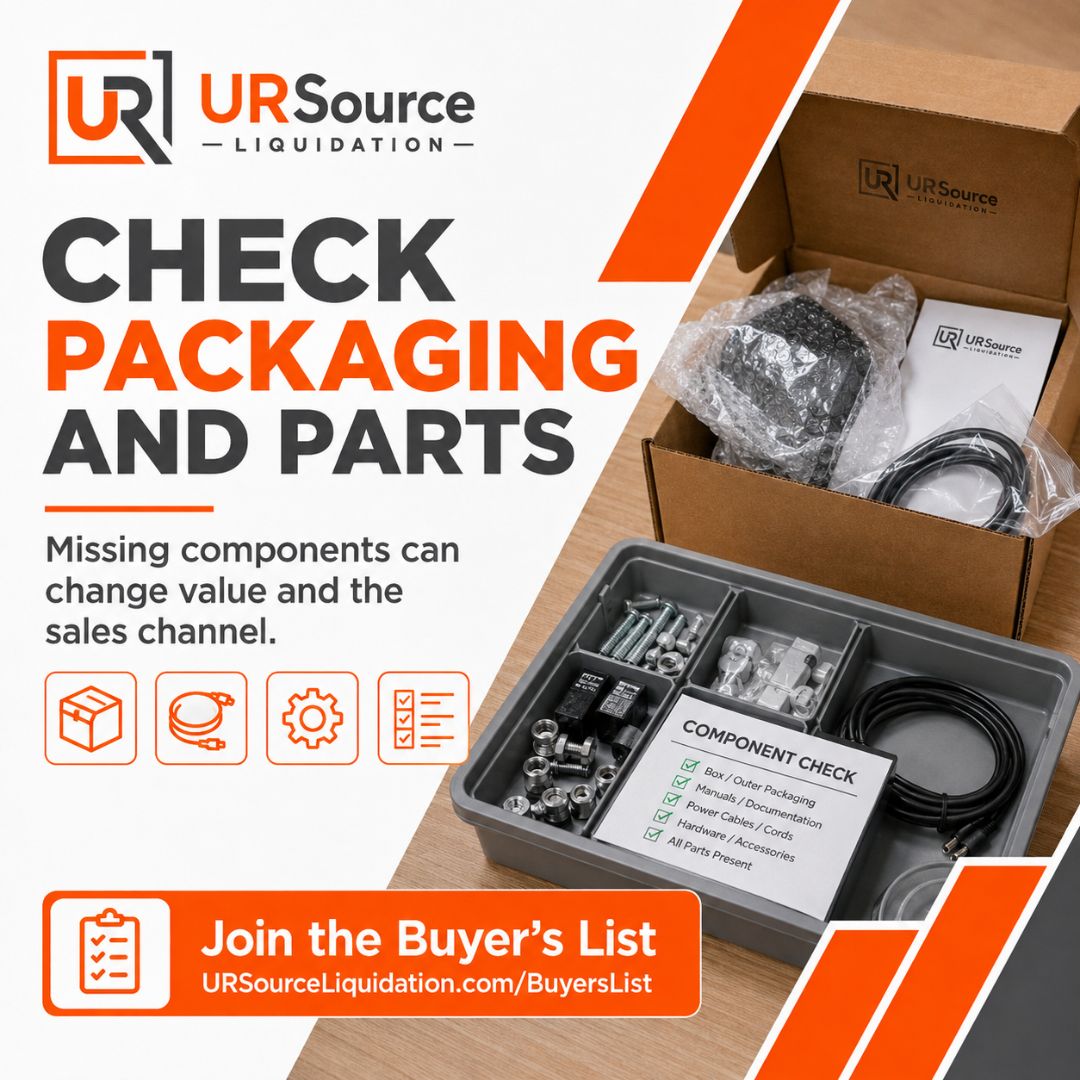
Packaging and included components can affect resale value and buyer expectations. Review the available photos and written details for anything that confirms whether packaging, accessories, chargers, batteries, manuals, hardware, or other components are included.
The key word is confirms. If a part is not shown or described, do not automatically assume it is included.
Missing components may change how an item can be sold. An incomplete product may require a different price, replacement parts, bundling, or another sales channel. Damaged or missing packaging can also affect presentation, especially for online sellers who need accurate photos and descriptions.
Think about the labor attached to incomplete inventory as well. Finding compatible parts, testing items, creating accurate listings, and answering customer questions all take time. A lower purchase cost does not automatically make that extra work worthwhile.
Verify Pickup Requirements
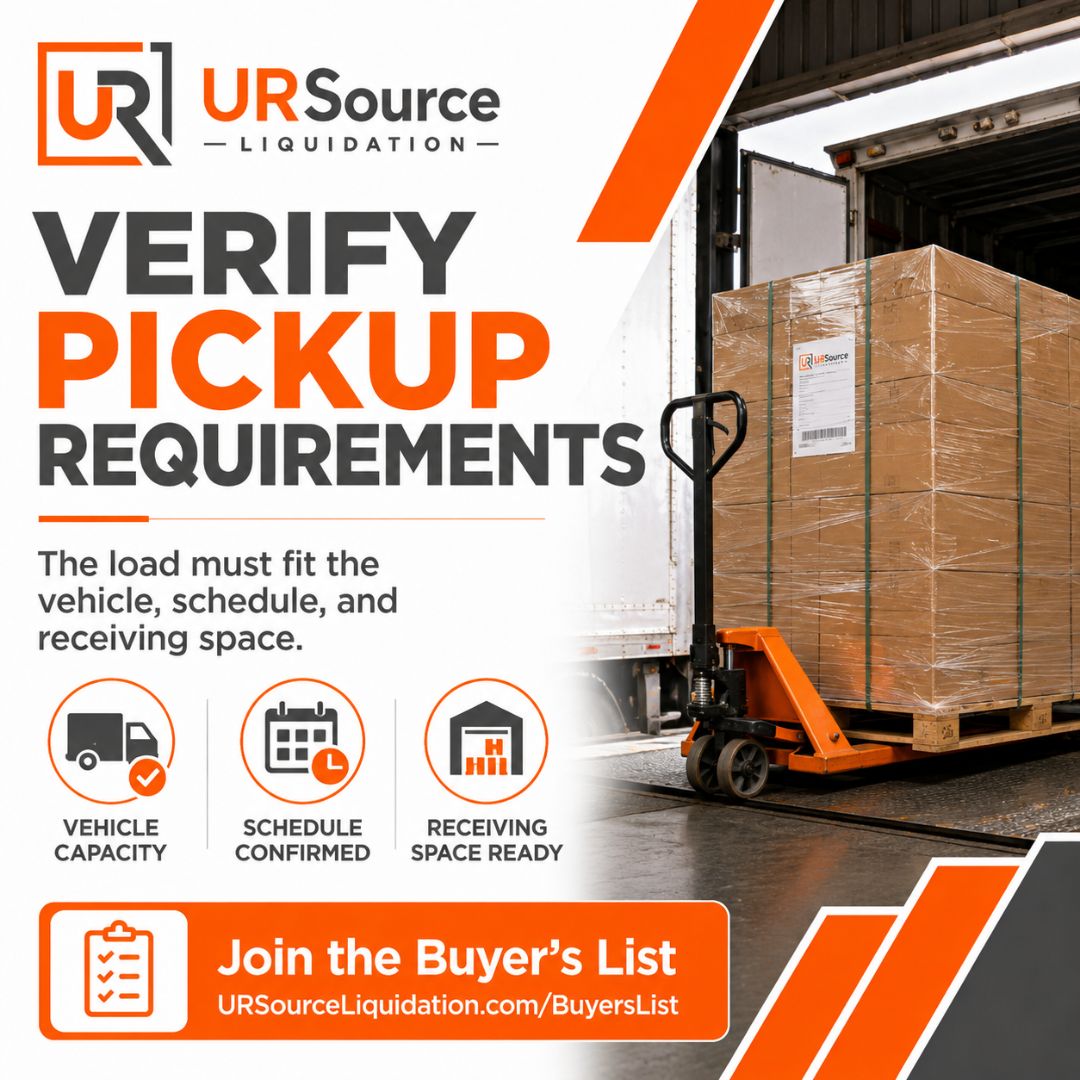
A good inventory opportunity still has to fit your logistics. Before committing, review the available pickup information and make sure the load fits your vehicle, schedule, unloading plan, and receiving space.
Consider what you need to move and receive the inventory efficiently. Do you have enough vehicle capacity? Is your storage area ready? Will the inventory need immediate sorting, or can it be received without disrupting merchandise you already have?
If you are reviewing an opportunity connected with URSource Liquidation in San Marcos, Texas, use the pickup details provided for that specific opportunity rather than assuming the requirements will be the same every time. Availability and logistics can change, so current information should guide the plan.
Pickup is part of the total commitment, not an afterthought. Transportation, unloading needs, helpers, storage, and processing time can all influence whether the purchase works for your operation.
Make the Checklist Part of Every Buying Decision
Strong liquidation buying is less about finding a perfect load and more about making consistent decisions with the information available. Review every photo. Confirm category and quantity. Use the stated condition details. Check packaging and parts. Verify pickup requirements before you commit.
A liquidation inventory inspection checklist gives you a repeatable process for comparing opportunities without relying on excitement or assumptions. Keep it close, refine it as your resale business learns, and use it whenever new inventory becomes available.
Keep this inspection checklist ready for your next inventory opportunity. Join the URSource Buyer’s List so that when new inventory information becomes available, you can review the photos, condition details, packaging, quantity, and logistics against the same buying standards before making a decision.
