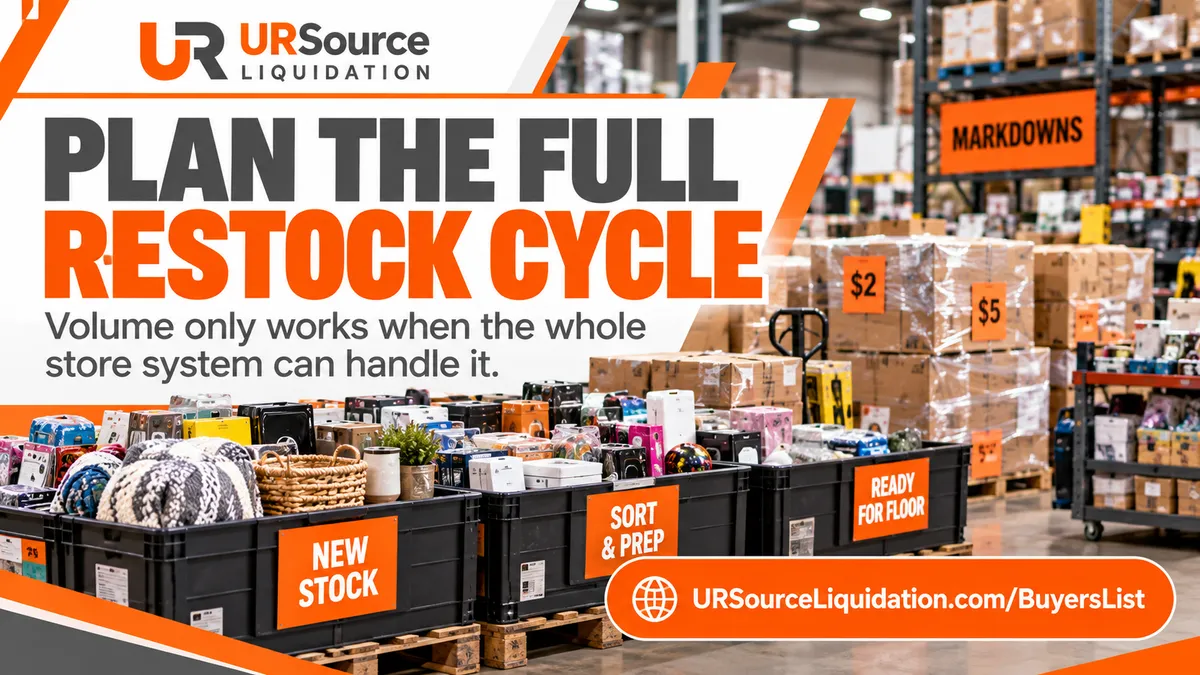
Liquidation Inventory Planning for Bin Stores and Discount Stores
A large inventory opportunity is only useful when your store can actually process, price, display, and sell it.
For bin stores and discount stores, volume creates opportunity, but it can also create problems when the rest of the operation cannot keep up. Merchandise may arrive faster than the team can sort it. Floor space can become crowded. Leftovers from one cycle may compete with the next restock. Cash can remain tied up longer than expected.
Effective liquidation inventory planning for bin stores and discount stores means looking at the complete restock cycle before committing to inventory. The purchase needs to work with your price model, customer experience, labor capacity, available space, and the timing of future loads.
For stores sourcing liquidation inventory around San Marcos, Texas and Central Texas, each opportunity may be different. The goal is to evaluate how well the inventory fits the system you already use to move merchandise.
Match Cost to the Price Model
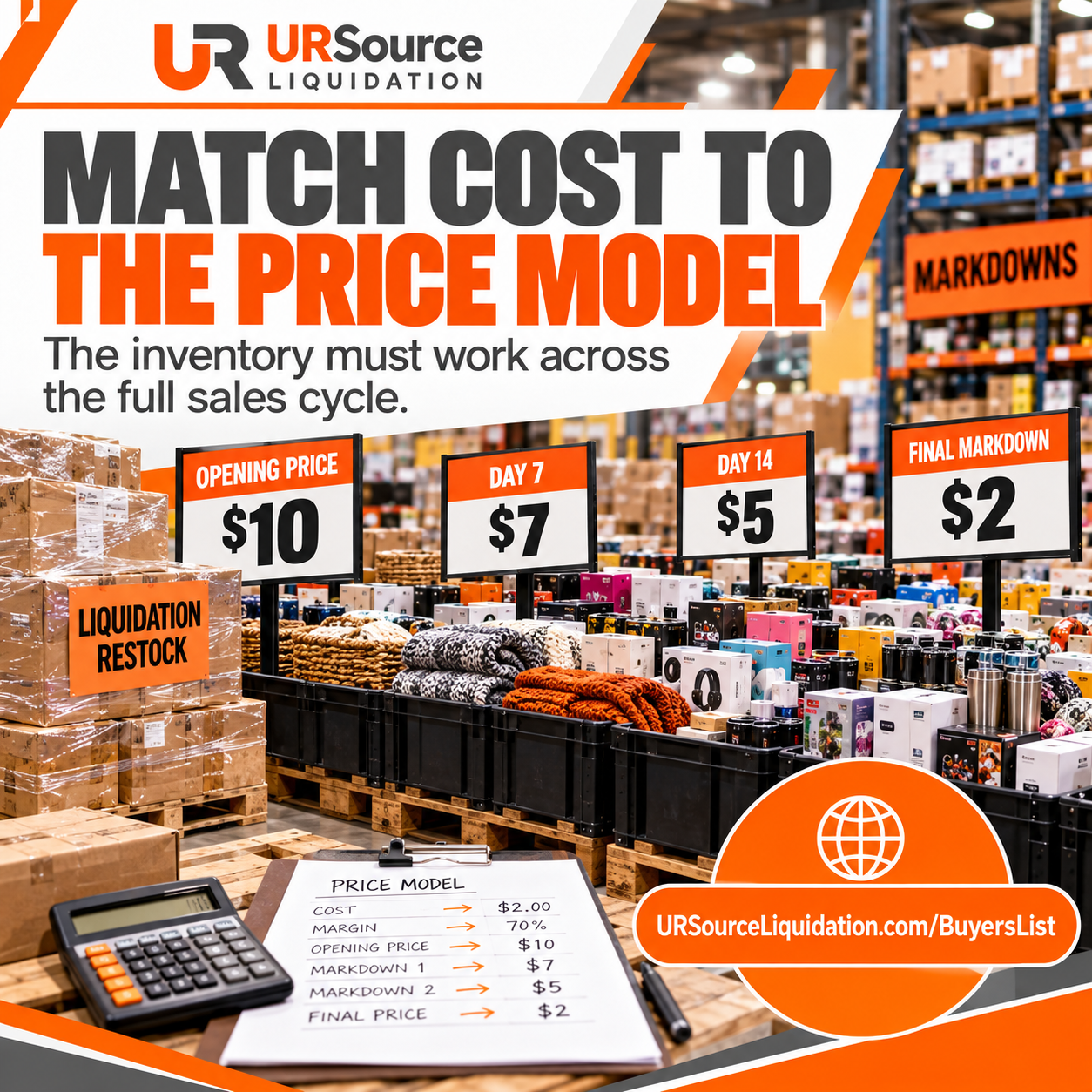
Your inventory cost has to work across the entire sales cycle, not just the first day merchandise reaches the floor.
Many bin and discount store models depend on changing price points, markdowns, clearance, or other methods for moving inventory over time. When evaluating a load, consider how much merchandise may realistically sell at earlier price points and what could remain later in the cycle.
The initial purchase price is only part of the calculation. Transportation, unloading, sorting, labor, store operations, shrink, damaged or unsuitable merchandise, and unsold items can all affect the final result.
A load that only works financially if nearly everything sells at the highest price point may leave very little room for normal markdowns or slower-moving merchandise.
Before committing to bulk inventory, compare the cost with the way your store actually sells. A realistic price model helps you decide what the inventory can support throughout the full cycle rather than relying on the most optimistic outcome.
Variety Creates the Hunt
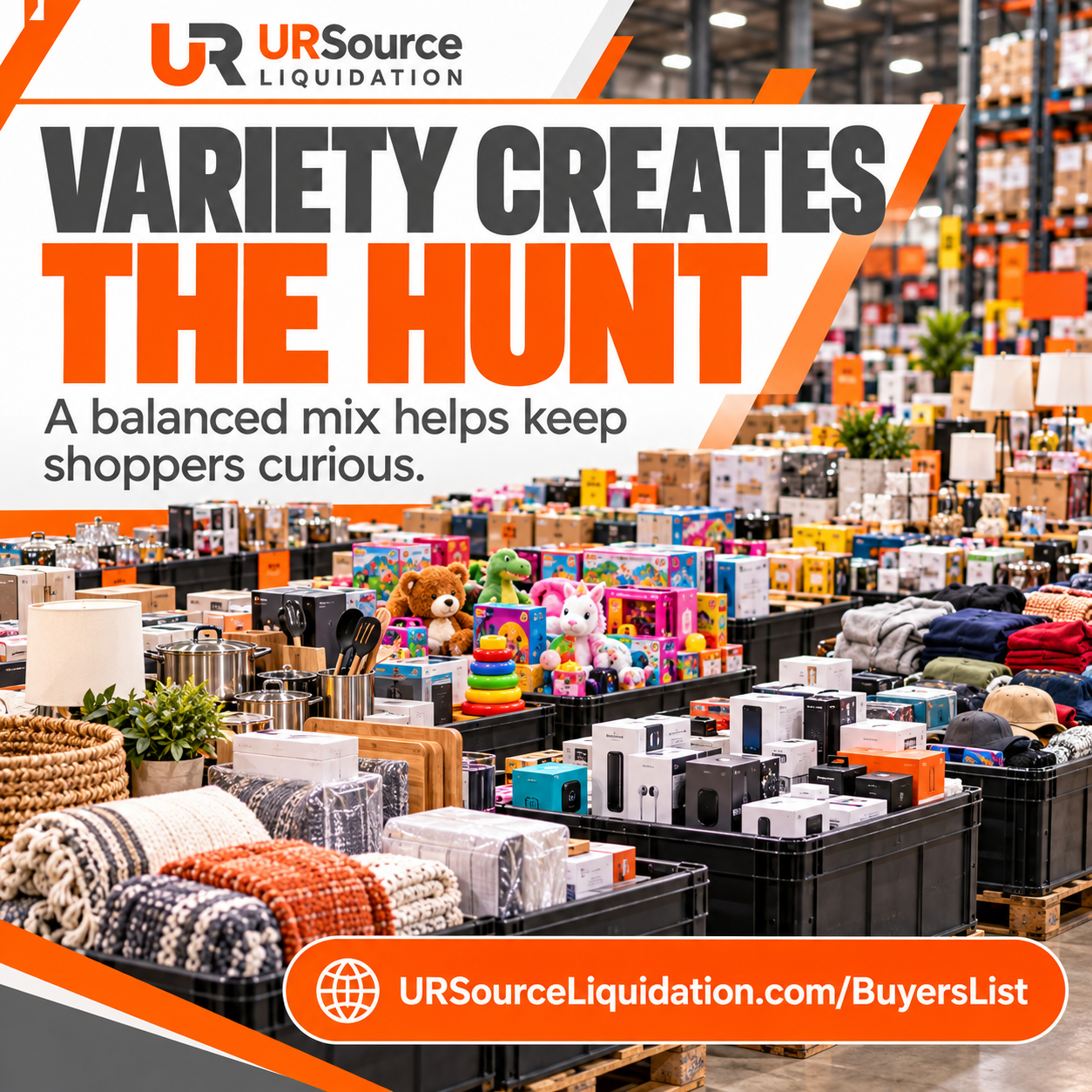
Part of the appeal of a bin or discount store is discovery. Customers often want to feel that there is something new to find when they visit.
Variety can help create that experience, but variety alone is not enough. The merchandise still needs to fit your shoppers, floor setup, pricing structure, and processing ability.
A balanced mix may make the store more interesting than having too much inventory concentrated in one narrow category. At the same time, bringing in merchandise simply because it is different can create problems if your customers have little interest in it.
Pay attention to what shoppers pick up, what sells earlier in the cycle, what remains after markdowns, and what customers regularly ask about. Those observations can help shape future inventory sourcing decisions.
The goal is not random variety. It is variety that keeps the shopping experience fresh while remaining practical for the business.
Processing Speed Sets the Limit
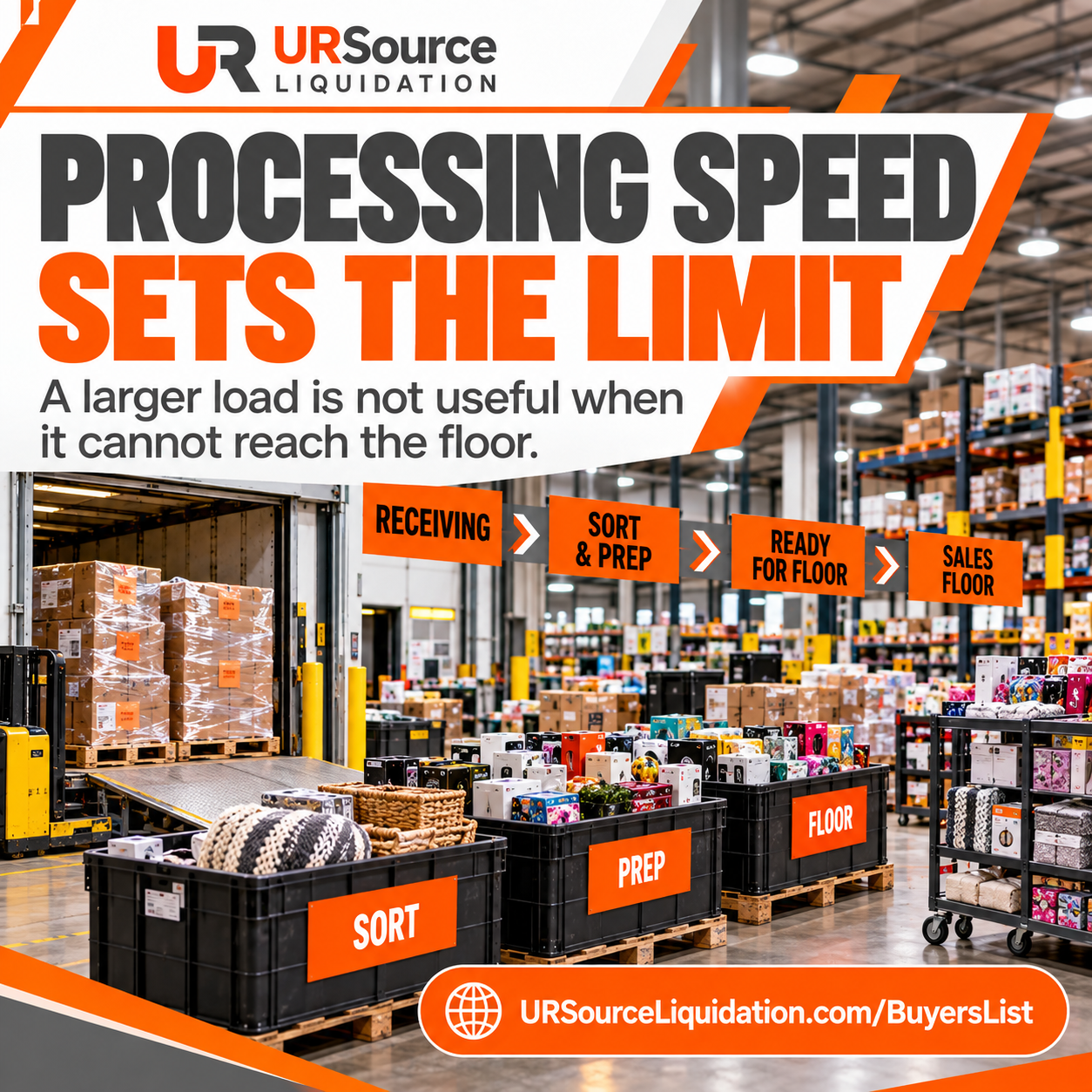
The size of a load should be determined partly by how quickly your team can turn incoming inventory into merchandise that is ready for customers.
A larger purchase does not automatically create more sales if most of it remains in the back room.
Think through the work required after inventory arrives. Merchandise may need to be unloaded, sorted, inspected, separated, cleaned when appropriate, organized, labeled, staged, or placed into bins and displays.
Every additional step requires time and labor.
If your team regularly receives more inventory than it can process before the next restock, the backlog can become part of the store's operating problem. Floor resets may be delayed, storage space may disappear, and new inventory may become harder to manage.
Your processing speed is therefore part of your buying capacity. Knowing that limit helps you choose inventory volume based on what the store can actually handle, not simply on what is available.
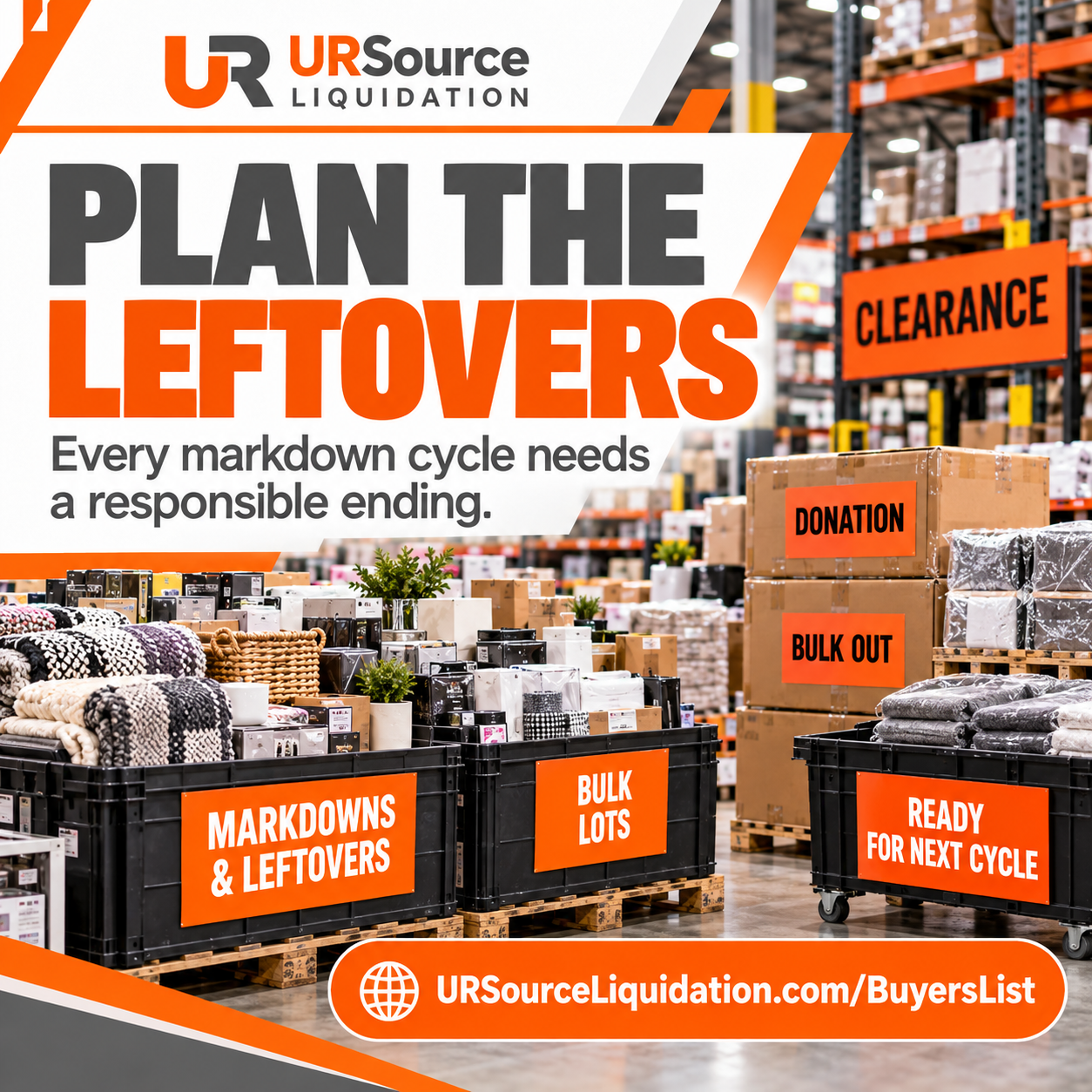
Plan the Leftovers
Every restock cycle eventually reaches merchandise that did not move as quickly as expected.
Leftovers should have a plan before the next load arrives.
Depending on the inventory and your business model, remaining merchandise might be marked down, bundled, routed to another sales channel, sold in bulk, donated, recycled, or otherwise handled responsibly.
The important part is deciding how the cycle ends.
Without an exit strategy, older inventory can consume floor and storage space while new merchandise continues arriving. That can make the store feel crowded and reduce the space available for fresh inventory.
Tracking leftovers also provides useful information. If certain categories consistently remain after the markdown cycle, that pattern can help you adjust future purchasing decisions.
A clear ending to each cycle makes room for the next one and helps prevent unsold inventory from quietly building up.
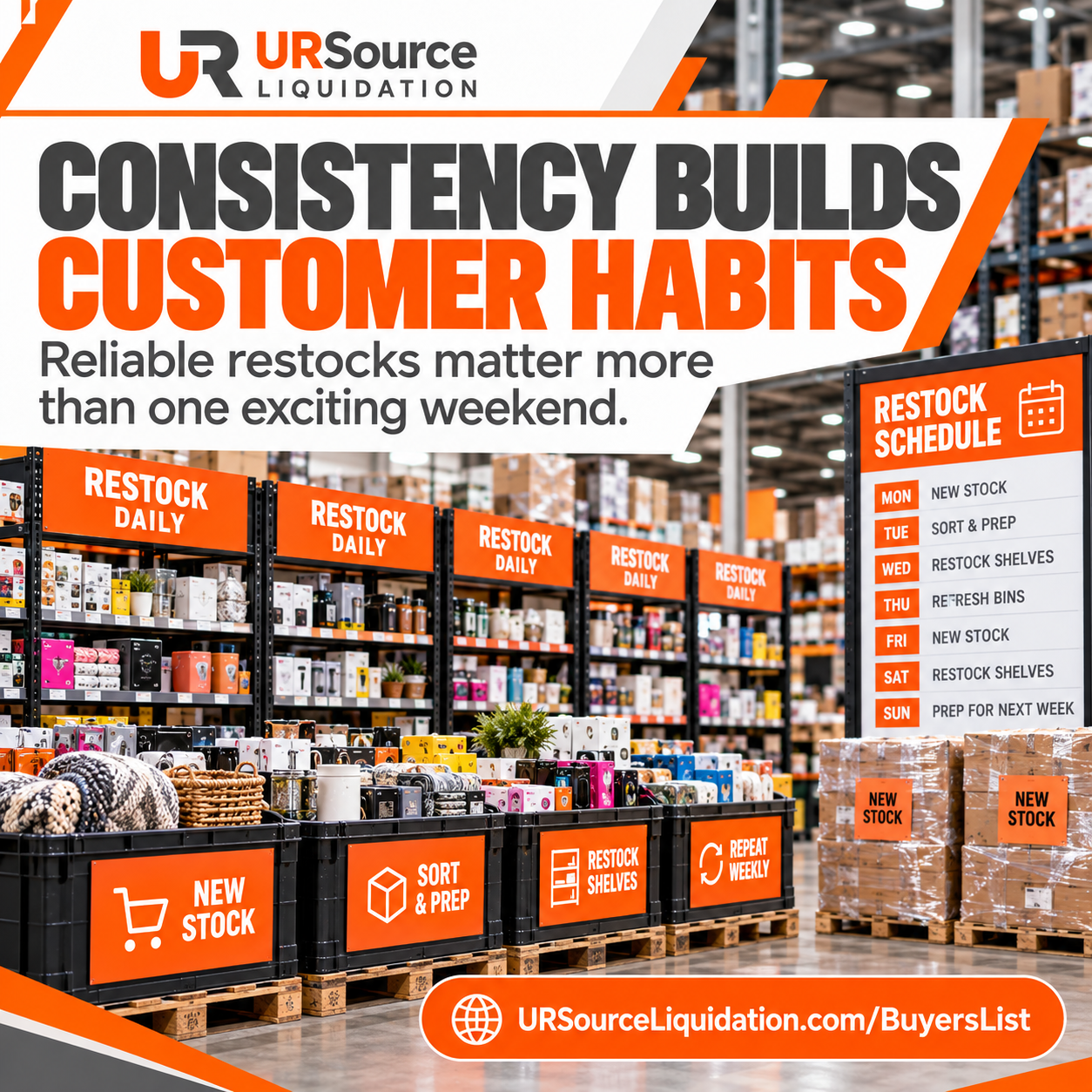
Consistency Builds Customer Habits
One unusually exciting restock can create attention. Consistent restocks are what help customers build a shopping routine.
When shoppers understand when fresh merchandise typically reaches the floor, they have a reason to return. That consistency can be more valuable operationally than purchasing a very large load that disrupts the schedule and takes too long to process.
Reliable restocks depend on coordination between inventory sourcing, transportation, receiving, processing, floor preparation, pricing, markdowns, and leftover management.
That is why restock planning should look beyond one purchase.
Consider whether the inventory opportunity allows you to maintain the pace your store can support. A steady system makes it easier to manage labor, floor space, and future buying capacity while giving customers a more predictable shopping experience.
Plan the Whole Restock Cycle
Strong liquidation inventory planning for bin stores and discount stores starts before the merchandise reaches the building.
Evaluate whether the cost fits your price model, whether the variety matches your customers, whether your team can process the volume, and what will happen to merchandise that remains at the end of the cycle.
Results can depend on purchase cost, transportation, labor, storage, condition, store expenses, customer demand, pricing, processing speed, and sell-through time. No single load should be evaluated only by its size or apparent retail value.
The better the inventory fits the complete store system, the easier it is to maintain a practical and repeatable restock process.
Find Inventory That Fits Your Restock Capacity
Before your next restock, know the price range your store needs, how much merchandise your team can process, how much floor and storage space is available, and how you plan to handle leftovers.
Join the URSource Liquidation Buyer’s List to stay connected to inventory opportunities, then compare each one against your actual pricing cycle and restock capacity.
Frequently Asked Questions
1. What should bin and discount stores consider before buying liquidation inventory?
Look at more than the size of the load. Consider your pricing cycle, customer demand, processing capacity, floor space, storage, labor, transportation, and how leftover merchandise will be handled.
2. Why does the price model matter when planning a restock?
Your inventory cost has to work across the full sales cycle, including opening prices, markdowns, clearance, and unsold items. A purchase should still make sense after labor, operating costs, shrink, and other expenses are considered.
3. How much inventory should a bin store buy at one time?
The right amount depends on how quickly your team can unload, sort, inspect, organize, and place merchandise on the floor. Buying more than your team can process may create backlogs and take up valuable storage space.
4. Why is product variety important in bin and discount stores?
Variety helps create the “hunt” that keeps shoppers interested. A balanced mix can make the store feel fresh, but the inventory should still fit your customers, price points, and store setup.
5. Can too much variety be a problem?
Yes. Variety only helps when the merchandise is relevant to your shoppers and manageable for your team. Too many unsuitable categories can create slower sell-through and more leftovers.
6. How does processing speed affect restock planning?
Processing speed determines how much inventory your operation can realistically handle. A larger load is not useful if merchandise sits in the back room instead of reaching the sales floor.
7. What should stores do with leftover inventory?
Create an exit plan before the next restock. Depending on the merchandise, leftovers may be marked down, bundled, moved to another sales channel, sold in bulk, donated, recycled, or otherwise handled responsibly.
8. Why are consistent restocks important?
Consistency helps customers build shopping habits. A reliable restock schedule can give shoppers a reason to return regularly and can be easier for your team to manage than occasional oversized loads.
9. How can a store improve future inventory decisions?
Track what sells early, what requires markdowns, what remains at the end of the cycle, and what customers ask for. Those patterns can help guide future inventory sourcing and restock decisions.
10. Where can bin and discount stores find liquidation inventory opportunities?
Join the URSource Liquidation Buyer’s List to stay connected to inventory opportunities. Review each opportunity based on your pricing model, processing speed, floor space, customer demand, and leftover plan before purchasing.
