Liquidation Inventory Profit Planning and Total Cost Analysis
An inventory opportunity can look profitable until the actual cost of selling it becomes clear. A low purchase price may be offset by transportation, processing work, damaged merchandise, platform fees, or items that sit unsold for months. Retail value alone cannot show whether a purchase makes sense.
Effective liquidation inventory profit planning starts before you buy. The goal is to estimate what customers will realistically pay, how much of the inventory can be sold, what expenses you will absorb, and how quickly your investment may return as cash.
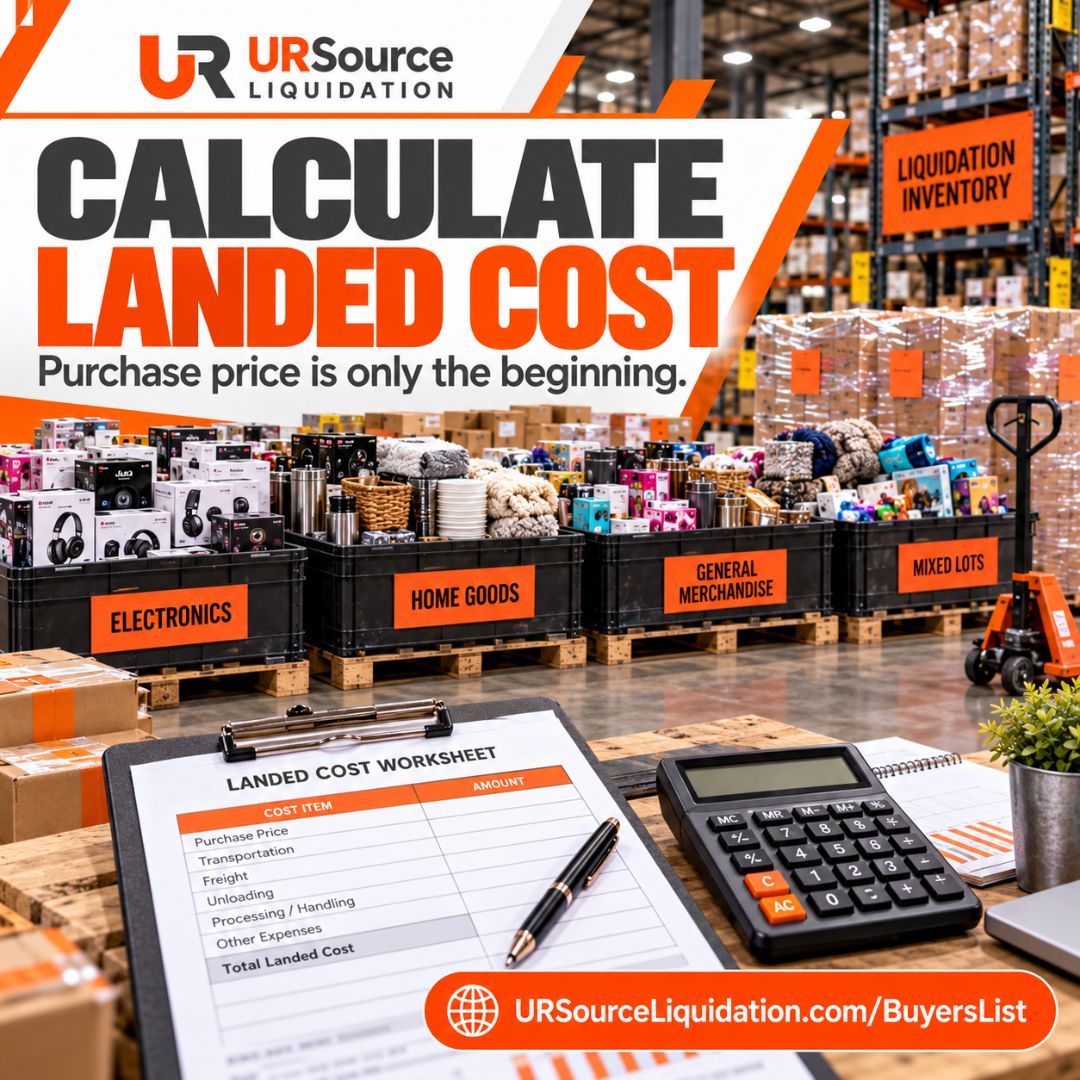
Calculate Landed Cost Before Estimating Profit
The purchase price is only one part of your inventory investment. Landed cost generally includes what you pay for the merchandise plus expenses required to get it to your selling location, such as applicable freight, transportation, fuel, and unloading.
Keep acquisition costs separate from the expenses of preparing and selling inventory. You may also need to account for testing, cleaning, supplies, storage, labor, payment processing, marketplace commissions, and shipping costs you absorb.
For a useful projection, calculate:
Projected profit = expected sales revenue − purchase cost − all other estimated expenses.
Do not treat your own labor as free simply because you are doing the work. Sorting, listing, packing, and customer service all require time.
Track both the total estimated cost and the cost per realistically sellable item. If some merchandise will not produce revenue, dividing expenses by every item in a lot can make the unit economics look better than they are.
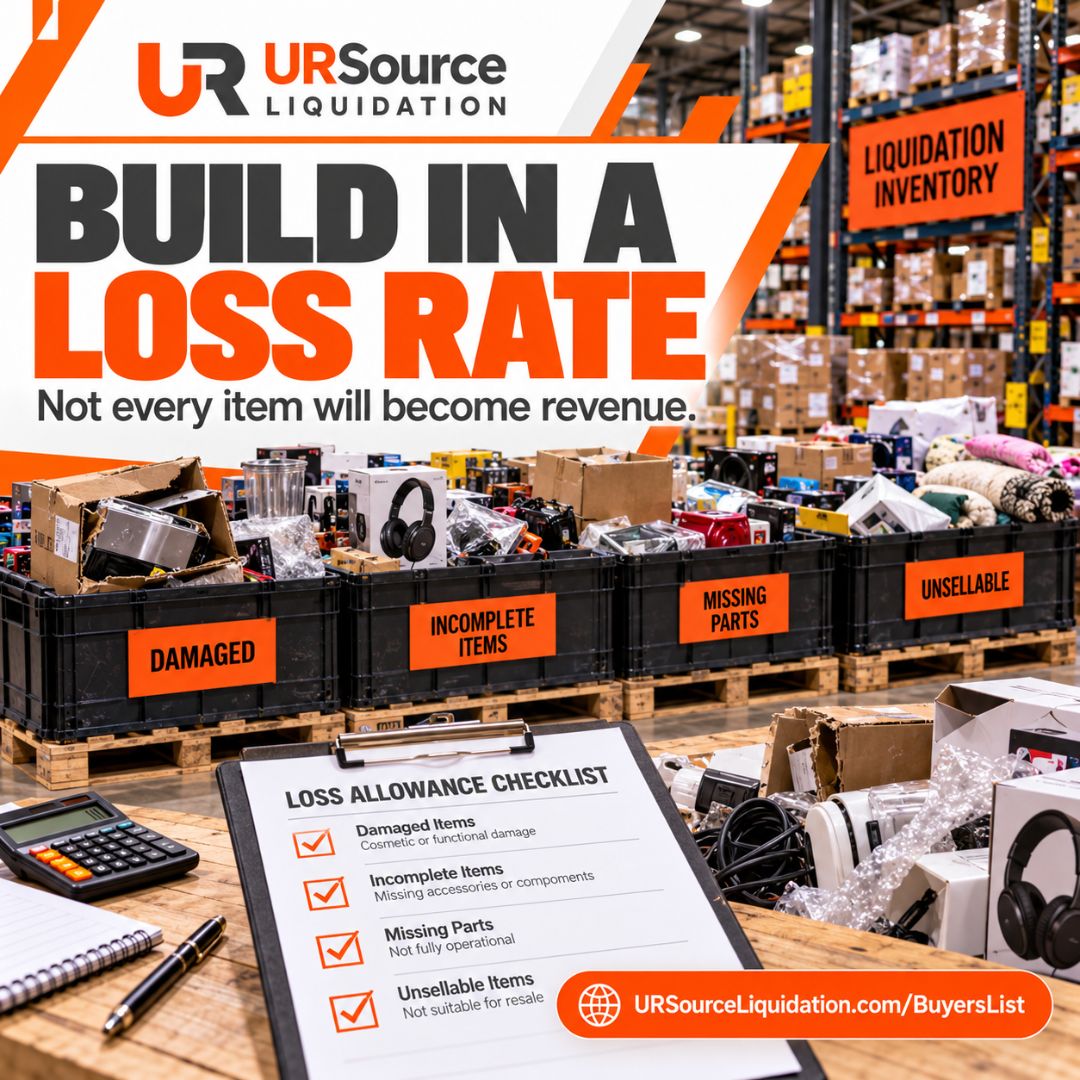
Build a Loss Rate Into Your Recovery Estimate
Not everything you purchase will become a completed sale. Depending on the opportunity, merchandise may be damaged, incomplete, missing essential parts, unsuitable for your customers, or too time-consuming to prepare.
A loss allowance prevents your projection from assuming perfect recovery. Estimate the share of inventory that can realistically be sold, then separate items likely to sell at normal prices from those requiring markdowns, bundling, or another exit path.
Use information provided for the specific opportunity and your own previous results. If condition details are limited, use cautious assumptions.
Create conservative, expected, and favorable scenarios. Each should reflect different levels of sellable inventory and achievable revenue—not imaginary retail value. Avoid relying on the most favorable outcome.
Record actual recovery after every purchase so future estimates become more useful.
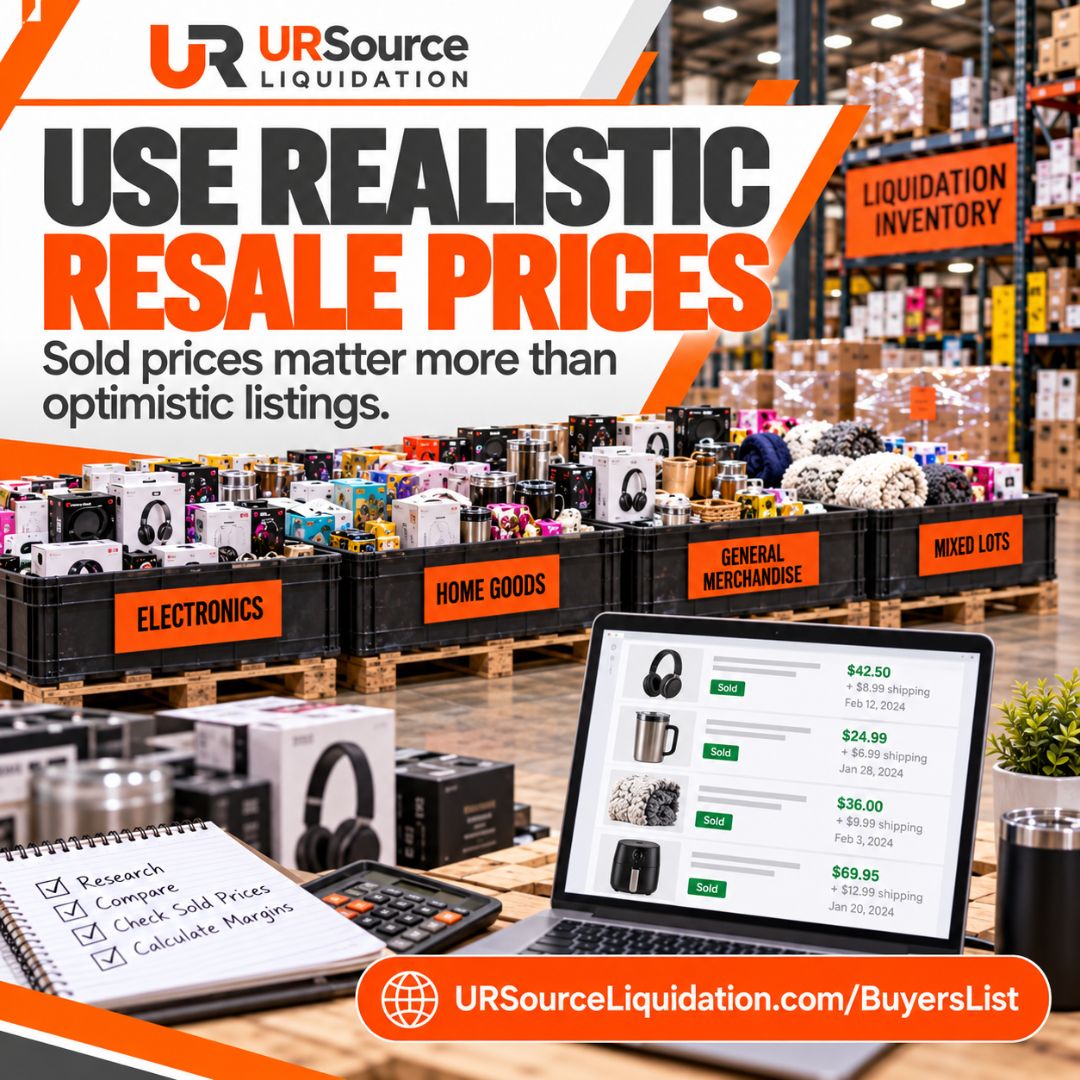
Use Realistic Resale Prices, Not Asking Prices
A high online listing price does not prove an item will sell for that amount. When available, look at completed sales, current buyer demand, comparable condition, included accessories, and prices accepted by customers in your particular market.
Different selling channels can produce different outcomes. An online seller may reach more buyers but incur listing work, platform fees, shipping, and customer-service costs. A flea market vendor or discount store may move an item locally at a lower selling price with a different expense structure.
Estimate the price customers are likely to pay after ordinary discounts or markdowns. Include realistic assumptions about condition and missing parts rather than pricing every item as complete or ready to use.
When evidence is limited, use a cautious range. Then calculate expected revenue from items you reasonably expect to sell—not from the entire estimated retail value of the lot.
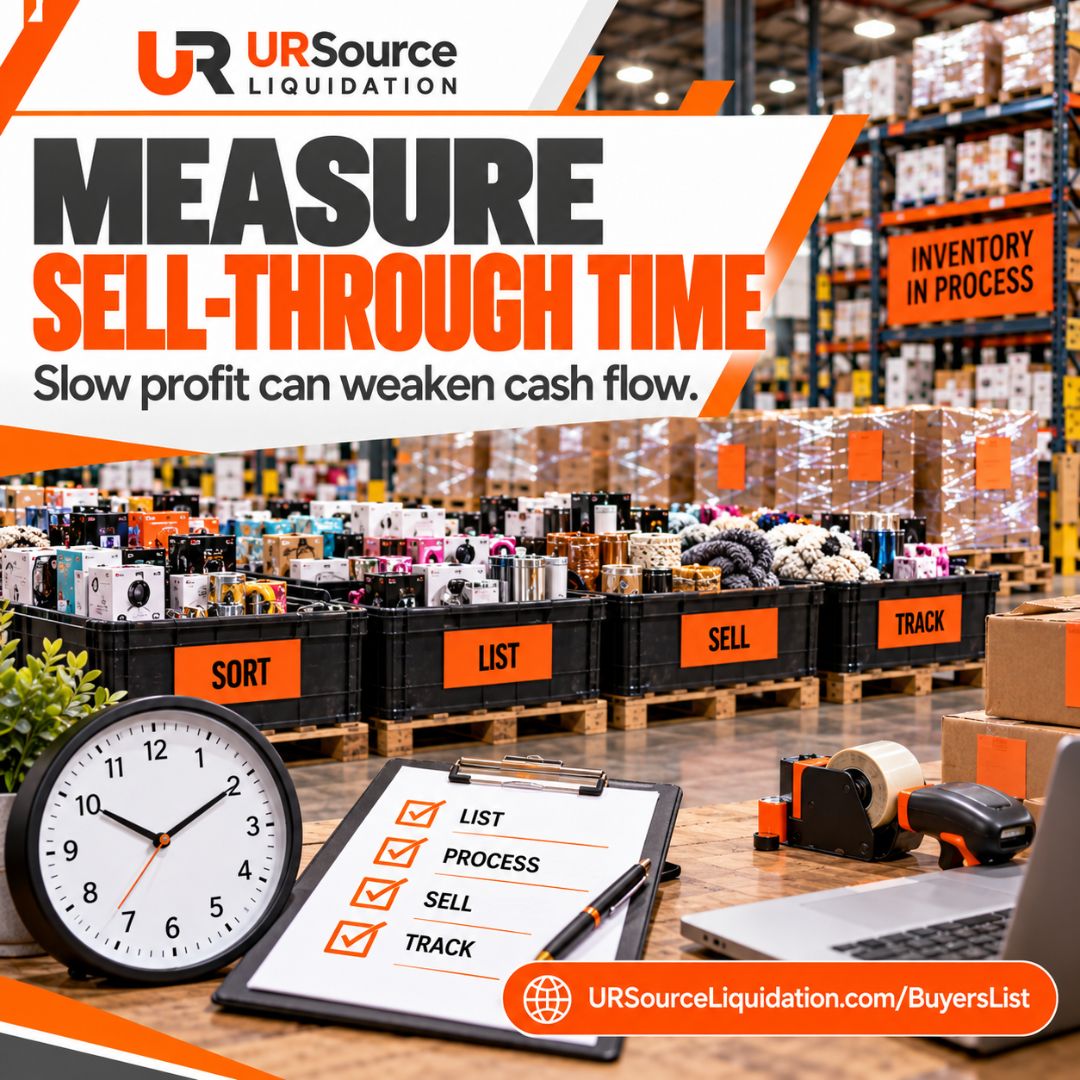
Measure Sell-Through Time and Its Effect on Cash Flow
Profit on paper is not the same as cash available for your next inventory purchase. Merchandise can eventually sell at an acceptable price while tying up money and storage space longer than your business can comfortably handle.
Before buying, ask how long the inventory may take to sort, list, display, and sell. Your processing capacity matters. A large lot may take longer to turn into revenue if you have limited shelf space, listing time, or customer demand.
Track how much inventory sells during each reporting period and how long the remainder stays in stock. Review aging merchandise regularly. A planned markdown, bundle, or alternate sales channel may recover cash sooner, even when that choice lowers the final selling price.
Holding inventory can increase operating costs. Consider when expenses must be paid versus when sales revenue is likely to arrive. That timing should influence both your buying budget and your required return.
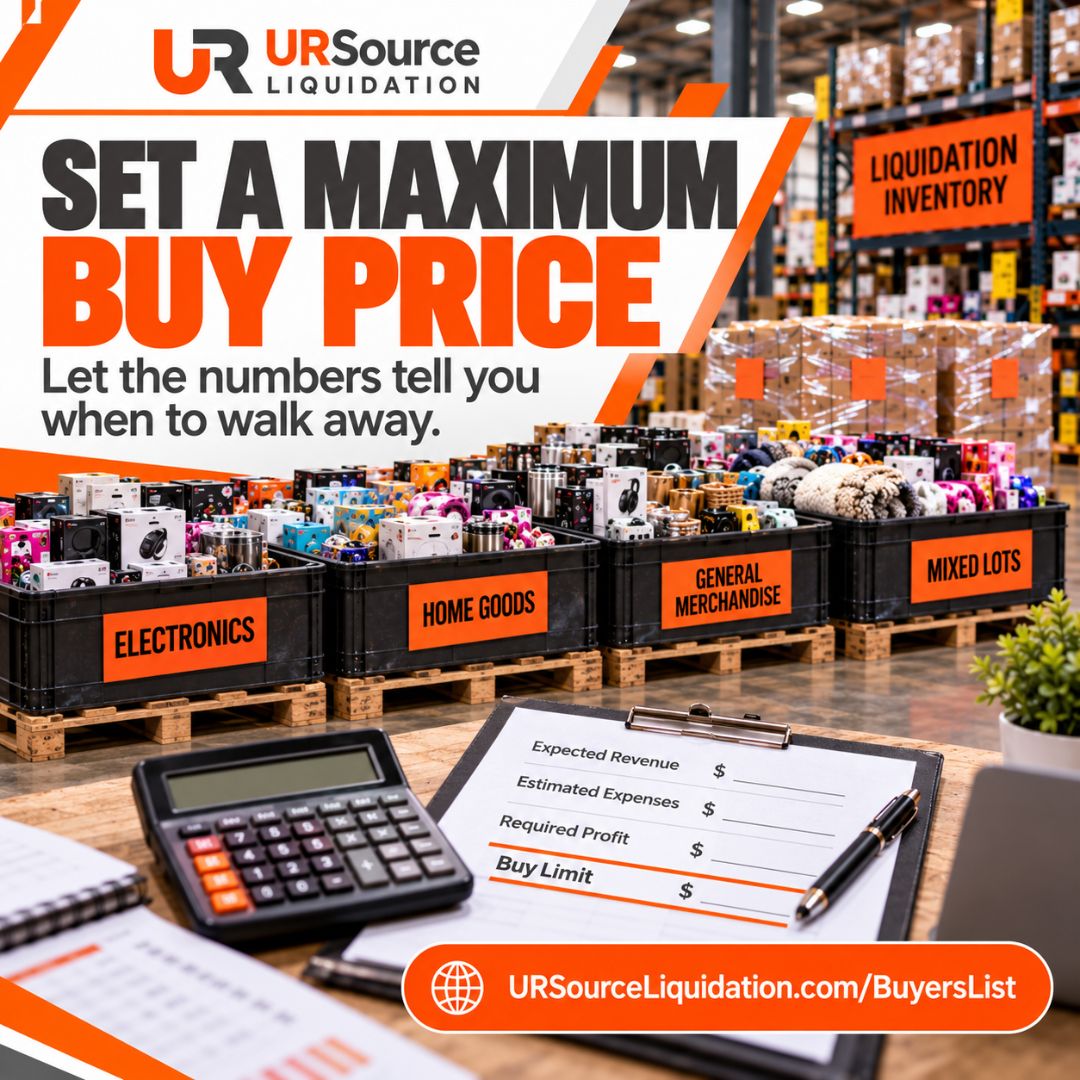
Set a Maximum Buy Price and Know When to Walk Away
Once you have realistic revenue and cost estimates, work backward to determine what you can afford to pay. The maximum buy price should protect enough room for expenses, uncertainty, and the profit your business needs.
Use this framework:
Maximum buy price = expected sales revenue − estimated expenses other than the purchase price − required profit.
Include transportation, labor, storage, selling fees, supplies, and any other expected costs in the expense estimate. Do not subtract a fee twice if you have already removed it from your revenue figure.
Recalculate using a more conservative recovery rate or lower resale prices. If a small change in demand, condition, or selling time erases your expected profit, the purchase may carry more risk than your budget allows.
Your limit is a decision rule. If the asking price exceeds your calculated ceiling, you can reconsider the opportunity or walk away. Preserve cash for better-fitting inventory.
Conclusion: Make the Numbers Guide Your Inventory Decisions
Strong liquidation inventory profit planning combines landed cost, expected losses, attainable resale prices, sell-through time, and a firm purchase limit. Review each opportunity on its own merits, because condition, demand, operating costs, and selling capacity can vary.
If you source inventory around San Marcos, Texas, or sell through local and online channels, keep a simple record of projected results versus actual sales. Accurate cost and recovery records improve future buying decisions.
Run the Numbers Before Your Next Purchase
Join the URSource Liquidation Buyer’s List to stay connected with potential inventory opportunities. When you review an opportunity, use your landed-cost estimate, expected recovery, sales timeline, and maximum buy price to decide whether it fits your business and available cash.
Frequently Asked Questions
1. How do you calculate profit on liquidation inventory?
To calculate liquidation inventory profit, subtract the total purchase cost and all additional expenses from your actual or projected sales revenue. Expenses may include transportation, labor, storage, processing, platform fees, and supplies. Use realistic resale prices and account for merchandise that may not sell.
2. What is landed cost in liquidation inventory?
Landed cost is the total expense of purchasing inventory and getting it to your selling location. It generally includes the purchase price, transportation, applicable freight charges, fuel, and unloading expenses. Understanding landed cost helps resellers evaluate the true cost of acquiring merchandise before estimating profit.
3. How do you estimate the loss rate of a liquidation pallet?
Estimate your loss rate by considering the percentage of inventory that may be damaged, incomplete, missing parts, or otherwise unsellable. Review available condition information and compare it with your previous purchasing experience. A realistic loss allowance helps prevent overestimating potential revenue.
4. Can you make a profit selling liquidation inventory?
Liquidation inventory can generate profit when achievable sales revenue exceeds the purchase price and all related expenses. However, profitability depends on merchandise condition, customer demand, resale pricing, processing costs, and sell-through time. Not every inventory purchase will produce a positive return.
5. Why shouldn't resellers rely on estimated retail value?
Estimated retail value does not necessarily reflect what customers are willing to pay. Merchandise condition, missing accessories, competition, discounts, and current demand can affect resale prices. Reviewing completed sales and actual market behavior provides a more practical basis for estimating inventory revenue.
6. What expenses can reduce liquidation inventory profit?
Expenses that may reduce profit include transportation, freight, unloading, cleaning, testing, storage, labor, packaging, payment processing, marketplace commissions, and shipping costs absorbed by the seller. Accounting for these expenses before purchasing helps resellers avoid underestimating the investment required.
7. How does inventory sell-through time affect profitability?
Sell-through time affects how quickly your inventory investment returns as cash. Merchandise that takes longer to sell can occupy valuable storage space, increase holding costs, and limit your ability to purchase additional inventory. Faster turnover may improve cash flow, although selling more quickly at a lower price can reduce overall profit.
8. How do you calculate the break-even point for liquidation inventory?
Your break-even point is reached when sales revenue covers the purchase price and all related expenses, leaving neither profit nor loss. Calculate your total expected costs, then determine how much merchandise must sell at realistic prices to recover that amount. Remember that per-unit selling fees and other variable expenses can change your break-even calculation.
9. How do you determine the maximum price to pay for liquidation inventory?
Start with your expected sales revenue, subtract all estimated expenses other than the inventory purchase price, and then subtract your required profit. The remaining amount represents your maximum purchase price under those assumptions. Use conservative estimates to avoid paying more than your business can reasonably support.
10. What should resellers check before purchasing liquidation pallets or bulk inventory?
Before purchasing, review the available merchandise details, condition information, expected resale demand, total acquisition costs, potential losses, and selling expenses. Consider your available storage space, processing capacity, cash flow, and expected sell-through time. A purchase should fit your calculated buying limit rather than relying solely on potential retail value.
