Liquidation Inventory Strategies for Online Marketplace Sellers
A product can look like a strong resale opportunity until you calculate what it actually takes to sell it online. Shipping may be expensive. Marketplace fees can reduce the amount you keep. An item may need testing, cleaning, measurements, detailed photos, or careful packaging before it is ready for a customer.
That is why the liquidation inventory online marketplace sellers choose should be evaluated differently from merchandise intended for a flea market, discount store, or local cash sale.
For resellers sourcing liquidation inventory in San Marcos, Texas or elsewhere, the goal is not simply to find items that appear valuable. The goal is to choose inventory that fits your online selling process from purchase through delivery.
Calculate Shipping First
Shipping should be part of your buying decision before inventory reaches your workspace.
A product can have strong resale demand and still be difficult to sell profitably if it is large, heavy, fragile, or expensive to package. Before assigning value to an item, consider its size, weight, packaging requirements, possible dimensional shipping costs, and the risk of damage during transit.
You do not need to know the final shipping cost of every item before buying a liquidation opportunity, but you should understand the types of products your current shipping system can handle efficiently.
Compact merchandise that fits standard packaging may work differently for your business than oversized or unusually shaped products. A product that needs extra protective materials, special handling, or a larger box may create more cost and labor than the initial resale price suggests.
Your purchase cost is only one part of the equation. If packaging, shipping, labor, or damage risk consumes too much of the potential resale amount, the item may not fit your online model.
Match the Platform
Not every product belongs on every marketplace.
Different online sales channels attract different customers, price points, search behavior, and expectations. They can also have different listing requirements, fees, competition levels, and return processes.
Before purchasing wholesale inventory for online resale, think about where you would realistically list it. Consider whether the category already performs well through one of your established channels, whether customers actively search for that type of item, and whether the expected selling price can support the platform’s costs.
Competition also matters. A product may have demand, but if many sellers are offering similar merchandise at aggressive prices, your expected resale value may need to be adjusted.
Inventory sourcing becomes easier to evaluate when you already understand your strongest sales channels. Instead of buying merchandise first and deciding where to sell it later, start with the marketplaces you already know and look for inventory that fits those audiences and workflows.
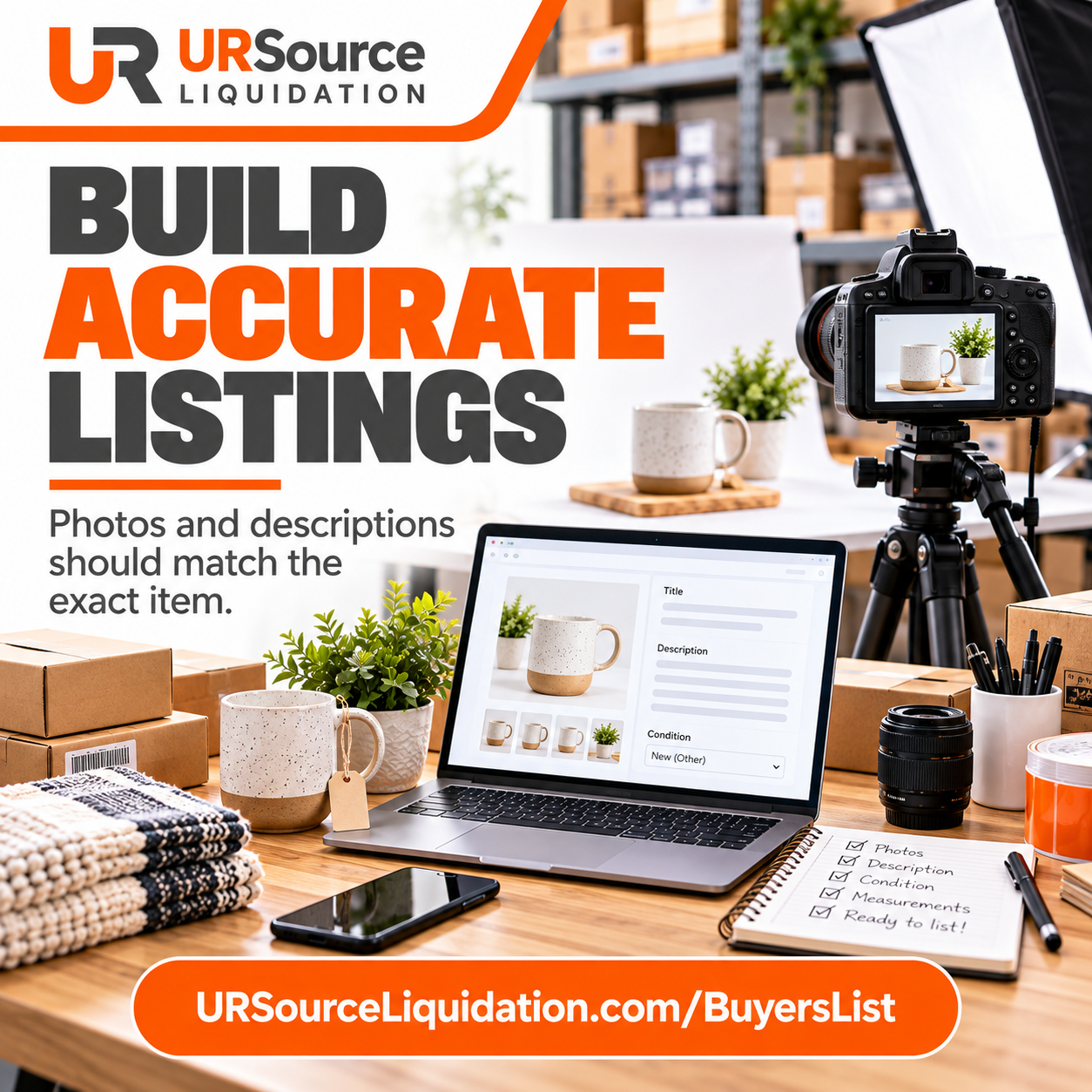
Build Accurate Listings
Online customers cannot physically inspect an item before buying it. Your listing has to do that work for them.
Clear photos, accurate descriptions, and useful product details help customers understand exactly what they are purchasing. For liquidation inventory, this is especially important because individual items may have different packaging, condition, included parts, or other details that should be reviewed before listing.
An accurate listing may include photos of the actual product, relevant condition information, included accessories, measurements when useful, and clear notes about anything the customer should know.
Avoid assuming every item in a mixed lot is identical.
Creating accurate listings also takes time. A reseller capable of processing twenty straightforward items may struggle with twenty products that each require extensive testing, research, photography, measurements, and description writing.
The best inventory for your operation is inventory your team can realistically process and represent accurately.
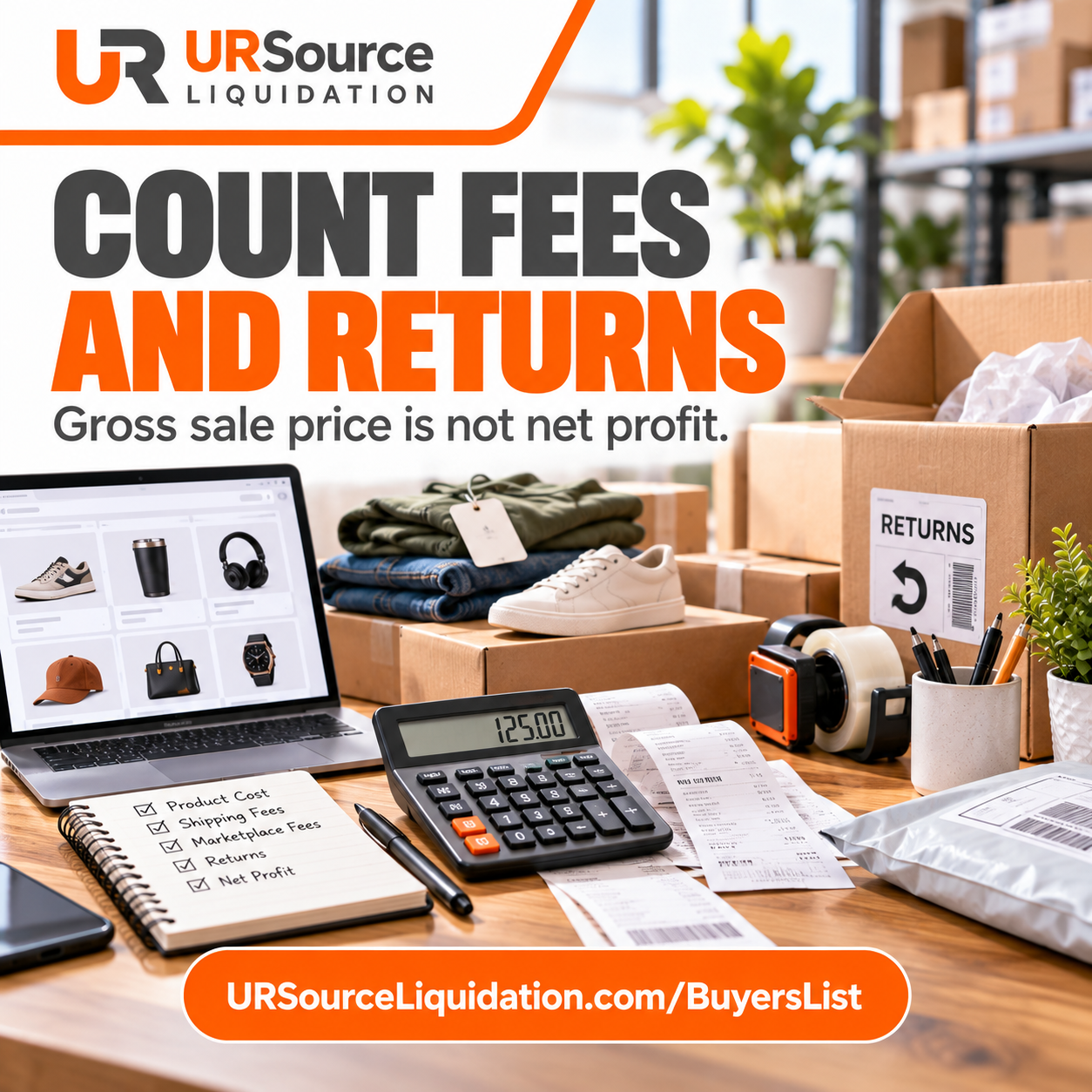
Count Fees and Returns
The gross selling price is not the same as the amount your business keeps.
Before estimating inventory profit, account for the costs connected to completing the transaction. Depending on your marketplace and selling process, those costs may include platform fees, payment processing, promoted listings, packaging materials, shipping adjustments, customer service, and returns.
Returns deserve particular attention because they can create more than one expense. A returned product may require additional shipping, inspection, repackaging, relisting, or markdown work before it can be sold again.
This does not mean avoiding every product with return risk. It means including realistic transaction costs when deciding how much inventory is worth to your business.
Profit depends on more than the difference between purchase cost and selling price. Transportation, processing labor, storage, condition, missing parts, platform fees, demand, pricing, and sell-through time can all affect the final result.
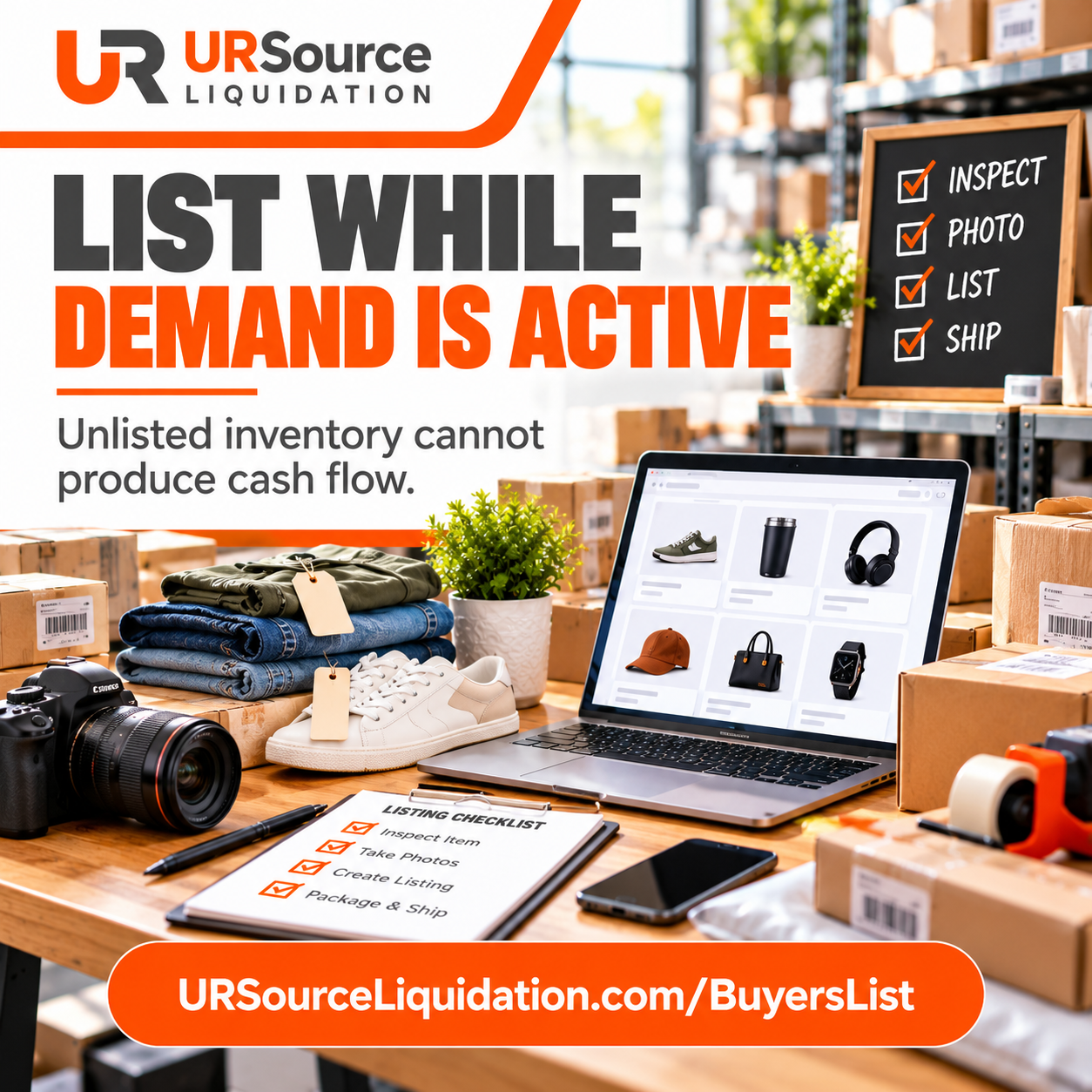
List While Demand Is Active
Buying inventory does not create cash flow. Selling it does.
A pallet or mixed lot sitting unprocessed in storage is still tied-up capital. The longer inventory waits for sorting, testing, photography, or listing, the longer your money remains committed to merchandise that customers cannot see.
Create a workflow that moves inventory from receiving to active listings as efficiently as your operation allows. For many online sellers, that may mean sorting the merchandise first, reviewing condition, testing when appropriate, photographing each item, preparing the listing, and publishing it as soon as practical.
Your buying volume should match that capacity.
If your business can only prepare a certain amount of inventory each week, repeatedly purchasing more than you can process may create a growing backlog. Storage becomes crowded, older inventory gets pushed aside, and potentially useful merchandise may sit while market demand changes.
Inventory that fits your current listing capacity may be more useful than a larger opportunity that takes too long to reach customers.
Choose Inventory for the Entire Online Sales Process
Successful online sourcing requires looking beyond the product itself.
The liquidation inventory online marketplace sellers select should still make sense after shipping, platform requirements, listing labor, transaction costs, return exposure, and processing time are considered.
Before committing to an opportunity, ask where you will sell the merchandise, what it will take to prepare each item, how it will be shipped, what costs may reduce the final return, and how quickly you can get it listed.
A disciplined process makes it easier to compare opportunities based on how your resale business actually operates instead of relying only on an item’s apparent retail value.
Find Inventory That Fits Your Online Selling Workflow
If you sell through online marketplaces, evaluate new inventory using your actual shipping limits, platform fees, return exposure, and listing capacity.
Join the URSource Liquidation Buyer’s List to stay connected to inventory opportunities from San Marcos, Texas, then review each opportunity based on whether your current online selling system can process, list, ship, and support it efficiently.
Frequently Asked Questions
1. What should online sellers check before buying liquidation inventory?
Start with the full selling process, not just the product itself. Review likely resale demand, shipping size and weight, condition information, marketplace fees, listing workload, return risk, and how quickly you can get the inventory online.
2. Why should shipping costs be calculated before buying inventory?
Shipping can significantly affect the final margin. Large, heavy, fragile, or awkwardly shaped products may require more packaging, higher postage, and additional handling. An item that looks profitable before shipping may become much less attractive after those costs are included.
3. How do I know which marketplace is best for an item?
Consider where similar products already fit your customers, price range, listing format, competition, and selling process. Different marketplaces attract different buyers, so inventory should match the platform where you already have a realistic way to sell it.
4. Why are accurate product listings important for liquidation inventory?
Customers buying online cannot inspect the product in person. Clear photos, accurate descriptions, condition details, measurements when needed, and information about included parts help customers understand what they are buying and can reduce confusion after the sale.
5. Should every item in a mixed liquidation lot use the same listing?
Not automatically. Items in a mixed lot may differ in condition, packaging, accessories, or other details. Each product should be reviewed before listing so the photos and description accurately represent the exact item being sold.
6. What costs should online sellers include when estimating profit?
Consider more than the purchase price. Costs may include transportation, processing labor, packaging, marketplace fees, payment processing, shipping, storage, returns, missing parts, and the time it takes for inventory to sell.
7. How do returns affect liquidation inventory profit?
Returns can create additional shipping, inspection, repackaging, customer service, relisting, or markdown work. Return risk should be considered when deciding how much you can afford to pay for inventory.
8. How quickly should liquidation inventory be listed online?
As soon as your normal processing workflow reasonably allows. Inventory that sits untested, unphotographed, or unlisted keeps cash tied up. Faster processing can also help you reach customers while demand is still active.
9. How much liquidation inventory should an online reseller buy at one time?
The right amount depends on your budget, storage, testing capacity, photography process, listing speed, shipping workflow, and existing inventory backlog. Buying more than you can process may slow down sell-through and tie up operating cash.
10. Where can online sellers find liquidation inventory opportunities?
Online sellers can stay connected to sourcing opportunities through the URSource Liquidation Buyer’s List. Review each opportunity against your shipping limits, marketplace fees, listing capacity, customer demand, and overall selling workflow before making a purchasing decision.
