
Matching Liquidation Inventory to the Right Resale Channel
A reseller can buy inventory that looks promising and still struggle to move it if the merchandise does not fit the way customers actually shop. The same product may make sense for an online marketplace, flea market, discount store, bin store, or bulk buyer but not necessarily for all of them.
That is why you should match liquidation inventory resale channel decisions before you buy. Instead of asking only, “Can I sell this?” consider where it should sell, what customers on that channel typically spend, how much work the sale requires, and what alternatives you have if the first plan is slow.

Start With Customer Demand
The best channel decision starts with the customers you already understand.
Review past sales, repeat requests, customer questions, saved searches, and the categories that regularly attract attention. These signals can help you determine whether an inventory opportunity fits an audience you can already reach.
A flea market vendor, online seller, discount store, and bin store may evaluate the same mixed inventory differently because their customers shop differently. Merchandise that works well when customers can inspect it in person may not justify the work of creating individual online listings. Another category may have stronger searchable demand and make more sense online.
Before purchasing, ask:
Who is most likely to buy this merchandise?
Do I already reach those customers?
What similar products have they purchased before?
Which sales channel gives them the easiest way to buy?
Demand does not guarantee sell-through, but it gives you a stronger starting point than purchasing based only on what looks interesting.
When reviewing opportunities from URSource Liquidation in San Marcos, Texas, compare the available inventory details with what your customers actually request and purchase.
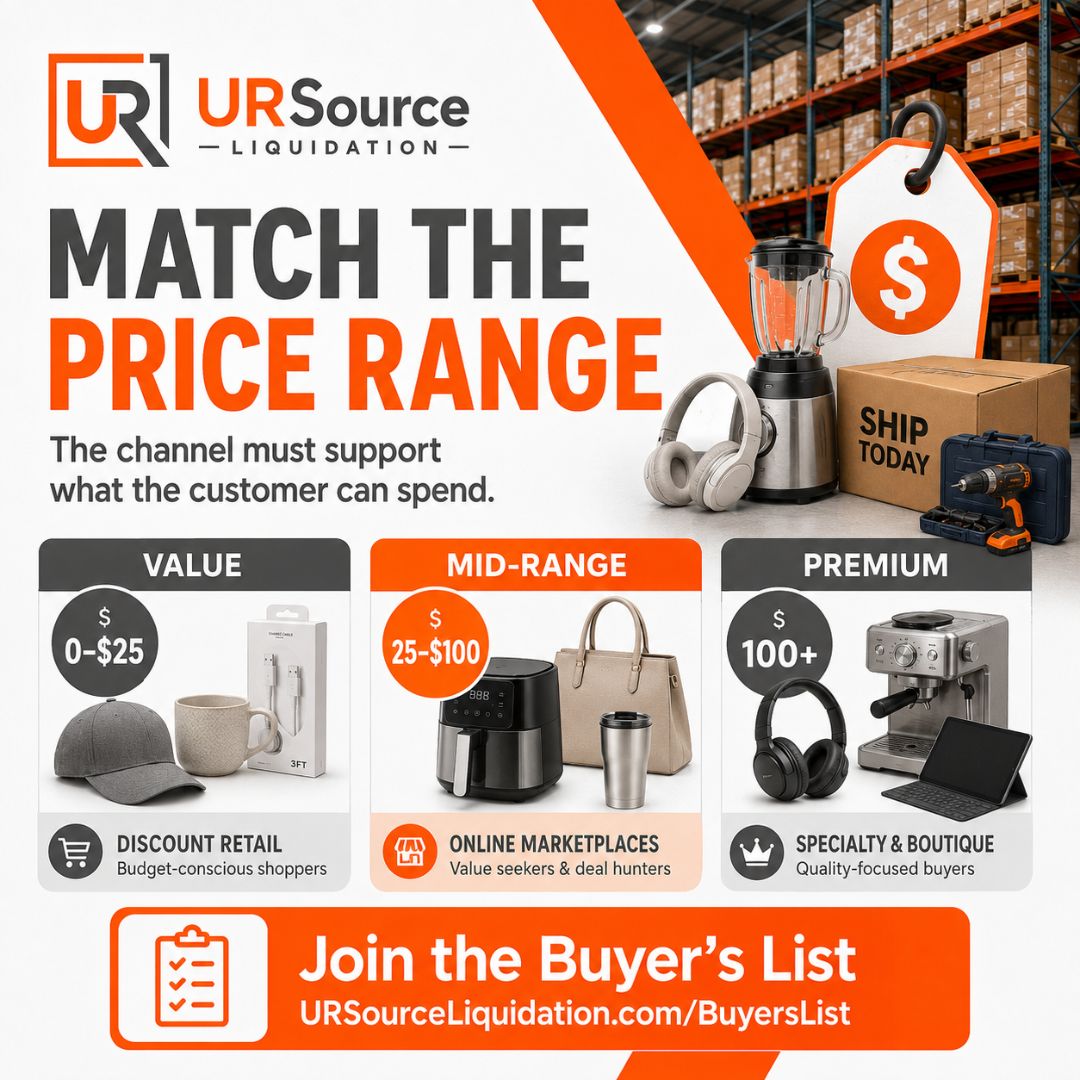
Match the Price Range
A strong product can still be a poor fit when the expected selling price is outside what customers on your channel normally spend.
Think about the price range your audience regularly accepts. Customers shopping a discount-focused environment may approach merchandise differently from buyers searching for a specific item online.
Your expected selling price also needs to support the total work involved.
Purchase cost is only one factor. Transportation, storage, processing, cleaning or testing when appropriate, supplies, marketplace fees, packaging, labor, and sell-through time can all affect the final result.
If an item requires extensive preparation but your sales channel supports only a low selling price, the opportunity may not justify the workload.
Avoid building the plan around hoped-for values. Instead, use realistic pricing based on your customers, sales history, and the actual channel you plan to use.
The most useful price is not necessarily what merchandise could theoretically sell for. It is what your market can realistically support.
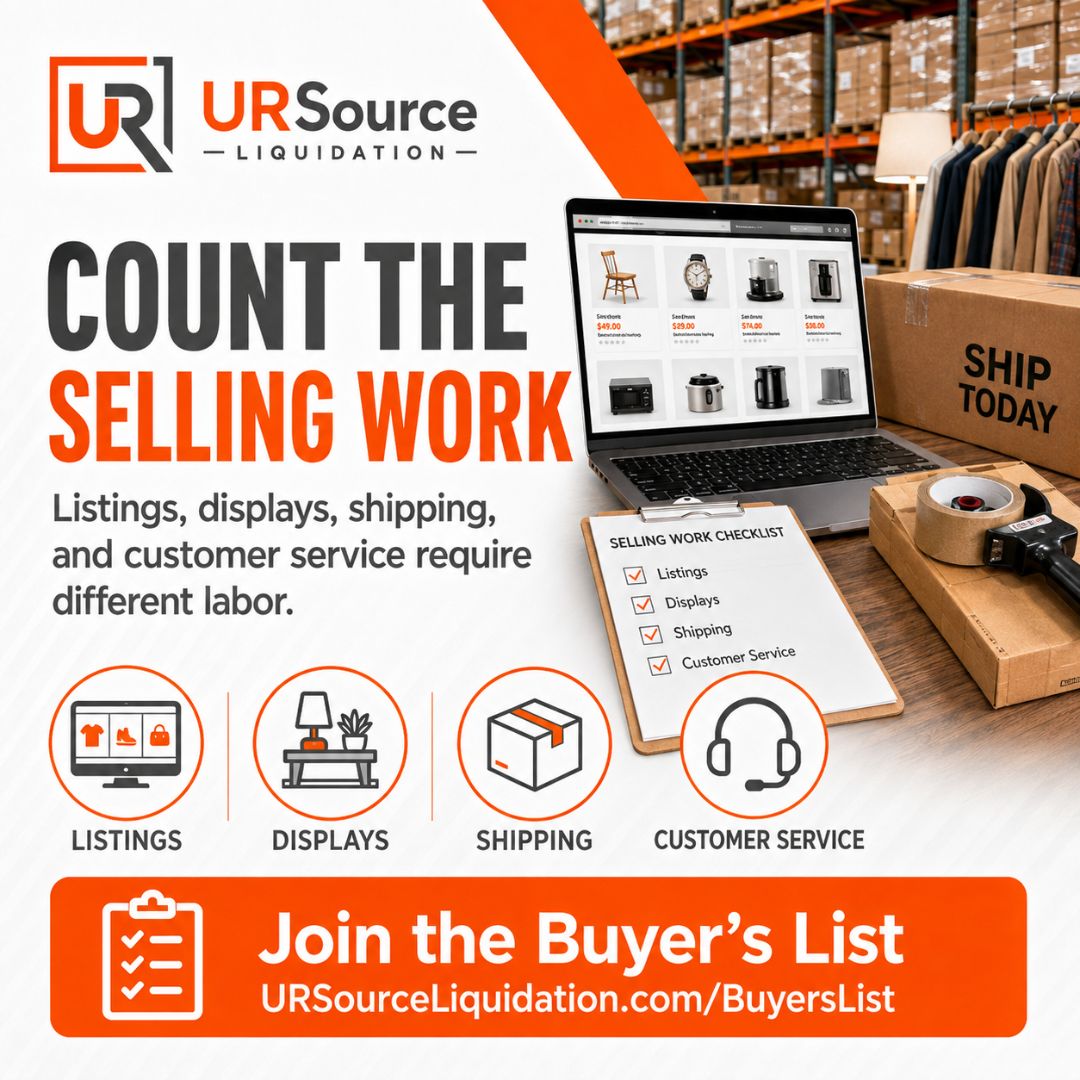
Count the Selling Work
Every resale channel creates a different workflow.
Online sellers may need to photograph items, write listings, document condition, answer customer questions, package orders, and manage shipping.
Flea market vendors and physical stores may spend more time receiving, sorting, pricing, organizing displays, restocking, and interacting with customers.
Bin stores may prioritize fast processing and organized replenishment, while bulk sales can reduce individual-item handling but require merchandise that fits the needs of another buyer.
Before committing to inventory, estimate how much selling work it creates.
A large quantity of items requiring individual listings is very different from inventory that can move through racks, tables, bins, bundles, or mixed lots.
Your capacity matters. If merchandise arrives faster than you can inspect, sort, list, display, or ship it, inventory can begin occupying storage space without producing enough sell-through.
Matching inventory to the right channel means choosing a workflow your business can realistically handle.
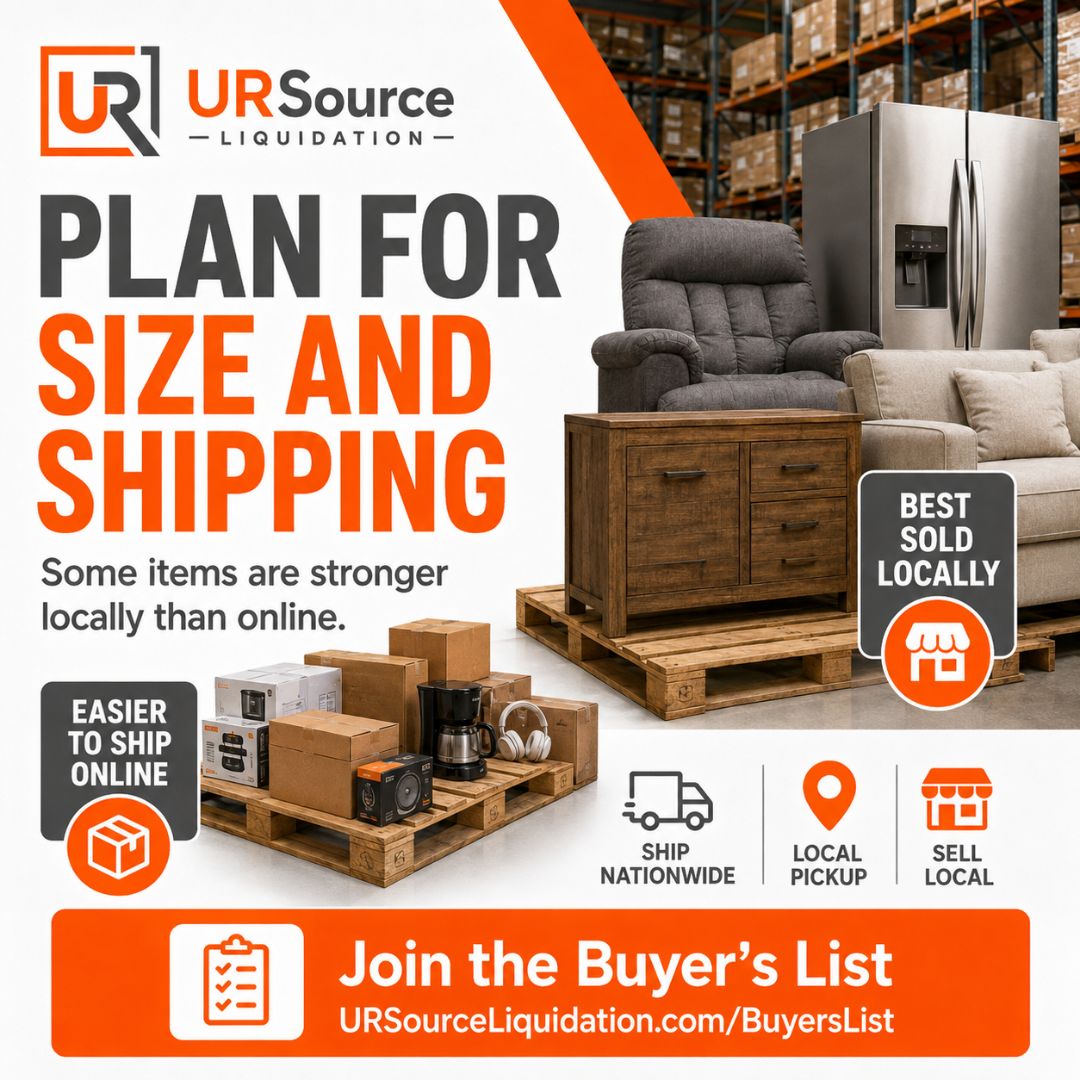
Plan for Size and Shipping
Size, weight, and handling requirements can quickly change where inventory makes the most sense.
Large, heavy, fragile, or difficult-to-package merchandise may be better suited to local selling than individual online shipping. That does not automatically make larger inventory a poor purchase. It means the logistics need to fit the sales plan.
Smaller products can be easier to ship, but shipping still involves packaging materials, labor, platform fees, potential damage, and fulfillment time.
Before buying, consider:
Can the item be packed efficiently?
Does shipping make sense for its likely selling price?
Would customers prefer local pickup?
Do you have enough receiving and storage space?
Can your operation process the merchandise efficiently?
For resellers serving San Marcos and Central Texas, local sales may provide another path for merchandise that is inconvenient to ship. Online channels can provide broader reach for appropriate items, but broader reach does not automatically mean a better result.
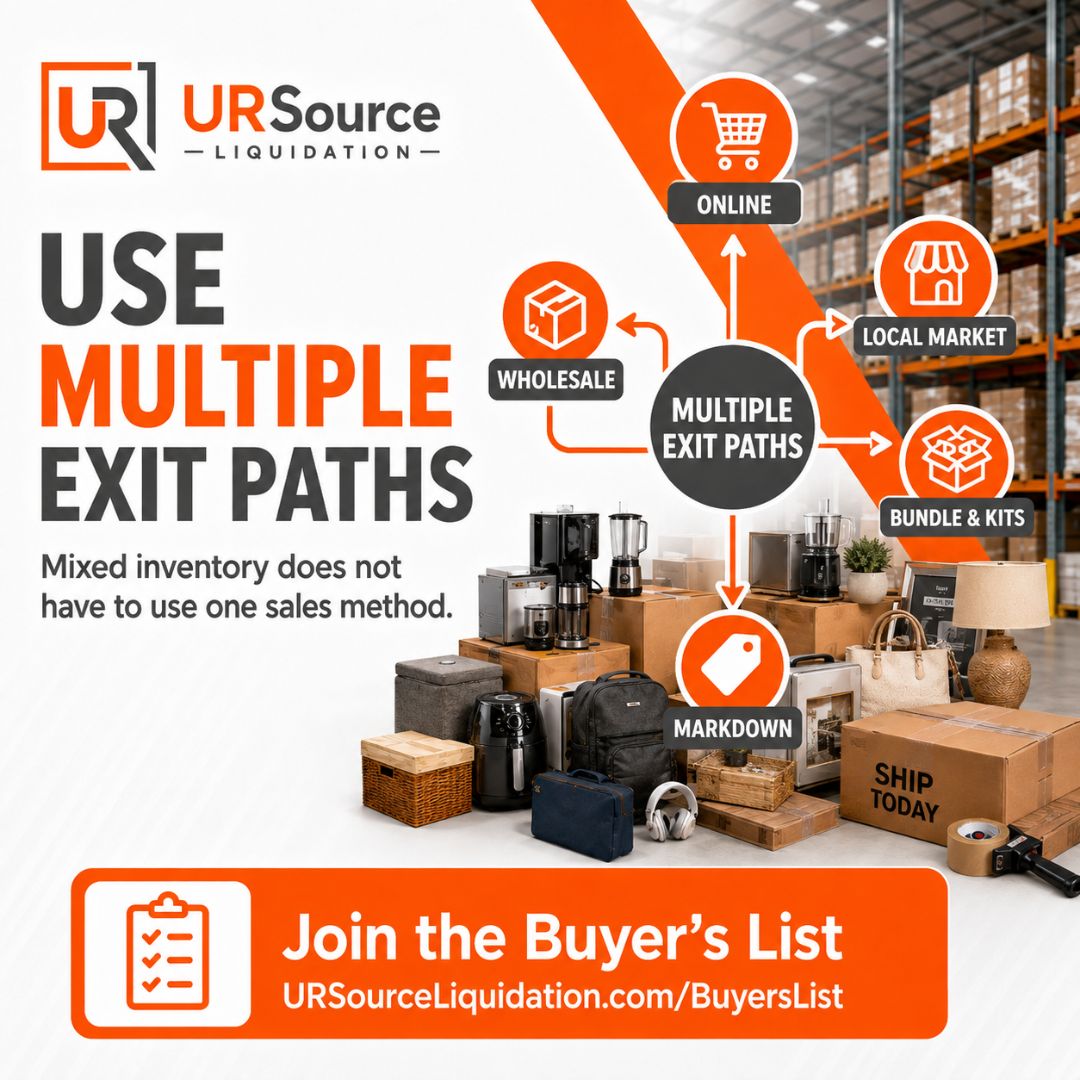
Use Multiple Exit Paths
Mixed liquidation inventory does not have to use one sales method.
A purchase may contain some merchandise worth listing individually online while other items fit a flea market, discount store, bin environment, bundle, clearance section, mixed lot, or bulk sale.
Planning more than one exit path can give you flexibility when different parts of the inventory move at different speeds.
Start by identifying the primary sales channel for the strongest portion of the opportunity. Then create a secondary plan for merchandise that does not fit that channel.
For example, you might change the presentation, create bundles, adjust pricing, move items to another existing channel, or combine appropriate merchandise into larger lots.
The goal is not to sell everywhere. It is to route each part of the inventory toward the channel that best fits its customer demand, price range, workload, and logistics.
Choose the Channel Before You Commit
A strong inventory opportunity should fit more than your budget. It should fit the way your business sells.
When you match liquidation inventory resale channel options before purchasing, you can evaluate customer demand, realistic price ranges, selling workload, shipping requirements, and backup exit paths before the merchandise reaches your space.
No strategy guarantees profit. Results can depend on purchase cost, transportation, labor, storage, condition, missing parts, platform fees, demand, pricing, processing speed, and sell-through time.
The clearer your selling plan is before the purchase, the easier it becomes to decide whether an opportunity belongs in your resale business.
Know where the merchandise would sell before you buy it. Join the URSource Buyer’s List and compare new inventory opportunities with your customers, price range, listing capacity, shipping limits, and available sales channels before you commit.
FAQs
1. Why should I match liquidation inventory to the way I sell?
Because the same merchandise can perform differently depending on the sales channel. Customer demand, price expectations, labor, shipping, storage, and presentation requirements can all affect whether inventory fits your business.
2. How do I know which resale channel is best for liquidation inventory?
Start with your existing customers. Review what they already buy, the price ranges they accept, how they prefer to shop, and how much work each channel requires before choosing inventory.
3. What should I check before buying liquidation inventory for online resale?
Consider item size, shipping difficulty, platform fees, listing workload, condition information, packaging needs, customer demand, and whether the expected selling price can support those costs.
4. When is liquidation inventory better suited for local selling?
Large, heavy, fragile, or difficult-to-ship merchandise may be stronger for local pickup, flea markets, discount stores, or other in-person sales channels where shipping is not required.
5. How important is customer demand when choosing liquidation inventory?
Customer demand should be one of the first factors you review. Inventory that matches products your buyers already request or purchase may be easier to position than merchandise that requires finding an entirely new audience.
6. Should I choose liquidation inventory based only on potential resale price?
No. Purchase cost is only one part of the decision. Transportation, storage, labor, platform fees, packaging, condition, demand, processing time, and sell-through time can all affect the final result.
7. How does selling workload affect which inventory I should buy?
Different inventory creates different amounts of work. Some items may require individual photos, listings, shipping, and customer service, while others may be easier to sell through displays, bins, bundles, or bulk lots.
8. Can one liquidation load be sold through multiple channels?
Yes. Mixed inventory may be divided among online marketplaces, local sales, discount environments, bundles, mixed lots, or bulk buyers depending on the merchandise and your available sales channels.
9. What is an exit path in liquidation resale?
An exit path is a realistic way to move inventory if your primary sales method is not the best fit. Examples may include another existing sales channel, bundling, markdowns, local selling, or combining appropriate items into mixed lots.
10. What is the biggest mistake when choosing liquidation inventory for resale?
A common mistake is buying inventory before deciding who will buy it and how it will be sold. A stronger approach is to match the inventory to customer demand, price range, workload, shipping needs, and available sales channels before committing.
