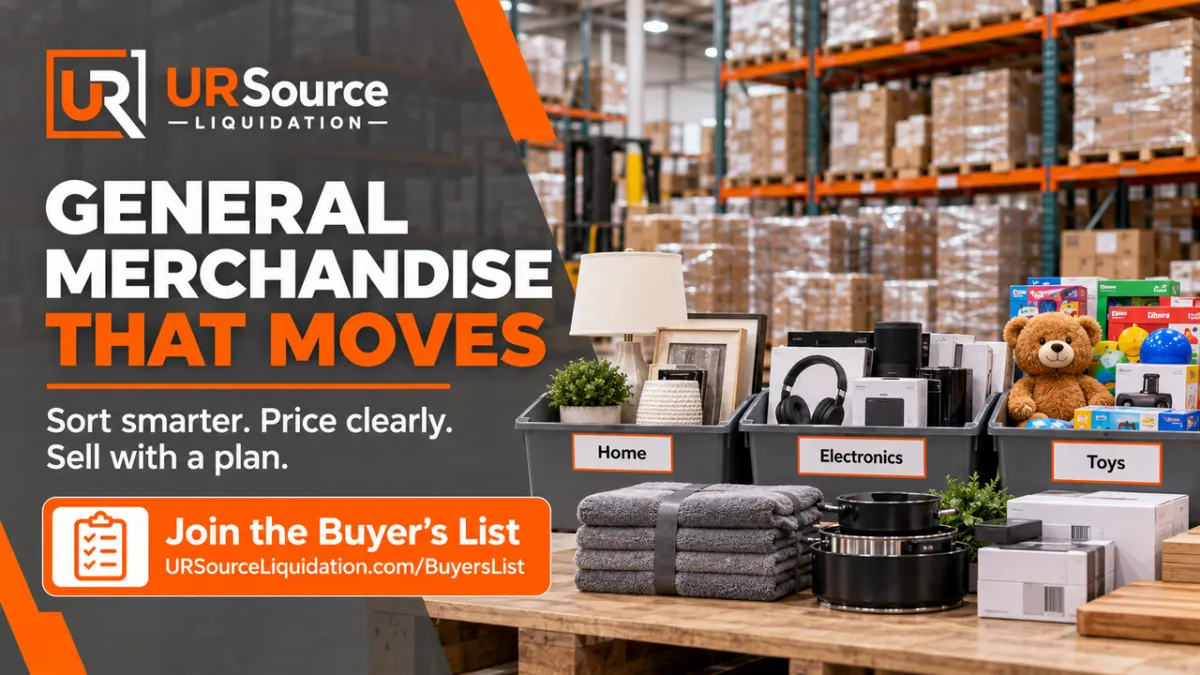
Sorting, Pricing, and Selling General Merchandise Liquidation
A mixed load of general merchandise can look promising when it first arrives, but unsorted variety can quickly become difficult to manage. Items may end up stacked in boxes, priced inconsistently, or placed in a sales channel that does not fit the product.
A clear system helps you move from receiving inventory to selling it with fewer unnecessary decisions. The goal is not to treat every item exactly the same. The goal is to create a repeatable process that helps you identify the best use, price, presentation, and sales path for each piece of general merchandise liquidation.
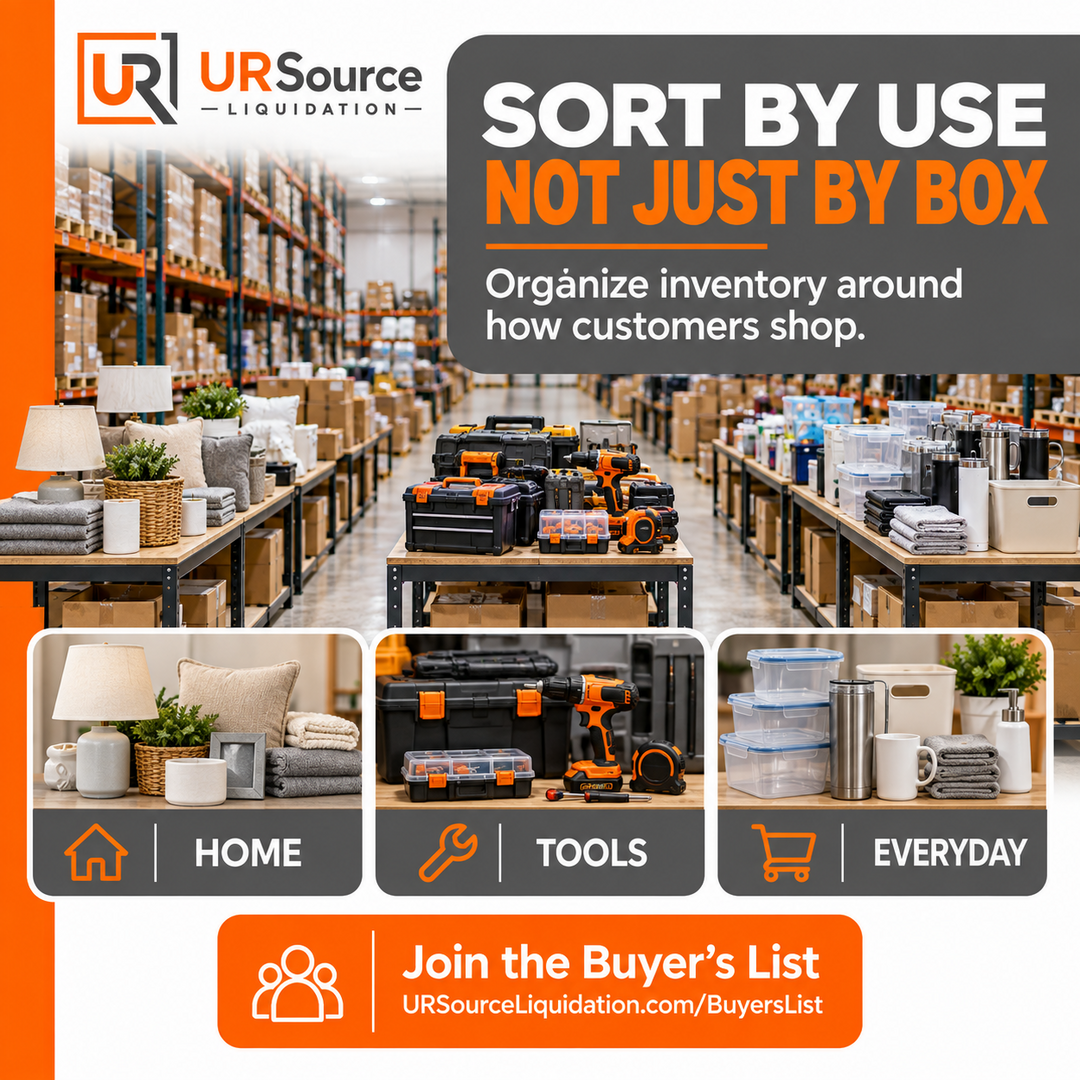
Sort by Use, Not Just by Box
The box or pallet an item came from does not tell customers how they should shop for it. Most buyers think in terms of use, need, room, project, or occasion.
Instead of leaving inventory grouped by original carton, sort items into practical categories. Depending on the load, these may include household items, organizers, small tools, accessories, seasonal products, office supplies, or items connected to a specific project.
Sorting by use makes the shopping experience easier. A customer looking for storage solutions should not have to search through unrelated products. Someone shopping for a small household upgrade may respond better to a useful display than to a random collection of items.
During the first sort, review condition, completeness, packaging, and obvious usability. Separate items that need testing or additional review from products that are ready to sell. If an item is missing an important part or its purpose is unclear, place it in a separate review area instead of allowing it to slow down the entire process.
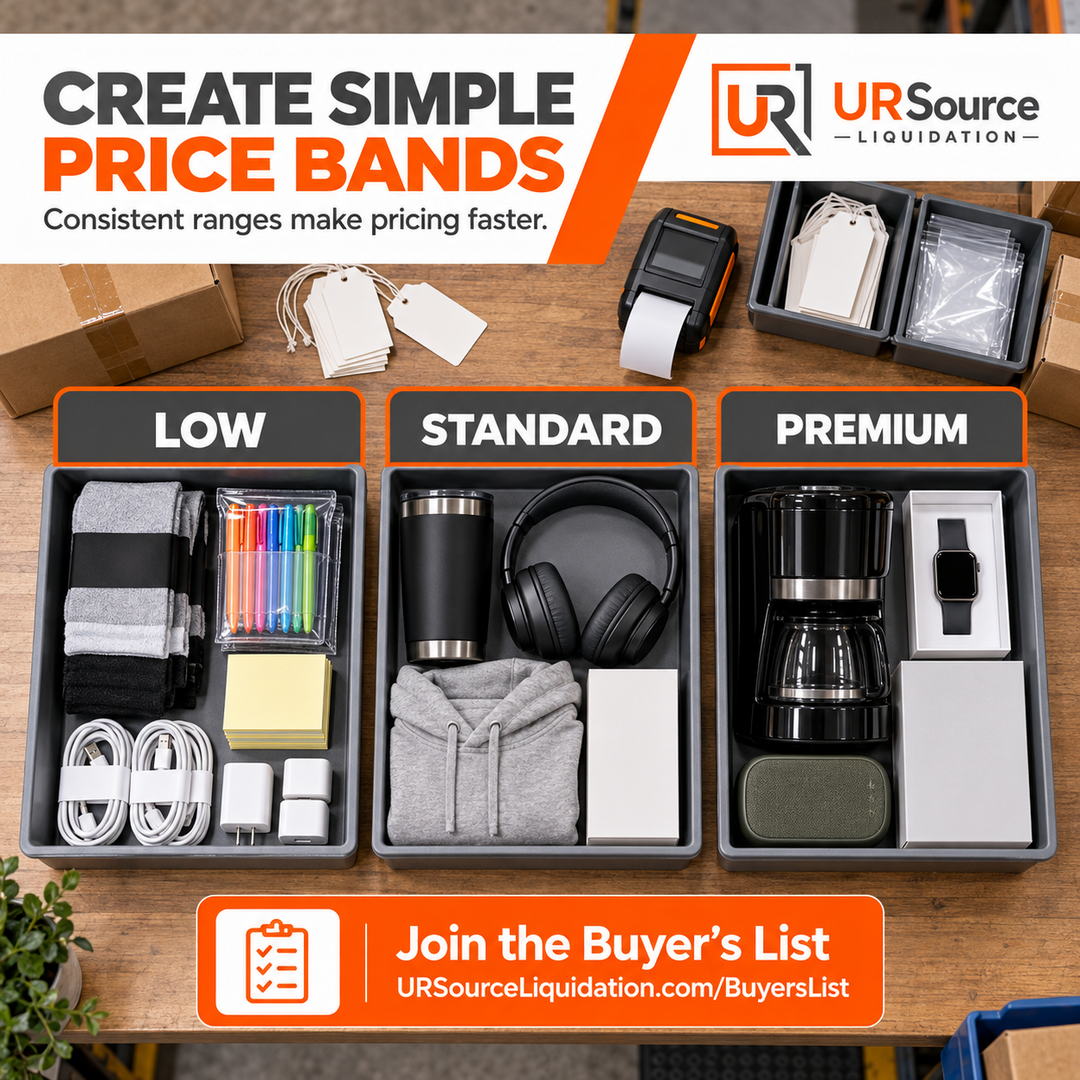
Create Simple Price Bands
Pricing every item from scratch can consume valuable time. Simple price bands create consistency and help you make faster decisions while keeping the sales floor easier to understand.
Your price bands can be based on factors such as condition, completeness, demand, size, packaging, and the amount of work required before sale. For example, you may create a lower band for simple, lower-risk items; a standard band for complete and usable products; and a higher band for items that require more evaluation or have stronger customer appeal.
The exact prices should reflect your own costs and selling environment. Consider the purchase cost, transportation, cleaning, testing, storage, labor, packaging, platform fees, and the time required to list or sell the product.
Clear price labels also help customers shop with confidence. When similar items have similar pricing, buyers can compare products more easily and checkout can move faster. You can still adjust individual items when condition, completeness, or demand justifies it, but the price bands give you a dependable starting point.
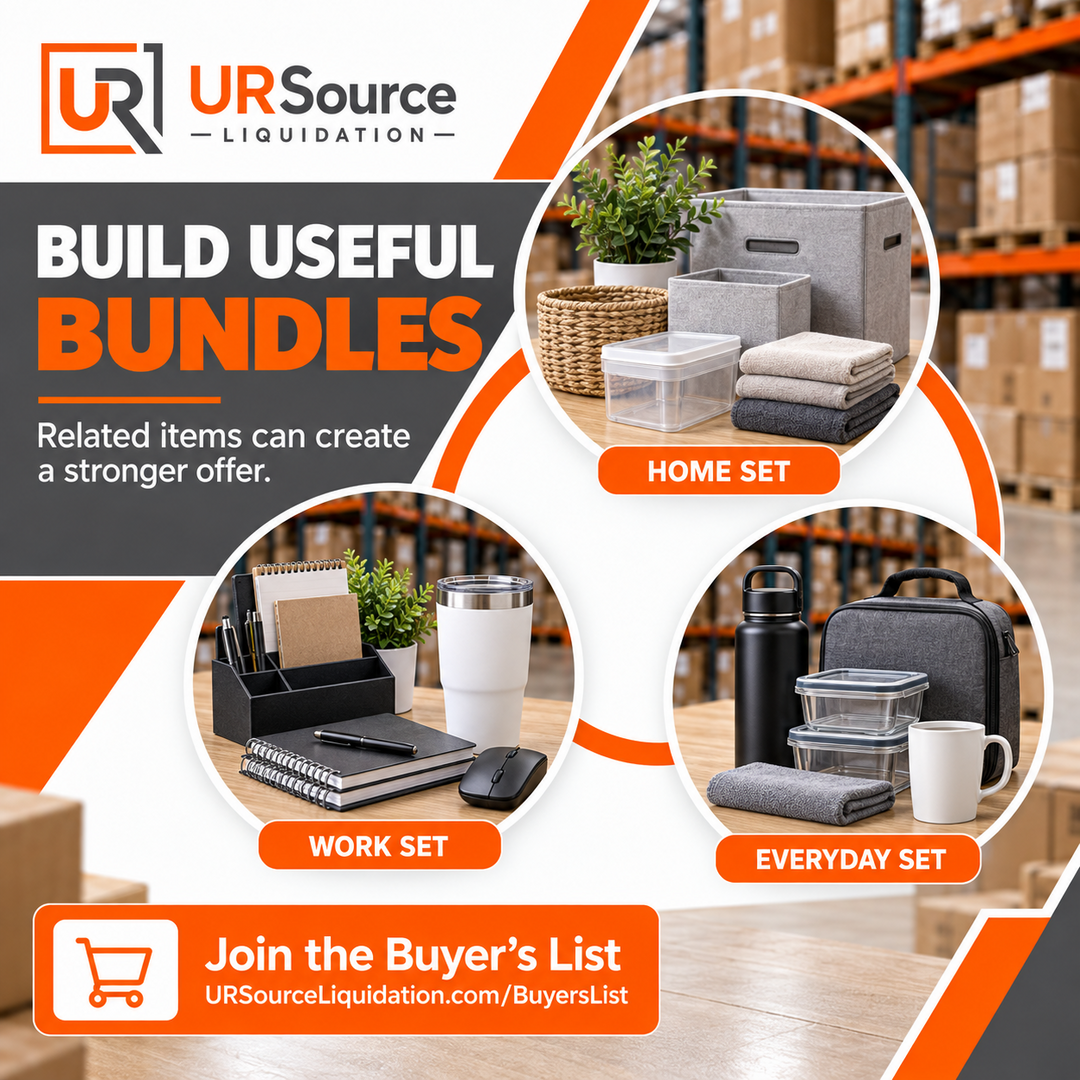
Build Useful Bundles
Some low-ticket items may be difficult to sell individually because the value does not justify the listing effort, storage space, or customer decision-making. Bundling related products can create a more useful offer.
A good bundle should solve a clear problem or support a specific activity. Compatible household items, related organizers, office supplies, or accessories may work better together than they would separately. The key is to make sure the products belong together and that the bundle is easy for a customer to understand.
Avoid combining unrelated items simply to clear space. A confusing bundle can reduce perceived value and make customers unsure about what they are purchasing. Review each item for condition and completeness, and clearly disclose anything that may affect how the bundle is used.
When pricing a bundle, consider the combined value, your processing time, and the channel where it will be sold. Bundles can be especially helpful when they reduce the number of individual listings or make a local display easier to shop.

Match Items to the Right Channel
Not every piece of general merchandise belongs on the same shelf or in the same listing format. The best channel depends on the item’s size, condition, demand, shipping difficulty, and expected selling effort.
Identifiable products that are easy to photograph, describe, and ship may be suitable for an online marketplace. Bulky, lower-value, or highly practical items may be easier to sell locally. Other products may fit a flea market display, discount store environment, social selling page, or a bundle-focused offer.
Think about the total work involved, not just the possible selling price. An item that requires extensive testing, detailed measurements, special packaging, or repeated customer questions may not be worth placing in a high-effort channel.
If you source inventory connected to San Marcos, Texas, include transportation, storage, and handling in your channel decision. A product’s selling path should fit your actual operation, available space, customer base, and ability to process inventory.

Track What Actually Sells
Your next purchase should be influenced by real sales results, not only by what looked interesting during the initial sort.
Track useful information such as:
Category or product type
Purchase and processing costs
Selling channel
Original price
Markdown or bundle changes
Date listed
Date sold
Customer questions or objections
Items that required extra work
This information can show which categories sell quickly, which products need better presentation, and which items remain in storage too long. It can also reveal whether a category is profitable after transportation, labor, fees, and other operating costs are included.
Over time, your records can help you refine your sorting process, price bands, bundles, and channel choices. You may discover that some products perform better as part of a group, while others need a different display or a more specific customer audience.
Build a System That Improves With Every Load
General merchandise liquidation becomes easier to manage when you create a process that moves inventory through clear stages: sort, review, price, bundle, assign a channel, and track the result.
Variety can create multiple selling paths, but it also requires discipline. The more consistently you organize products around customer use and actual sales data, the easier it becomes to make better decisions about future inventory. Results will still depend on purchase cost, condition, demand, labor, storage, fees, and sell-through time, but a clear system gives you better information to work with.
Planning your next general merchandise liquidation purchase? Join the URSource Liquidation Buyer’s List to stay informed about inventory opportunities you can evaluate based on category fit, processing capacity, pricing strategy, and selling channel.
Sign up here: URSource Liquidation Buyer List
Frequently Asked Questions
1. What is general merchandise liquidation?
General merchandise liquidation refers to varied inventory that may include household items, organizers, tools, accessories, office products, and other resale categories. Each opportunity should be reviewed based on condition, completeness, cost, and customer demand.
2. Why should I sort liquidation inventory by use?
Customers usually shop based on what they need, not the box or pallet an item came from. Sorting by use makes products easier to find and can create a more organized shopping experience.
3. What should I check before pricing general merchandise?
Review the item’s condition, completeness, packaging, usability, size, and the amount of work needed before sale. Cleaning, testing, storage, transportation, and selling fees may also affect the final price.
4. How do price bands make selling easier?
Simple price bands reduce the time spent deciding what each item should cost. They also create more consistent displays and help customers compare similar products more easily.
5. What costs should be included in a pricing decision?
Consider the purchase cost, transportation, cleaning, testing, storage, labor, packaging, and platform fees. A selling price should reflect the total work and expense involved, not just the item’s expected selling price.
6. When should I create product bundles?
Bundling may help when individual low-ticket items are difficult to sell alone or require too much listing effort. Items should be related, compatible, and connected to a clear customer need.
7. What makes a liquidation bundle useful?
A useful bundle combines products that work well together or support the same activity. Avoid adding unrelated items just to clear space, and disclose missing parts or condition concerns clearly.
8. How do I choose the right sales channel?
Consider the item’s size, condition, demand, shipping difficulty, and the amount of work required to sell it. Online marketplaces, local sales, flea markets, social selling, and discount-style displays may each fit different products.
9. Should every item be listed online?
No. Some products may require extensive testing, detailed descriptions, special packaging, or repeated customer communication. If the work does not fit the item’s expected value, another sales channel may be more practical.
10. What should I track after selling liquidation inventory?
Track the category, costs, sales channel, original price, markdowns, bundle changes, listing date, sale date, and customer objections. This information can help improve your sorting, pricing, bundling, and purchasing decisions for future inventory.
